
Micronectriella blight of cereals
Micronectriella agropyri
Description
Symptoms
Symptoms typically manifest as the snow melts in early spring. The first visual signs include water-soaked lesions on the lower leaves, which eventually turn grey or brown as the tissue necroses.
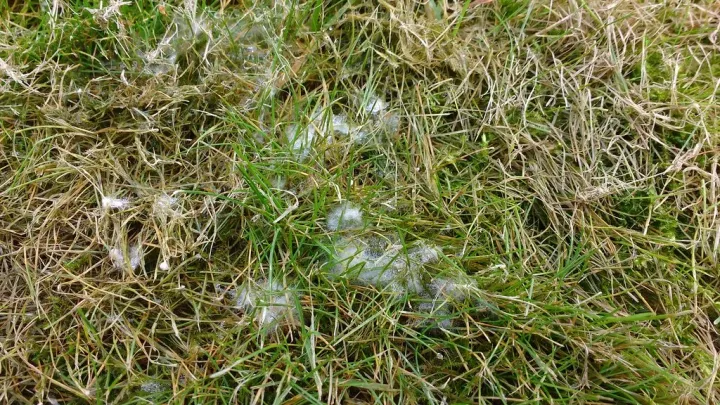
Under humid conditions, a characteristic whitish or light pink moldy growth appears on the affected plant parts. This growth represents the asexual sporulation of the fungus, which serves as inoculum for secondary infections.
Severe infection leads to the rotting of the crown and basal nodes. The affected tillers become brittle, discolored, and eventually collapse, leading to the thinning of the crop stand.
Small, dark, globular structures known as perithecia can often be observed on the necrotic tissues of infected plants. These structures indicate the sexual stage of the pathogen and are common in late spring.
In the field, the disease manifests as irregular patches of stunted, yellowing plants. Affected areas often fail to recover, resulting in significant gaps in the field that reduce overall crop density.
Pathogen
The causal agent of this disease is the ascomycete fungus Micronectriella agropyri. It is closely related to Fusarium nivale (syn. Gerlachia nivalis), which is widely recognized as a major pathogen in winter cereals, particularly in temperate regions.
The pathogen survives in the soil and on crop residues primarily as mycelium and chlamydospores. These resting structures allow the fungus to persist for several seasons, making it a difficult pathogen to eradicate from agricultural fields.
Biological activity of the fungus is characterized by its ability to thrive at low temperatures. While many pathogens are inhibited by cool weather, Micronectriella agropyri remains active even in late autumn and early spring, and under the snow cover.
The life cycle involves the production of conidia, which are disseminated by wind, rain splashes, and farm equipment. Once spores land on susceptible plant tissues, they germinate and penetrate the host's epidermis.
The fungal development is favored by a complex interplay of moisture and cool temperatures. The fungus colonizes the crown and stem base, systematically destroying plant tissues and preventing nutrient transport.
Conditions for development
The development of the disease is highly dependent on environmental factors, with moisture being the most critical parameter. High humidity combined with cool temperatures between 5°C and 15°C provides optimal conditions for infection.
Prolonged, wet autumns followed by mild, snow-heavy winters are particularly conducive to disease outbreaks. The snow cover acts as an insulating blanket, protecting the fungus from freezing while maintaining sufficient moisture for its growth.
Poor field drainage and excessive soil moisture are significant risk factors. In waterlogged areas, the lack of soil oxygen stresses the plants, making them more susceptible to fungal colonization.
Agronomic practices such as high-density sowing restrict airflow and keep the plant base consistently humid, facilitating rapid disease spread. Proper spacing is essential to mitigate these microclimatic effects.
Excessive nitrogen fertilization often leads to rapid, succulent growth that is less resistant to fungal attack. Balanced nutrient management is crucial for maintaining the natural physical defenses of cereal crops.
Why it matters
The primary economic impact of this disease is a direct reduction in grain yield due to plant mortality. In severe cases, the thinning of the stand can lead to yield losses exceeding 30-40%.
Plants that survive the infection often exhibit reduced vigor and poor root development. This directly affects the grain filling process, leading to shriveled kernels with low hectoliter weight and poor quality.
The disease negatively impacts the winter hardiness of cereal crops, making them more prone to winterkill. This frequently necessitates the destruction of the winter crop and expensive reseeding efforts in the spring.
Contamination of the grain with mycotoxins produced by associated Fusarium species is a major concern. These toxins can pose significant health risks if the grain is used for livestock feed or human consumption.
There is also an increased cost of production associated with the need for fungicide applications and intensified monitoring of the fields during the early stages of spring growth.
Protection
Effective management starts with the use of high-quality, disease-free seed. Seed treatments with systemic fungicides are essential to protect young seedlings from early-season infections.
Crop rotation is a fundamental tool for reducing the inoculum pressure. Avoid planting cereals after other susceptible crops to prevent the buildup of the fungus in the field soil.
Deep tillage practices help to bury crop residues, accelerating their decomposition and limiting the survival of the fungus. This physical disruption of the inoculum source is a key component of integrated pest management.
Selecting cereal varieties with known resistance or tolerance to fungal crown rot is a sustainable way to minimize damage. Breeders continue to focus on traits that enhance the plant's natural ability to withstand pathogens.
- Fungicide applications during the tillering and stem elongation stages to prevent further spread.
- Improved drainage systems to prevent waterlogging and reduce soil humidity.
- Balanced application of NPK fertilizers to promote robust root and stem development.
- Regular field scouting to identify infection spots early and implement timely interventions.
Discussion
No discussions yet — be the first.