
Lettuce anthracnose
Microdochium panattonianum
Lettuce anthracnose is caused by the fungus Microdochium panattonianum, previously known as Marssonina panattoniana. This fungal pathogen is highly specific to the Asteraceae family and is a significant threat to commercial lettuce production worldwide.
What the section contains
Lettuce anthracnose
The fungus survives in the soil and on crop debris for several years. It can also be transmitted via infected seeds, which may harbor the pathogen and initiate outbreaks when conditions become favorable for fungal growth and sporulation.
Infection occurs when spores (conidia) land on lettuce leaves, usually spread by water splashes from rain or overhead irrigation. Once it lands on a susceptible host, the fungus penetrates the leaf tissue, initiating the colonization process.
The biological cycle of the fungus is strictly dependent on environmental moisture. It produces massive amounts of spores on the lesions, which are then disseminated by mechanical means, including tools, farm machinery, and personnel moving through the field.
The pathogen demonstrates high aggressiveness under cool, moist conditions. It actively secretes enzymes that degrade plant tissues, leading to the rapid appearance of localized necrosis, which is characteristic of the anthracnose disease cycle.
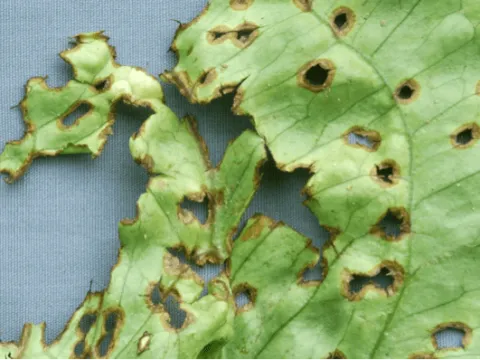
The first symptoms of lettuce anthracnose are small, water-soaked, circular spots on the lower leaves. As the disease progresses, these spots expand and become angular, clearly delimited by the leaf veins, which is a key diagnostic feature.
Eventually, the central part of the lesion may dry out and fall out, creating a "shot-hole" effect on the leaves. This physical damage renders the lettuce heads unmarketable, as they lose their aesthetic appeal and structural integrity.
Under high humidity, a greyish-pink mass of fungal spores may develop on the undersides of the lesions. This mass serves as a secondary inoculum, leading to rapid spread throughout the crop canopy if conditions remain favorable.
In severe cases, the lesions can coalesce, covering large areas of the leaf surface. This leads to the yellowing and premature death of the foliage, effectively reducing the plant's ability to perform photosynthesis and slowing its growth significantly.
- Small water-soaked lesions on lower leaves.
- Angular necrotic spots bounded by leaf veins.
- "Shot-hole" symptoms due to tissue decay.
- Stunting of the lettuce plant and leaf deformation.
- Wilt and collapse of older leaves in severe infections.
The development of anthracnose is heavily influenced by cool temperatures, typically ranging from 15°C to 22°C. While the fungus can survive warmer temperatures, its most rapid infection cycles occur within this moderate temperature range.
Leaf wetness is the most critical environmental factor. Prolonged periods of rain or consistent overhead irrigation keep the leaf surfaces wet, providing the perfect window for fungal spores to germinate and invade the host plant.
High plant density and poor field aeration contribute significantly to the disease. Crowded plants trap humidity within the canopy, preventing the foliage from drying out quickly, which maintains the microclimate required by the pathogen.
The presence of wild hosts or weeds belonging to the Asteraceae family can maintain the disease in the field between growing seasons. Soil management is essential, as the fungus persists in crop residues left on the soil surface.
Atmospheric humidity levels above 85% are conducive to the spread of the disease. In greenhouse conditions, poor ventilation and high humidity levels without proper air circulation often lead to explosive outbreaks of anthracnose.
The primary harm caused by anthracnose is the total loss of marketability of the lettuce crop. Consumers and retailers demand pristine, blemish-free leaves, and even minor anthracnose damage leads to high rejection rates at harvest.
The disease reduces total biomass and crop weight by damaging leaf surfaces and causing premature senescence. This results in direct economic losses for growers who sell lettuce by weight or bundle size.
Secondary infections by soft-rot bacteria often follow the initial fungal colonization. This synergy accelerates the decay of the lettuce heads during storage and transport, leading to significant post-harvest losses and waste.
Management of the disease often necessitates the increased use of fungicides, which adds to production costs. These applications may also result in pesticide residues, complicating compliance with safety standards for leafy greens.
Outbreaks can disrupt harvesting schedules, as workers must carefully sort out affected heads. In severe cases, large portions of the field may be abandoned entirely, creating supply chain disruptions and significant financial impact.
Selecting disease-resistant lettuce varieties is the most effective long-term management strategy. Many commercial cultivars are now bred with specific resistance to Microdochium panattonianum, providing a primary defense line.
Cultural practices are paramount, starting with strict crop rotation. Avoiding lettuce production on the same ground for at least three years helps reduce the soil-borne inoculum levels significantly and breaks the disease cycle.
Switching from overhead irrigation to drip irrigation is highly recommended to keep the foliage dry. If overhead irrigation must be used, it should be done early in the day so that the leaves can dry completely before nightfall.
Proper field sanitation, including the removal and destruction of crop residues immediately after harvest, prevents the buildup of the fungus. Controlling weeds in the vicinity of the field also eliminates potential reservoirs for the pathogen.
Chemical control involving approved fungicides can be used as a last resort or preventative measure during high-risk weather windows. Applications must follow label directions, particularly regarding pre-harvest intervals to ensure safety.