
Description
Symptoms
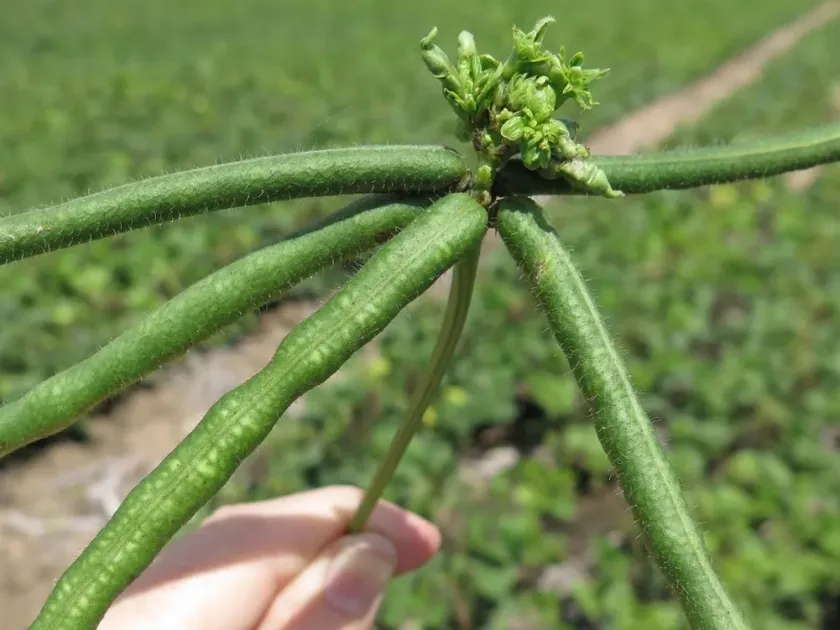
The hallmark symptom of phyllody is the transformation of floral parts into leaf-like structures, a phenomenon known as virescence. Flowers lose their natural morphology and become vegetative and green.
Infected lettuce plants exhibit excessive branching and stunting, often developing a characteristic bushy appearance. The leaves may become chlorotic, stiff, and brittle, deviating from the healthy appearance of the crop.
Growth is significantly inhibited, and in many cases, the plant fails to form a proper head. The overall reduction in plant vigor makes the lettuce completely unmarketable and unsuitable for consumption.
Root systems may also show signs of decline, contributing to reduced water and nutrient uptake. During the heat of the day, infected plants may show temporary wilting symptoms that are more pronounced than in healthy plants.
Affected plants are often distributed in patches across the field, reflecting the movement patterns of the insect vectors as they transition between host plants.
Pathogen
Lettuce phyllody is a severe plant disease caused by phytoplasmas, which are specialized bacteria belonging to the class Mollicutes. These pathogens lack cell walls and exclusively inhabit the phloem tissue of the host plant.
Because phytoplasmas are obligate parasites, they rely entirely on their host plants or insect vectors for survival and reproduction. They systematically colonize the plant's vascular system, disrupting nutrient transport and hormonal balance.
The disease is primarily transmitted by leafhoppers. These insects feed on the phloem of infected plants, ingest the phytoplasma, and subsequently transmit it to healthy crops during their feeding process.
Phytoplasmas have a wide host range, affecting not only lettuce but also various vegetables and legume crops. Their ability to survive in weed reservoirs complicates disease management significantly.
The latent period between initial infection and the appearance of symptoms can be lengthy, meaning that by the time signs are visible, the pathogen has already spread throughout the plant's tissues.
Conditions for development
The development of phyllody epidemics is closely tied to the population dynamics of leafhoppers. Warm, dry weather conditions are generally optimal for the rapid reproduction and migration of these vectors.
Weed hosts in surrounding areas act as major reservoirs for phytoplasmas. These plants harbor the pathogen throughout the season, providing a constant source of infection for emerging lettuce crops.
The lack of proper crop rotation practices contributes to the build-up of both the pathogen and the insect vectors within the farming environment, increasing the probability of widespread infection.
Agricultural practices that promote high weed pressure increase the risk of disease spread, as these weeds provide essential nutrition and shelter for the leafhopper populations.
Environmental stress, such as improper irrigation or soil nutrient imbalances, can reduce the resilience of the lettuce crop, making it more susceptible to colonization by phytoplasmas.
Why it matters
Lettuce phyllody causes substantial economic losses, as the damage is typically irreversible. Once a plant is infected, it cannot be recovered, leading to a direct reduction in marketable yield.
The loss of aesthetic quality is total; even minor infections render the entire plant unacceptable for market distribution or processing, which can lead to the destruction of entire crop batches.
The rapid transmission by vectors means that an outbreak can escalate quickly, forcing farmers to implement costly emergency control measures to save the remaining unaffected parts of the crop.
Phytoplasma infection weakens the plant, making it more prone to colonization by secondary pathogens, which can complicate the overall management of the field and increase the need for chemical inputs.
In addition to direct losses, the disease creates long-term management challenges, requiring farmers to manage both the vector populations and the surrounding weed reservoirs continuously.
Protection
The primary control strategy involves intensive management of leafhopper populations using systemic insecticides. Timely application is crucial to disrupt the transmission cycle before the pathogen spreads.
Strict weed control on the farm and in surrounding non-crop areas is essential. Eliminating reservoir hosts removes the primary source of the phytoplasma and disrupts the vectors' feeding grounds.
Maintaining spatial separation between different plantings of lettuce helps prevent the spread of the disease from older, already infected batches to younger, vulnerable crops.
Regular monitoring of insect populations using yellow sticky traps allows for early detection of vectors, enabling more targeted and efficient management interventions.
Rouging, or the prompt removal and destruction of symptomatic plants, is recommended to reduce the localized inoculum load and slow the spread of the disease within the field.
Pathogens and affected parts
Affects crops · 1
Discussion
No discussions yet — be the first.