
Melampodium rust
Puccinia melampodii
Description
Symptoms
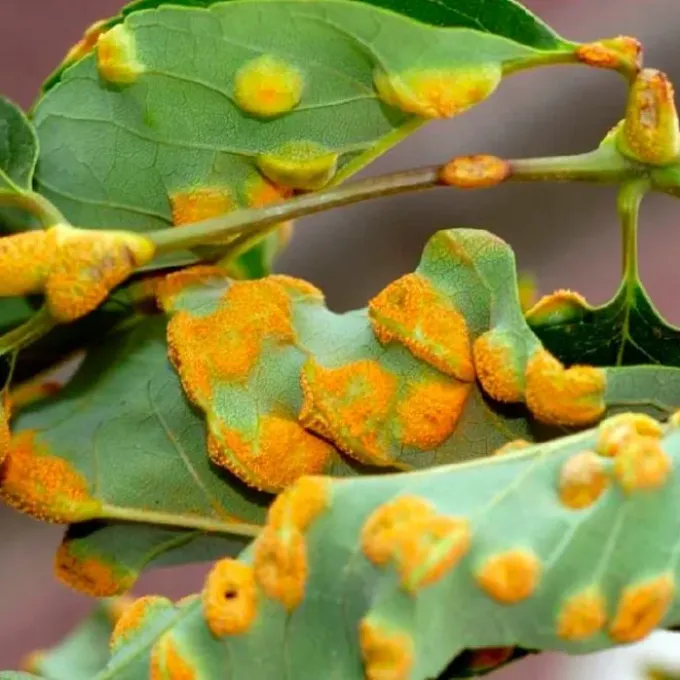
The primary symptom involves the appearance of chlorotic spots on the underside of leaves, which eventually develop into characteristic rust-colored or orange pustules.
These pustules, known as uredinia, contain masses of spores that break through the plant epidermis, often giving the surface a powdery, dusty texture.
As the infection progresses, affected tissues turn yellow and then necrotic, leading to premature leaf drop and the stunting of the overall plant growth.
Stem and petiole infections appear as elongated lesions that disrupt the transport of water and nutrients throughout the plant's vascular system.
In severe cases, the plant may show visible signs of dehydration and structural deformity, significantly reducing its aesthetic or commercial value.
Pathogen
The causative agent of this disease is the microscopic fungus Puccinia melampodii, which belongs to the Basidiomycota division. As an obligate parasite, it relies entirely on the host plant to complete its biological cycle.
The pathogen develops an extensive mycelium within the plant's intercellular spaces. By forming haustoria, it extracts essential nutrients directly from the host cells, weakening the plant's overall vitality.
The fungus produces various types of spores that allow it to reproduce rapidly and spread across plant populations through air currents and water splashes.
Its lifecycle is highly specialized, allowing the fungus to persist in dormant stages within plant debris, waiting for optimal conditions to trigger a new infection cycle.
The fungus's ability to mutate and adapt makes it a persistent challenge for plant health, requiring consistent management efforts to keep it under control.
Conditions for development
High relative humidity is the most critical environmental trigger for Puccinia melampodii, as it provides the necessary moisture for spore germination.
The optimal temperature range for the development of this fungus is between 18 and 25 degrees Celsius, matching the active growing season of most host plants.
Surface moisture from dew, rain, or overhead irrigation serves as the perfect medium for spores to attach and penetrate the plant's outer layers.
Crowded plantings with poor air circulation create a microclimate that traps humidity, greatly accelerating the infection process and spore distribution.
Plants under nutrient stress, particularly those with excessive nitrogen fertilization, are more susceptible to the fungal invasion due to their softer, more permeable tissues.
Why it matters
The most significant damage is the reduction of the photosynthetic leaf area, which limits the plant's ability to produce energy and maintain its growth cycles.
Infected plants become more vulnerable to environmental stresses, including heat and drought, as their vascular health is compromised by the fungal mycelium.
For ornamental crops, the disease causes severe aesthetic damage, making them unfit for sale or display due to the unsightly necrotic spots and distorted foliage.
Economic losses can be substantial in agricultural settings, where decreased seed weight and reduced crop vigor directly affect total harvest yields.
Without proper intervention, the disease can spread rapidly, leading to complete failure of the crop in a relatively short time frame.
Protection
Preventative management starts with selecting disease-resistant cultivars, which is the most effective long-term strategy for minimizing rust impact.
Sanitation practices, such as the removal and destruction of fallen leaves and crop residues, are essential to eliminate the primary sources of fungal inoculum.
Systemic fungicides are recommended for active control, as they can penetrate plant tissues to eradicate developing mycelium and protect healthy growth.
Cultural modifications, such as improving spacing and switching from overhead irrigation to drip irrigation, help reduce leaf moisture and inhibit fungal growth.
- Ensure proper site selection to avoid humid pockets.
- Monitor plants weekly for the first signs of pustules.
- Apply balanced fertilization to strengthen plant cell walls.
Discussion
No discussions yet — be the first.