
Massalongia
Massalongia
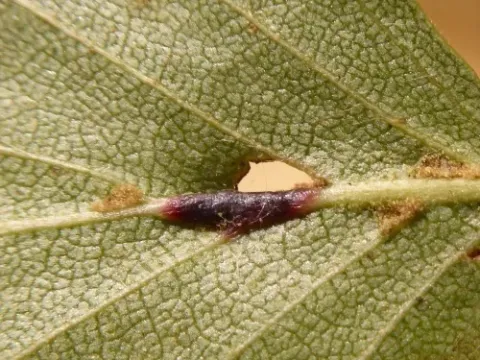
The primary symptom of Massalongia infestation is the appearance of characteristic galls or swellings on the leaves of host plants.
What the section contains
Massalongia
These galls are created as an abnormal growth response to the presence of larvae embedded within the leaf tissues.
Initially, these swellings are light green or yellowish, later turning reddish or brown as the larvae develop inside.
When inspecting the underside of the leaf, one can often find small depressions corresponding to the sites of larval activity.
Severe infestations cause significant leaf distortion, curling of the margins, and premature senescence or yellowing of the foliage.
The agent commonly referred to in this context is the gall midge known as Massalongia rubra.
It is classified not as a fungal pathogen, but as a phytophagous insect that causes localized morphological changes in plants.
The adult midge is a tiny dipteran that lays its eggs inside the young developing leaf tissue.
The larvae secrete substances that manipulate the plant's cell division, forcing it to form a protective gall structure.
The biology of this pest is highly specialized, relying on the host plant to provide both shelter and nutrition throughout the larval stage.
Massalongia thrives during periods of active shoot growth, typically in the spring and early summer seasons.
High humidity and moderate temperatures are the key environmental triggers that favor the emergence and activity of the midges.
Plantations with poor air circulation and dense canopy structures are highly susceptible to becoming breeding grounds for the pest.
The accumulation of plant debris near the base of the bushes creates ideal overwintering conditions for the pupae.
Lack of proper field sanitation allows the population to sustain itself and expand year after year.
The major impact on the plant is the impairment of photosynthesis due to the massive distortion of the leaf surface area.
Plant vitality is reduced, making the host more prone to stress and less capable of producing a high-quality yield.
The nutrient transport system of the plant can be affected when leaves are heavily compromised by the gall formation.
Weakened plants are significantly more vulnerable to secondary opportunistic fungal and bacterial infections.
In uncontrolled environments, the pest can lead to a steady decline in the overall vigor and productivity of the entire plantation.
Effective prevention starts with rigorous field sanitation, specifically the removal and destruction of fallen leaves in autumn.
Cultivating the soil between rows in early spring helps to bury or destroy pupating insects, limiting the next generation.
Mechanical removal of infested leaves during the early stages of gall development is a highly recommended non-chemical control measure.
Where necessary, selective application of insecticides during the adult flight period can reduce population pressure significantly.
Maintaining proper spacing between plants ensures better air movement, which acts as a deterrent to the colonization by gall midges.