
Massalongia carnosa
Massalongia carnosa
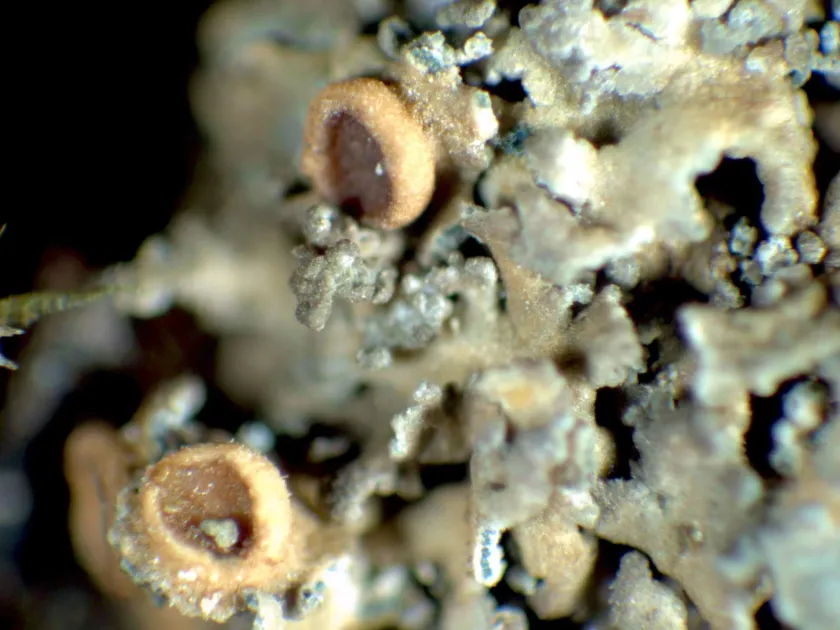
Description
Pathogen
Massalongia carnosa is a specialized lichenized fungus belonging to the Peltigeraceae family. It functions as a complex symbiotic entity, integrating fungal filaments with Nostoc cyanobacteria to thrive in challenging environments.
In agronomic terms, it is important to clarify that this organism is not a plant pathogen. It does not infect or cause disease in agricultural crops, and therefore, it requires no chemical control or intervention in farming practices.
The organism's biology is characterized by a fleshy, lobed thallus structure, which gives the species its name. This morphology is optimized for moisture retention in cold or temperate forest conditions.
As a non-pathogenic inhabitant of natural landscapes, it serves as a component of the local microbiota. Its presence is often indicative of stable, undisturbed ecological conditions where biodiversity is well-maintained.
Scientific interest in this species lies in its taxonomy and its role as an air quality bioindicator, as lichenized fungi are highly sensitive to sulfur dioxide and other pollutants.
Conditions for development
Massalongia carnosa thrives in environments characterized by high humidity and cool temperatures. It is commonly found in shaded areas where consistent moisture levels support the activity of the photobiont component.
The preferred habitats include bryophyte-covered rocks, damp soil, or the bases of old-growth trees. It relies heavily on a stable microclimate to maintain its metabolic functions and reproductive cycles.
The spread of this fungus is facilitated by the dispersal of spores or vegetative fragments, which require stable, non-disturbed substrates to colonize effectively over time.
Environmental stability is the primary factor limiting the distribution of the species. Any significant changes in humidity or air purity often lead to the decline of local populations.
Since the species is ecologically harmless to cultivated crops, there are no control or eradication protocols associated with its life cycle, reinforcing its status as a neutral biological entity in the field.
Discussion
No discussions yet — be the first.