
Massaria canker
Massaria inquinans
The disease is caused by the ascomycete fungus Splanchnonema platani, formerly known as Massaria inquinans, which is a common pathogen of plane trees.
What the section contains
Massaria canker
This fungus acts as a necrotrophic pathogen, colonizing the bark and cambium layers of twigs and branches, leading to tissue death.
The lifecycle of the fungus involves the formation of fruiting bodies called ascostromata, which appear as black pustules under the bark surface.
Once the bark is breached, the fungus produces spores that can be easily spread by rain splash or wind currents to neighboring branches.
The mycelium grows within the woody tissues, slowly disrupting vascular transport and causing the branch to die off over time.
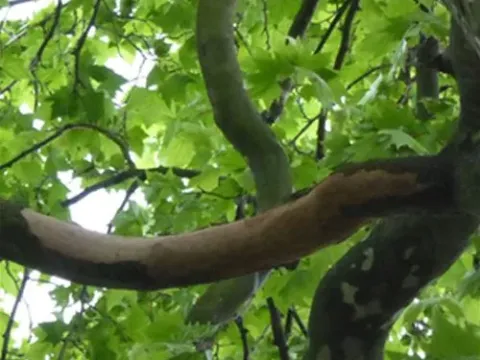
The primary symptom is the appearance of elongated, reddish-brown to black lesions on the upper side of the affected branches.
The bark in the infected areas becomes sunken, eventually cracking and peeling, which gives the branch a characteristic mottled appearance.
Foliage on affected branches may show premature yellowing and wilting, often leading to distinct patterns of crown dieback.
Tiny, black, fruit-like fungal structures can be observed breaking through the bark surface, indicating the active sporulation phase.
In advanced cases, the wood underneath the bark shows signs of decay, making the branches brittle and prone to breakage.
High levels of humidity and frequent rainfall are critical environmental factors that promote the activation and spread of the fungus.
Trees under abiotic stress, such as drought or soil compaction, are significantly more susceptible to infection by this pathogen.
Mechanical damage to the bark or incorrect pruning cuts provide entry points for the fungal spores to colonize the tree.
Poor crown management, leading to high density and low airflow, creates a moist microclimate that favors fungal development.
Moderate temperatures ranging from 15°C to 25°C are ideal for the rapid growth of the mycelium during the growing season.
Massaria canker is a significant concern for urban forestry, as it leads to widespread branch dieback in plane tree populations.
The aesthetic value of the trees is severely diminished, often requiring extensive crown thinning to remove dead or dying branches.
The most dangerous aspect is the risk of falling branches, which poses a safety hazard to pedestrians and infrastructure in public areas.
Over time, recurring infections can weaken the entire tree structure, leading to premature tree decline and death.
The management costs associated with hazard mitigation and maintenance are substantial for municipal arboriculture departments.
Effective management requires prompt removal of symptomatic branches, cutting back into healthy wood to ensure all infection is removed.
Sanitation is paramount; all infected material must be pruned, collected, and destroyed to reduce the local inoculum load.
Tools must be disinfected with appropriate agents between cuts on different branches to avoid mechanical transmission of the fungus.
Improving the tree's general vigor through proper irrigation and soil management helps the plant defend itself against further invasion.
- Regular inspections of tree crowns for lesions.
- Proper pruning techniques to avoid unnecessary wounding.
- Disinfection of pruning equipment.
- Monitoring of tree health during drought periods.