
Leveillula clavata
Leveillula clavata
Leveillula clavata is a fungal pathogen belonging to the Erysiphales order, which causes a specific type of powdery mildew. Unlike surface-dwelling mildews, this fungus is an endoparasite, meaning its mycelium grows primarily within the leaf tissue.
What the section contains
Leveillula clavata
The fungus invades the host plant through the stomata, utilizing the internal space for mycelial development. This allows the pathogen to extract nutrients from the plant's internal cells while remaining protected to some extent by the leaf epidermis.
During the reproductive phase, the fungus produces conidiophores that emerge through the stomata to release airborne conidia. These spores are responsible for the rapid spread of the disease across fields or greenhouses.
To survive adverse conditions, Leveillula clavata produces cleistothecia, which serve as overwintering structures. These fruiting bodies can persist in soil, plant debris, or greenhouse structures until the next growing season.
The biological nature of this fungus allows it to adapt to various climates. It poses a significant threat to a wide range of horticultural and field crops, requiring specialized management strategies.
The initial symptoms are characterized by chlorotic, pale yellow spots on the upper leaf surface. These spots often show an angular pattern, bounded by leaf veins, as the mycelium develops inside the tissue.
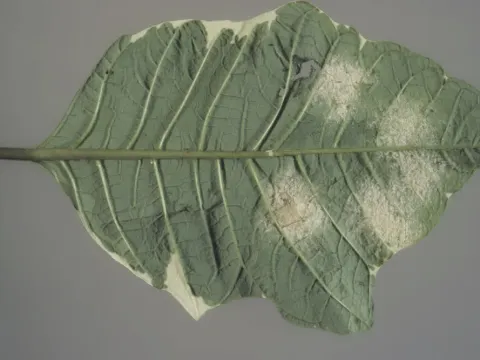
On the underside of the leaf, a white, powdery fungal growth appears. This corresponds to the conidial sporulation of the fungus emerging from the stomata, though it may appear less dense than other powdery mildew species.
As the infection progresses, the chlorotic spots become necrotic and dry out. This tissue death can lead to leaf curling, premature yellowing, and eventually, the shedding of leaves from the lower canopy upwards.
In severe infections, the plant exhibits signs of significant stress. Photosynthesis is drastically reduced, leading to stunted growth, weakened stalks, and a notable decrease in both fruit size and quality.
- Yellow chlorotic leaf spots
- White fungal growth on leaf undersides
- Premature leaf drop
- Tissue necrosis and leaf senescence
The development of Leveillula clavata is favored by warm weather with alternating humidity levels. Temperatures ranging from 20 to 25 degrees Celsius are considered optimal for rapid mycelial growth and sporulation.
In greenhouse settings, poor air circulation and high relative humidity are primary factors that accelerate the epidemic. Stagnant air allows spores to land and germinate on the leaf surface more effectively.
High nitrogen levels in plant tissue can make the host more susceptible to the pathogen. Conversely, an optimal mineral balance, particularly adequate potassium, helps the plant maintain stronger physiological defenses.
Infected plant debris left in the field from previous seasons acts as the primary inoculum. Because the pathogen can persist through winter in various forms, sanitation is essential for managing the disease cycle.
Plant density plays a critical role in disease spread. Densely spaced crops create a favorable microclimate and facilitate the contact of foliage, which speeds up the horizontal spread of the infection throughout the crop.
The primary harm is the destruction of the plant's photosynthetic capacity. When a significant portion of the foliage is affected, the plant cannot produce enough sugars, resulting in poor development of fruits and seeds.
The premature loss of leaves exposes fruits to direct sunlight, which can cause physiological damage and sunburn. Furthermore, the overall vitality of the plant is compromised, making it less resilient to other stresses.
Economic losses are often severe due to the reduction in marketable yield. Infected plants often produce smaller fruits, which fail to meet quality standards and carry a lower commercial value.
The weakened state of the plant tissue also predisposes the crop to secondary infections by other fungi or bacteria. This synergistic effect can lead to the rapid decay of plant parts and total loss of the harvest.
Management of the disease adds to the cost of production. Farmers must invest in frequent fungicide applications and extra labor for sanitation, which reduces the overall profitability of the agricultural operation.
Integrated pest management is the most effective way to handle Leveillula clavata. A robust program starts with crop rotation and the thorough removal or deep plowing of all plant residues after harvest.
Fungicides such as triazoles and strobilurins are highly effective for managing outbreaks. It is crucial to apply these chemicals preventatively or at the very first signs of disease to minimize mycelial spread.
Environmental control in greenhouses is vital. Maintaining low humidity and ensuring efficient ventilation effectively inhibits spore germination and restricts the pathogen's ability to infect new leaf tissue.
Whenever possible, growers should select resistant or tolerant crop varieties. This practice significantly lowers the reliance on chemical inputs and provides a more sustainable long-term solution.
Routine scouting and early detection are essential. Identifying isolated infection points allows for targeted management or rogueing, which can prevent a localized issue from becoming a widespread epidemic.