
Liberty cap
Psilocybe semilanceata
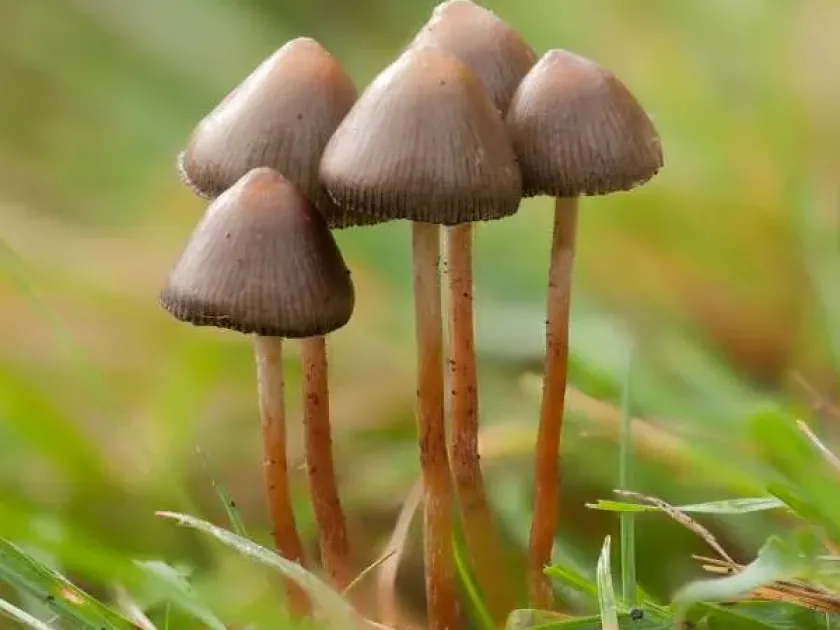
Description
Pathogen
The fungus Psilocybe semilanceata, commonly known as the liberty cap, belongs to the family Hymenogastraceae. From an agronomic perspective, it is not a plant pathogen.
This organism is a saprotroph, meaning it obtains nutrients from decomposing organic matter. It does not infect or cause disease in living agricultural crops or ornamental plants.
Its mycelium grows in the root zones of grasses, often found on permanent pastures or meadows, but it maintains a non-parasitic relationship with the surrounding vegetation.
The fungus is essential for natural nutrient cycling, as it contributes to the decomposition of organic debris, thereby enriching the soil with humus.
Agronomists do not consider this species a pest or a causative agent of any crop diseases, and therefore, it does not require any phytosanitary intervention.
Conditions for development
The growth of fruiting bodies of Psilocybe semilanceata is strictly dependent on specific environmental conditions, particularly high soil moisture and cool air temperatures.
The species prefers acidic soil types rich in organic matter, such as old grasslands, pastures, and uncultivated meadows, where a thick layer of vegetation debris exists.
It thrives in environments that are rarely subjected to mechanical disturbances like plowing or harrowing, which disrupts the delicate network of its mycelium.
Autumn is the peak season for its development, provided that local precipitation levels are sufficient to maintain consistent moisture at the soil surface.
Poor soil aeration and persistent high humidity are strong indicators that the local environmental conditions may support the presence of this fungal species.
Why it matters
The species poses no threat to agricultural productivity. It does not cause root rot, leaf spots, or any other systemic illness in cultivated plant species.
Because it is a saprotroph, it does not compete for nutrients with crops, nor does it inhibit their growth through root exudates or toxins.
There is no economic damage associated with this fungus; it does not degrade the quality of crops or render them unsafe for consumption.
In fact, its role in breaking down dead plant material can be considered beneficial in some ecological contexts, as it speeds up the natural degradation process.
The presence of this fungus is considered agronomically irrelevant, and it does not necessitate any form of monitoring or reporting in commercial farming.
Protection
No control measures are necessary for this fungus because it is not an agricultural pathogen and causes no harm to farming operations.
If its presence is undesirable in specific areas, such as high-traffic pastures, standard pasture management techniques are sufficient to limit its growth.
- Improving field drainage to prevent waterlogging of soil surfaces.
- Regular mowing or grazing management to reduce the accumulation of decaying organic matter.
- Liming the soil, which increases pH levels and makes the environment less suitable for this acid-loving fungus.
- Maintaining soil health through appropriate nutrient management to ensure vigorous grass growth.
The use of chemical fungicides against this species is not recommended, as it is environmentally irresponsible and ineffective for non-target saprotrophs.
Effective management of pasture quality is the best approach to ensuring a balanced ecosystem where saprotrophic fungi do not proliferate excessively.
Discussion
No discussions yet — be the first.