
Lichenomphalia
Lichenomphalia
Description
Symptoms
The most visible signs of Lichenomphalia are the thallus crusts on the soil surface, which usually appear as grey-green or greenish patches spread across the ground.
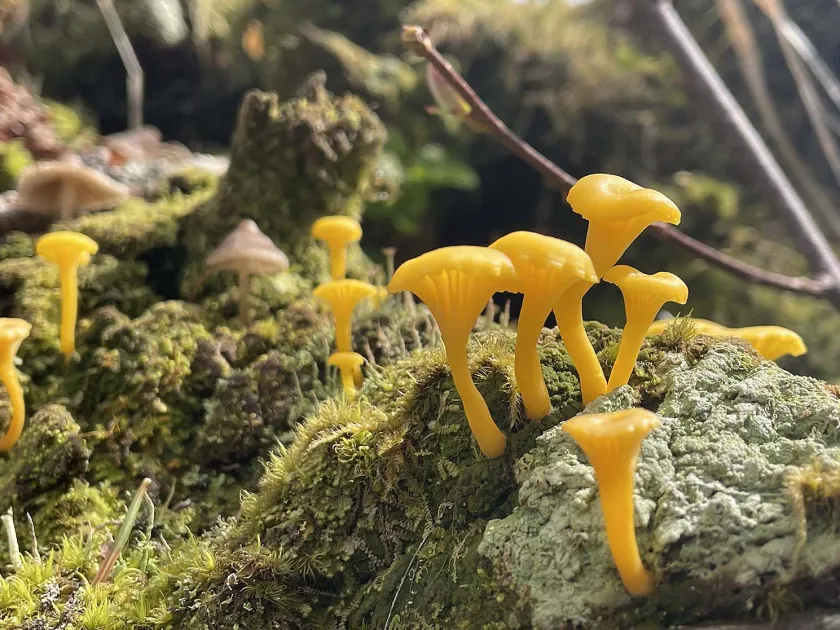
During favourable conditions, small, funnel-shaped mushrooms (fruiting bodies) emerge from these patches. These are the most distinct identification feature of the genus.
The thallus can appear as a thin, leathery layer that binds to soil particles, sometimes covering mossy areas or damp soil near irrigation channels.
Presence of these organisms is often detected in patches where the vegetation cover is sparse or where moisture tends to accumulate after rain.
Identification can also be confirmed by the texture of the fungal growth, which remains relatively stable and does not show the typical rapid necrosis seen in fungal infections of leaves or stems.
Pathogen
Lichenomphalia is a genus of basidiomycetous fungi that form a symbiotic relationship with algae to create a lichen. It is unique in agricultural settings because it acts more like a soil crust organism than a typical pathogenic fungus.
The organism consists of a fungal mycelium and algal cells, which together create a thallus capable of surviving in various environments. It is often found in sites with moist, undisturbed soil.
Spore dissemination occurs via basidiospores, which are distributed by wind. Once these spores land on a suitable substrate, they establish new colonies by integrating with local algae.
Unlike traditional phytopathogens that infect internal plant tissues, Lichenomphalia primarily affects the soil interface, modifying the micro-environment where seeds germinate.
Its biology is specialized for low-nutrient, high-moisture conditions, making it a natural competitor in certain agro-ecosystems where standard crop management has been reduced.
Conditions for development
The primary environmental driver for Lichenomphalia is persistent high surface moisture. Areas with poor drainage are most susceptible to colonization.
Adequate sunlight is required for the symbiotic algae within the lichen, meaning that open, unshaded areas of fields are at higher risk of development.
Reduced tillage practices allow these lichenized fungi to persist and colonize the surface, as frequent mechanical soil disruption prevents the establishment of a stable thallus.
Soil pH plays a significant role in their distribution, with many species preferring slightly acidic soil environments which are often found in poorly maintained agricultural zones.
Minimal competition from other soil-covering plants creates an environment where Lichenomphalia can spread effectively without being outcompeted.
Why it matters
The main agricultural concern is the formation of a physical crust on the soil surface, which limits soil aeration and inhibits the exchange of gases for seeds and seedlings.
This fungal layer can also act as an insulator, delaying the warming of the soil in early spring and potentially slowing down crop emergence and initial development.
In addition, the presence of Lichenomphalia is often a biological indicator of poor drainage, which can itself cause root suffocation and increase the risk of other soil-borne diseases.
By competing for surface area, it may hinder the establishment of dense, uniform crop stands, particularly in low-lying spots of a field.
While not a direct tissue-killing parasite, its presence reduces the overall health and optimal fertility of the affected soil surface layers.
Protection
Mechanical tillage is the most effective control measure. Disrupting the soil surface breaks the thallus of the lichen and inhibits its capacity to photosynthesize.
Improving field drainage is critical to reducing the moisture levels required for the long-term survival of Lichenomphalia colonies.
Soil liming can effectively shift the pH levels, making the environment less favorable for the growth and spread of these fungal lichen associations.
Crop rotation and increasing plant density help to shade the soil surface, reducing the sunlight available for the algal partner within the lichen.
Chemical control with fungicides is generally not recommended or cost-effective, as the organism is easily suppressed by standard agronomic practices.
Discussion
No discussions yet — be the first.