
Lichenomphalia umbellifera
Lichenomphalia umbellifera
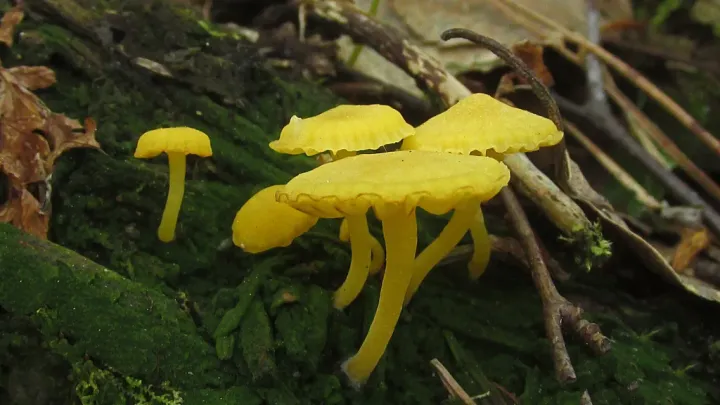
Description
Pathogen
Lichenomphalia umbellifera is a specialized lichenized fungus that forms a symbiotic relationship with algae. It is biologically impossible to categorize this organism as a plant pathogen.
The fungus component, which belongs to the Basidiomycota phylum, lives in symbiosis with algae, essentially creating a functional lichen. It does not penetrate plant cell walls or extract nutrients from crop hosts.
There is no evidence or scientific basis to classify this organism as a disease of crops, as it lacks the physiological mechanism to harm living vegetation.
In mycological terms, it is recognized as a non-pathogenic species that naturally inhabits decaying organic matter, peat, or soil surfaces rich in algae.
Farmers often mistake the fungal fruiting bodies for signs of disease; however, their presence is purely ecological and indicates environmental moisture rather than a plant pathology.
Conditions for development
The organism thrives in environments with consistent moisture, such as damp forest floors, mossy areas, and acidic, nutrient-poor soils that have remained undisturbed.
Development is heavily dependent on the presence of suitable algal partners, as the fungus requires a stable symbiosis to survive and produce its characteristic small mushroom-like structures.
Climate factors such as high humidity and moderate temperatures are essential, as dry conditions lead to the rapid desiccation of the lichen complex.
Agricultural intervention, such as tillage, soil compaction, and the application of nitrogenous fertilizers, typically inhibits the growth of these lichenized fungi.
- Requires high atmospheric humidity.
- Prefers acidic substrates (pH < 6.0).
- Sensitive to chemical fertilizers and herbicides.
- Usually found in stable, non-cultivated habitats.
- Displays slow growth cycles typical of lichen communities.
Discussion
No discussions yet — be the first.