
Leveillula duriaei
Leveillula duriaei
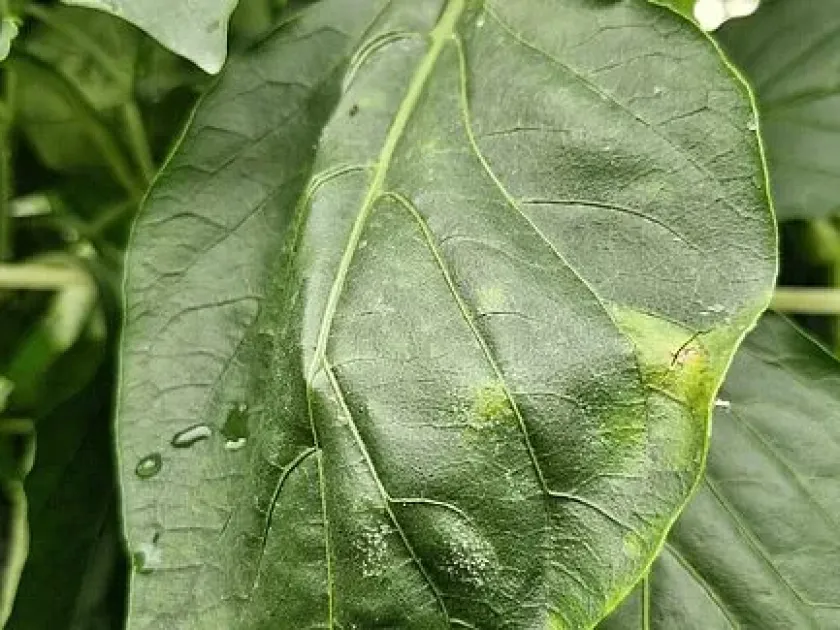
Description
Symptoms
The early symptoms of Leveillula duriaei infection appear as chlorotic spots on the upper side of the leaf, which gradually turn yellow and undergo necrosis.
Unlike typical powdery mildew species, the characteristic white fungal growth (mycelium) is often sparse or confined to the underside of the leaf, complicating early diagnosis.
As the disease progresses, leaves begin to wither and drop prematurely, starting from the lower parts of the plant and moving upwards, significantly reducing photosynthetic capacity.
Stems and petioles may exhibit brown spots, often accompanied by a subtle grey layer of spores, especially under high humidity conditions.
Severe infestations cause plant stunting, malformed flowers, and significant reductions in fruit quality, ultimately leading to substantial yield losses.
Pathogen
Leveillula duriaei is a specialized fungal pathogen belonging to the Erysiphales order, known for its unique endoparasitic mode of development within the host plant.
Unlike most powdery mildews, the mycelium of this fungus develops primarily within the leaf tissue, specifically in the intercellular spaces of the mesophyll, entering through the stomata.
Reproduction is carried out via conidia, which are produced on specialized conidiophores that emerge through the stomatal openings of the host plant leaves.
The fungus maintains its life cycle through both an asexual stage (conidia) and a sexual stage, forming cleistothecia that allow the pathogen to survive harsh environmental conditions.
Its broad host range, which includes various Asteraceae and Solanaceae species, facilitates the persistence of the pathogen in agricultural ecosystems throughout the year.
Conditions for development
The development of Leveillula duriaei is strongly favored by moderate temperatures and sufficient air humidity during the plant's active growth period.
Poor ventilation and high-density planting conditions promote the accumulation of moisture, which is essential for the germination of conidia and successful infection.
Wind-borne conidia facilitate the rapid spread of the disease between adjacent fields and within the same crop, allowing for fast epidemic outbreaks.
The presence of wild hosts or weeds near crop fields provides an ideal reservoir for the pathogen to survive between growing seasons.
Extended periods of dew or high relative humidity create the perfect microclimate for the fungus to sporulate and penetrate new plant tissues.
Why it matters
The primary economic impact arises from a sharp decline in crop productivity, as infected plants struggle to maintain necessary physiological processes.
Loss of photosynthetic surface area leads to delayed fruit ripening, lower sugar content, and overall poor quality of the final agricultural output.
Stressed plants become highly vulnerable to secondary infections, including bacterial and other fungal pathogens, which can completely compromise the harvest.
Farmers face significant financial pressure due to both the loss of yield and the increased costs associated with repeated fungicide applications.
Infected produce often exhibits reduced shelf life and poor marketability, resulting in direct losses for the agricultural producer.
Protection
Effective management requires a comprehensive strategy that integrates cultural, physical, and chemical control methods to minimize the pathogen's impact.
Sanitation practices, such as the deep burial of crop residues and thorough cleaning of the field, are critical to eliminate overwintering sources of the fungus.
The selection of disease-resistant or tolerant crop varieties is a cornerstone of integrated pest management and provides the most sustainable defense.
Chemical intervention should involve the timely application of systemic fungicides, rotating between different chemical classes to prevent the development of resistance.
- Implementing strict crop rotation schedules
- Managing surrounding weeds to remove hosts
- Optimizing nitrogen and potassium fertilization
- Regular field scouting for early detection
Discussion
No discussions yet — be the first.