
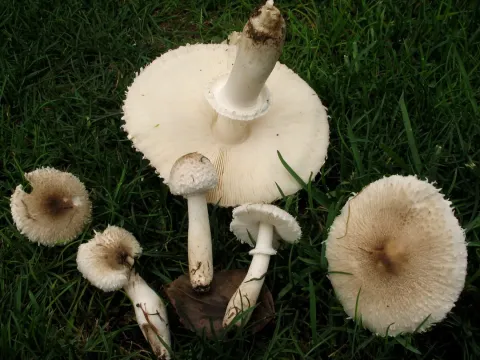
Leucoagaricus macrorrhizus
Leucoagaricus macrorrhizus
Leucoagaricus macrorrhizus is a basidiomycete fungus within the Agaricaceae family. It is vital to state that it is not a plant pathogen and does not cause plant diseases.
What the section contains
Leucoagaricus macrorrhizus
This species functions as a saprotroph, which means it obtains nutrients by decomposing dead organic matter rather than attacking living plant tissues.
The fungus is characterized by its long, rooting stem which allows it to anchor deeply into the soil or composting substrates.
Its mycelium is commonly found in nutrient-rich, organic-heavy environments, playing a natural role in the ecosystem as a decomposer.
In agronomy, it is observed as a biological component of healthy, fertile soils rather than a threat to crop health.
Development of Leucoagaricus macrorrhizus requires abundant organic matter and stable moisture levels within the soil or substrate.
It thrives in temperature ranges between 20°C and 25°C, making it active during typical growing seasons in greenhouses or gardens.
Well-aerated soil structures are preferred, allowing for the rapid expansion of the fungal network across available organic layers.
Spores of the fungus are dispersed via air currents and water, facilitating colonization in areas with similar environmental conditions.
The presence of this fungus in industrial settings often points to incomplete pasteurization of mushroom compost or high organic loading in the soil.
Leucoagaricus macrorrhizus poses no threat to crop yield because it does not parasitize living plant structures or interfere with plant health.
In commercial mushroom cultivation, it can act as a weed competitor, potentially competing for nutrients if the substrate quality is compromised.
Large-scale colonization by its mycelium might slightly alter the physical properties of the soil, which could be inconvenient for potted container plants.
Misidentifying this benign saprotroph as a pathogen leads to unnecessary chemical treatments, which can harm beneficial soil microorganisms.
The overall impact on agriculture is neutral, as it generally performs the task of breaking down organic matter back into the soil system.
No chemical control measures are necessary because the species is not pathogenic and causes no harm to agricultural production.
Sanitation practices, such as removing excess plant debris from greenhouse floors, are sufficient to manage its population if desired.
Improving soil drainage and ventilation effectively creates conditions that limit the expansion of the fungal mycelium.
Thermal sterilization of growing media is the primary method for preventing the introduction of unwanted fungi in professional farming.
Manual removal of fruiting bodies, if they appear in aesthetic landscapes or nurseries, is usually the only action required to limit their presence.