
Lethariella
Lethariella
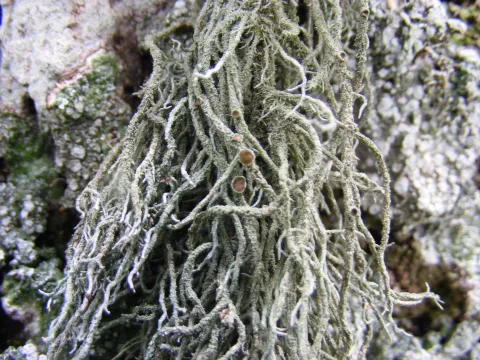
Lethariella is a genus of shrubby lichens characterized by elongated, branched, and often hair-like structures. They typically display yellowish-green to brownish hues, standing out against the tree bark.
What the section contains
Lethariella
The primary sign of their presence is the appearance of dense, beard-like growths on branches and stems. These colonies can cover significant portions of a tree if left undisturbed.
Unlike pathogenic fungi, these organisms do not cause localized tissue necrosis. However, they create a visual layer that masks the natural texture and color of the tree bark, often signaling a lack of maintenance.
Observers might notice that the branches appear muffled or fuzzy. While the lichen itself is not a destructive parasite, its extensive accumulation is a strong indicator of low vitality in the host tree.
Distinguishing them from true bark diseases is straightforward: lichens sit on the surface and can be detached easily without damaging the underlying cambium or woody tissue of the tree.
Biologically, Lethariella is not a plant disease but a genus of lichen from the Parmeliaceae family. It is a symbiotic organism comprised of fungal partners and photosynthetic algae or cyanobacteria.
These organisms are not pathogens; they do not extract nutrients from the host plant's internal sap. They function as epiphytes, meaning they use the tree exclusively as a physical substrate for anchoring.
The interaction is commensalistic in nature. The lichen thrives by capturing moisture and minerals from the atmosphere, independent of the tree's metabolic processes for its primary nutrition.
Dispersal occurs via spores or vegetative fragments carried by wind. Once they land on a suitable textured surface like tree bark, they begin to colonize, provided the local microclimate is sufficiently humid.
The fungal component forms the structural matrix, while the photosynthetic component produces energy. This symbiosis allows them to thrive in environments where independent plants might struggle due to limited soil resources.
Lethariella requires high atmospheric humidity and relatively clean air to proliferate. They are sensitive bioindicators, and their presence is often linked to areas with low levels of air pollution.
Shaded, stagnant environments within the tree canopy are ideal for their development. Poor pruning practices that lead to dense, light-deprived foliage create a perfect microclimate for these lichens to flourish.
Rough, mature bark with numerous crevices is the preferred substrate. These cracks collect organic debris that provides initial anchorage and trace minerals for the lichen to establish its hold.
Frequent fog, mist, or prolonged rainfall periods significantly accelerate the colonization process. In arid or high-sunlight regions, their survival rate is much lower due to desiccation risks.
Lack of proper tree maintenance, such as neglecting crown thinning, keeps the interior of the tree damp. This moisture retention is essential for the lichen's metabolic activity and expansion.
Although not a primary parasite, excessive lichen coverage can act as a physical barrier. This may impede gas exchange through the lenticels of the bark, potentially slowing down the tree's overall respiration.
The lichen layer acts as a moisture trap, keeping the bark wet for longer periods after rain. This constant humidity creates a favorable environment for wood-decay fungi and secondary opportunistic infections.
In cases of extremely dense growth, the added weight of the lichen during winter or stormy weather can increase mechanical stress on branches, leading to breakage, especially in brittle or aged wood.
The presence of significant lichen cover may hide the early symptoms of more serious health issues, such as cankers or pest infestations, delaying crucial diagnosis and treatment.
Aesthetically, heavy colonization makes trees appear neglected, which is undesirable in landscape design and ornamental gardening, necessitating prompt removal to restore the tree's appearance.
The most effective long-term control measure is regular crown pruning. Thinning the canopy increases air circulation and light exposure, effectively drying out the bark and making it unsuitable for lichens.
Mechanical removal using a stiff-bristled brush is highly effective for cleaning trunks. Care must be taken to remove the lichen without scraping or scarring the live bark tissue beneath.
Applying a lime wash or a mild copper-based fungicide spray during the tree's dormant season can significantly reduce lichen populations by altering the bark's pH and surface chemistry.
Improving the tree’s overall health through fertilization and proper irrigation helps the tree grow faster, often naturally shedding lichen-covered bark as it expands.
- Regular inspection of the canopy for early colonization.
- Sanitary pruning of dead or heavily infested branches.
- Application of iron sulfate solutions as a cleaning agent.
- Maintenance of a clean tree base to regulate humidity.