
Letrouitia domingensis
Letrouitia domingensis
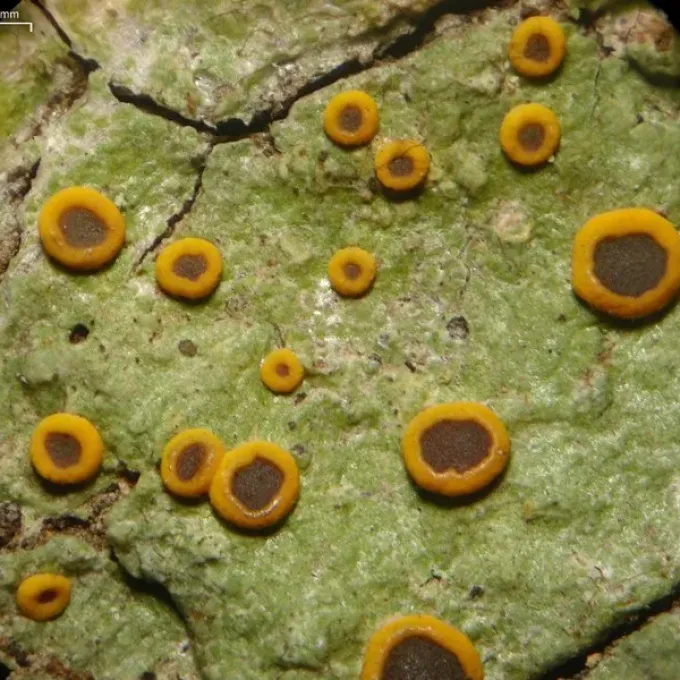
Description
Symptoms
The primary symptom is the appearance of patchy, crusty, or granular growths on the bark, which typically display bright orange or yellowish pigmentation.
These growths are usually concentrated in bark fissures, where they thrive due to the accumulation of organic dust and increased moisture levels.
In areas of heavy colonization, the bark may exhibit increased roughness or signs of premature shedding as the lichen structure expands.
The presence of these growths may coincide with weakened growth in specific branches, although the lichen itself is often a secondary inhabitant.
Close inspection reveals the minute, cup-shaped fruiting bodies that are diagnostic of the species when viewed with a magnifying lens.
Pathogen
Letrouitia domingensis is a species of crustose lichen belonging to the Letrouitiaceae family, often found growing on the bark of various woody plants.
Biologically, it is a symbiotic association between a fungus and algae, acting as an epiphyte rather than a parasitic pathogen that invades internal tissues.
The organism is identified by its distinctive orange or yellowish apothecia (fruiting bodies), which provide a stark contrast against the dark bark of trees.
Dispersal primarily occurs via wind-blown spores that colonize suitable substrates where surface moisture and moderate shade are present.
This lichen is highly sensitive to environmental quality, often flourishing in stable, humid environments that remain undisturbed by intense chemical exposure.
Conditions for development
Prolonged high humidity levels are essential for the active colonization and sustained growth of the lichen on the bark of trees.
Overcrowded orchards or gardens with poor air circulation create shaded, damp microclimates that are ideal for the development of lichen colonies.
Lack of regular trunk maintenance, such as cleaning and sanitation, allows organic material to accumulate, providing a nutrient source for the lichen.
Trees that are in a state of physiological stress or poor health are more susceptible to becoming hosts for various epiphytic organisms.
Minimal use of antifungal or maintenance sprays in a garden allows lichens to spread unchecked across the branches over several growing seasons.
Why it matters
While not a direct parasite, dense lichen cover can obstruct the natural respiration of bark, potentially hindering the tree's physiological processes.
The crusty surface creates an ideal microhabitat for various tree-dwelling pests, including mites and scale insects, which hide beneath the lichen layers.
Prolonged lichen colonization can alter the surface pH of the bark, which might negatively influence the surrounding microbial community.
The aesthetic value of trees in orchards or parks is significantly compromised, making the trees appear neglected and unhealthy to observers.
In extreme cases, the structural integrity of the bark may be slightly compromised, leading to premature aging of twigs and smaller branches.
Protection
Mechanical removal using soft brushes or plastic scrapers during the dormant season is the most effective and eco-friendly method for controlling lichen.
Whitewashing tree trunks with a lime-based mixture helps to disinfect the bark and create a hostile environment for spore germination.
Proper pruning practices that ensure adequate light penetration and airflow through the canopy remain the best long-term preventive measure.
Applications of ferrous sulfate in early spring can effectively suppress existing lichen colonies and inhibit the germination of new spores.
- Monitor tree trunks regularly for signs of spread.
- Perform dormant season sanitation and cleaning.
- Maintain optimal spacing between trees.
- Prioritize general tree health and vitality.
Discussion
No discussions yet — be the first.