
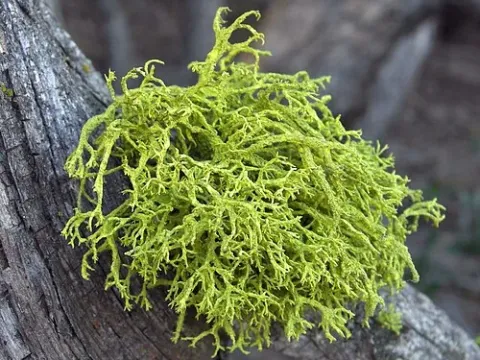
Letharia
Letharia
The organism associated with the term Letharia is Letharia vulpina, commonly known as the wolf lichen. It is a symbiotic organism consisting of a fungus and algae, categorized within the Lecanoromycetes class.
What the section contains
Letharia
Unlike parasitic fungi that actively penetrate host tissues, Letharia is an epiphyte. It uses the bark of conifers as a stable substrate for its growth, deriving its nutrients from the air and rain.
This species produces vulpinic acid, a chemical compound that provides the characteristic bright yellow-green pigmentation and functions as a defense mechanism against herbivory.
Letharia is highly specialized for high-altitude coniferous forests, thriving in cool, temperate environments where it can colonize both living and dead wood.
Biologically, it is a stable lichen species that does not cause systemic disease in trees, but its presence is often linked to the overall vitality of the host.
The primary symptom of Letharia colonization is the appearance of bright, fruticose (shrub-like) thalli on the bark, which stand out due to their distinct yellow-green or lemon-yellow hue.
The thallus is highly branched and lobed, growing into dense, bushy tufts that are firmly attached to the trunk and thick branches of coniferous trees.
In cases of heavy colonization, the lichen may cover large segments of the tree surface, masking the original texture and color of the bark.
A key identifying feature is the intensity of the coloration, which remains vibrant even in dry conditions, unlike many other lichen species that turn grey.
- Bright yellow-green bushy clusters.
- Strong adhesion to the bark surface.
- Predominant growth on old, mature conifers.
Letharia development is strongly correlated with cool, humid climates, frequently found in mountainous regions where fog and rainfall are consistent.
Atmospheric purity is a critical requirement for this lichen; it is extremely sensitive to sulfur dioxide and other air pollutants, serving as a bioindicator of healthy ecosystems.
Mature coniferous trees, such as pine, spruce, and larch, provide the best substrate for its growth due to the rough, stable surface of their aging bark.
Sufficient aeration and moderate light exposure are preferred, although it can adapt to various light conditions provided there is enough atmospheric moisture.
The growth rate of Letharia is relatively slow, meaning it takes several years for colonization to become visually prominent on the surface of the tree.
Letharia is generally considered harmless to a healthy, vigorous tree, as it does not feed on the tree's internal vascular system or tissues.
However, excessive growth can physically obstruct the lenticels of the bark, slightly inhibiting the gas exchange process essential for the tree's respiration.
In high-density colonies, the trapped moisture underneath the lichen might foster an environment that allows secondary fungal or bacterial pathogens to infect the bark.
For ornamental or high-value trees, the visual impact of heavy lichen coverage is often perceived as a sign of neglect, reducing the aesthetic appeal of the garden.
While the lichen itself is not the primary cause of tree death, its presence is a diagnostic marker suggesting that the tree may be growing too slowly or lacks optimal vigor.
Management of Letharia is usually not required unless it creates aesthetic issues or the tree is already stressed. Improving the tree’s overall health is the best preventative strategy.
Mechanical removal can be performed by gently brushing the bark with a stiff brush during damp conditions to detach the lichen without damaging the tree tissue.
Applying copper-based fungicides can help eradicate or prevent the establishment of lichen colonies on the trunks of valuable ornamental conifers.
Ensuring proper pruning to allow for better air circulation throughout the canopy can reduce the humidity levels that favor the growth of epiphytic lichens.
Regular fertilization and adequate watering cycles help maintain high bark vitality, which naturally limits the available space for lichen colonization.