
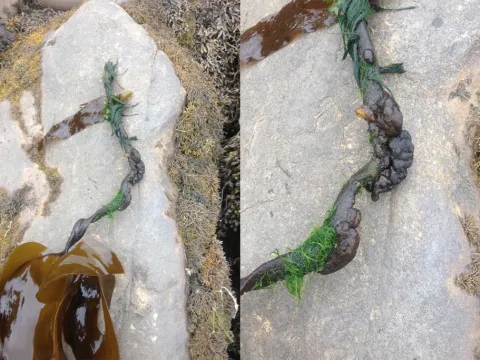
Lessonia nigrescens
Lessonia nigrescens
Lessonia nigrescens is a species of brown algae belonging to the order Laminariales and is not a plant disease pathogen.
What the section contains
Lessonia nigrescens
Commonly found along the rocky intertidal zones of Chile and Peru, it creates significant kelp forests that act as primary producers in marine ecosystems.
In agricultural science, Lessonia nigrescens is valued for its rich content of alginates, minerals, and growth-promoting hormones.
Extracts derived from this seaweed are widely used in the development of foliar fertilizers and soil conditioners to improve crop yields.
Its biological structure is highly adapted to high-energy wave environments, which allows it to thrive in the harsh conditions of the South Pacific.
The distribution of Lessonia nigrescens is primarily driven by cold ocean currents and the availability of stable, rocky substrates for attachment.
Optimal growth requires consistent nutrient upwelling, which provides essential minerals for rapid biomass accumulation.
Temperature fluctuations, particularly during El Niño events, can severely limit the growth and reproductive capacity of these algae.
Light availability in the intertidal zone is crucial for photosynthesis, though the species is well-adapted to variable light intensity.
Ocean currents play a vital role in spore dispersal, ensuring the expansion and maintenance of established kelp colonies along the coastline.
The species does not act as a pathogen for land-based agriculture, as it is strictly a marine organism.
The primary environmental concern relates to the over-harvesting of wild populations, which can lead to habitat loss for fish and crustaceans.
Reduced coverage of Lessonia nigrescens increases coastal erosion by decreasing the buffering effect of algae against wave force.
Climate change poses a risk to the species itself, as rising water temperatures threaten the survival of sensitive kelp communities.
There are no negative impacts on land crops resulting from the existence of this seaweed; rather, it is a beneficial natural resource.
Sustainable management of Lessonia nigrescens is achieved through strict regulation of harvesting activities and quotas.
Best practices dictate that only the thallus should be cut, leaving the holdfast intact to allow for rapid vegetative regeneration.
The establishment of marine protected areas helps to preserve the biodiversity of kelp forests and maintains the genetic pool of the species.
Commercial cultivation techniques are being developed to reduce reliance on wild harvesting and ensure a consistent supply for agricultural use.
Continuous ecological monitoring is essential to track the resilience of these kelp beds against both industrial harvesting and environmental shifts.