
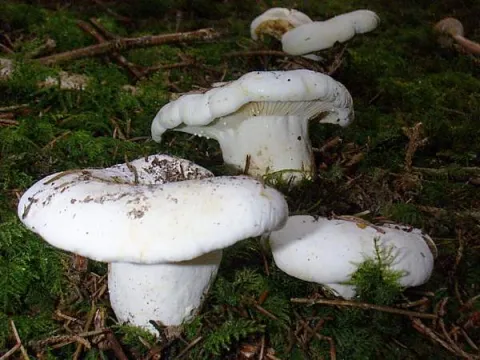
Fleecy milk-cap
Lactarius vellereus
The fleecy milk-cap, scientifically known as Lactarius vellereus, is not a plant pathogen and does not cause diseases in agricultural crops.
What the section contains
Fleecy milk-cap
It is a basidiomycete fungus belonging to the Russulaceae family, known for its mycorrhizal relationship with various tree species in forest environments.
Biologically, it functions as a decomposer and a symbiont, rather than a parasite, meaning it does not attack living tissues or cause plant necrosis.
As it does not infect plants, it is not classified as a disease-causing agent, and its presence in soil is considered a sign of healthy forest dynamics.
The fungus produces mycelium that integrates with root systems to improve nutrient uptake, providing ecological benefits rather than causing harm.
Lactarius vellereus thrives in moist, shaded forest areas, particularly where deciduous or mixed woodlands provide suitable host trees.
The fungus prefers acidic, humus-rich soil that retains enough moisture to support the development of extensive underground mycelial networks.
The appearance of fruit bodies is highly dependent on rainfall and moderate temperatures, typically occurring between mid-summer and early autumn.
High relative humidity is essential for the maturation of the cap, which features a distinct felty or velvety texture that characterizes the species.
Prolonged drought periods inhibit the growth of the fungus, leading to a temporary dormancy of the mycelium until conditions become favorable again.
The fruiting body consists of a large, robust cap, often off-white or cream in color, with a velvety surface that feels like felt or wool.
The gills are spaced out and run down the stem, exuding a white, acrid latex that turns slightly yellowish when dried upon exposure to air.
The stem is thick, hard, and relatively short, designed to support the substantial weight of the cap as it grows during the peak season.
Mature specimens often display a funnel-shaped cap with wavy, incurved edges that may be covered in fine hairs or velvety fibers.
A key diagnostic feature is the intense, burning taste of the flesh, which serves as a natural deterrent against many small forest invertebrates.
The fleecy milk-cap poses no threat to agriculture or horticulture, as it has no capability to infect or damage crops.
In terms of economic impact, there is no need for concern or intervention, as the fungus does not induce any pathogenic rot or decay.
Instead, it contributes to the forest ecosystem by breaking down organic matter and returning essential nutrients into the soil layer.
There is no risk of yield reduction in crops or ornamental plants associated with the natural occurrence of this fungal species.
The presence of this fungus in a landscape setting signifies stable soil health and a balanced micro-environment for local vegetation.
No protective or chemical control measures are required, as Lactarius vellereus does not act as a pest or a disease vector.
If the appearance of mushrooms is undesired in a garden, manual removal of fruit bodies is sufficient to keep the area clear.
Standard horticultural practices, such as maintaining proper drainage and preventing excess moisture, are effective for general landscape management.
Prophylactic fungicide applications are unnecessary and are strictly discouraged as they may disrupt the beneficial soil microbiome.
- Monitor soil moisture levels to ensure proper aeration.
- Manually pick and dispose of mushrooms if necessary for aesthetic reasons.
- Maintain garden hygiene by removing excess dead leaves and debris.