
Floccularia
Floccularia
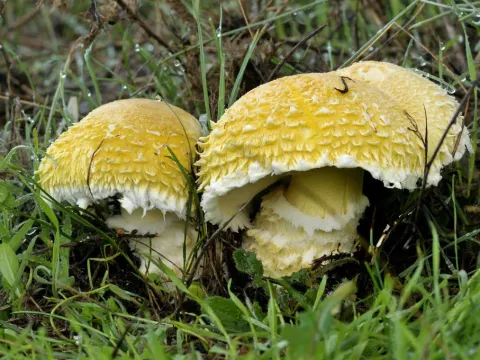
The causative agent of this disease is the basidiomycete fungus Floccularia luteovirens, which belongs to the Agaricaceae family. This pathogen is known for its ability to act as both a saprotroph and a parasite.
What the section contains
Floccularia
The fungus produces fruiting bodies often found in steppe and forest-steppe zones, frequently forming characteristic fairy rings in the soil environment.
The biology of the fungus is closely linked to the root systems of various perennial herbaceous plants and woody species, where the mycelium proliferates.
Dissemination occurs through basidiospores carried by wind and also through direct root-to-root contact between healthy plants and infected soil patches.
The genetic adaptability of this pathogen to different soil types makes managing its spread a complex challenge for agricultural specialists.
The primary sign of infection is stunted plant growth, which manifests as premature yellowing and wilting of the foliage during the growing season.
A specific white or yellowish mycelial mat can be observed around the root collar, gradually spreading across the infected tissues.
A characteristic symptom is the decay of the root vascular tissues, leading to impaired transpiration and an overall disruption of the plant water balance.
In infected areas, plant tissues become soft, discolored, and prone to rapid decomposition caused by secondary microbial invaders.
Fruiting bodies of the fungus often emerge around the base of affected plants, particularly following periods of high soil moisture.
High soil moisture, caused by heavy rainfall or improper irrigation management, significantly promotes the development of Floccularia.
The optimal temperature range for the vegetative growth of this fungus is moderate, allowing it to remain active throughout the spring and autumn seasons.
The presence of abundant non-decomposed organic matter in the soil provides a suitable substrate for the pathogen to accumulate its infectious load.
Heavy, compacted soils with poor aeration contribute to water stagnation, which accelerates the colonization of plant roots by the fungus.
Crowded plantings and the absence of proper crop rotation cycles create ideal conditions for the rapid spread of the pathogen within a field.
The damage caused by this disease involves the gradual necrosis of the root system, ultimately leading to the total collapse of the plant.
Floccularia infection results in substantial yield losses, as infested crops cease to produce healthy fruit or biomass.
Due to impaired nutrient and water uptake, plants become extremely vulnerable to environmental stressors like frost, heat, and drought.
In large-scale agricultural settings, the pathogen can cause significant gaps in the field, reducing overall crop density and productivity.
Economic losses are compounded by the pathogen’s longevity in the soil, which necessitates costly soil remediation and long-term quarantine measures.
The primary control measure is strict adherence to crop rotation cycles, avoiding the planting of susceptible species in infested areas for several years.
Deep tillage is essential to improve soil aeration and facilitate the mineralization of plant debris where the pathogen may overwinter.
The use of systemic fungicides applied to the soil surrounding localized infection sites can effectively curb the expansion of the mycelium.
- Sourcing certified disease-free planting material
- Cultivating resistant or tolerant plant varieties
- Implementing effective field drainage systems
- Sanitary removal of infected plants with surrounding soil
Preventative strategies should include the application of biological control agents, such as antagonistic fungi, to suppress pathogens in the rhizosphere.