
Floccularia luteovirens
Floccularia luteovirens
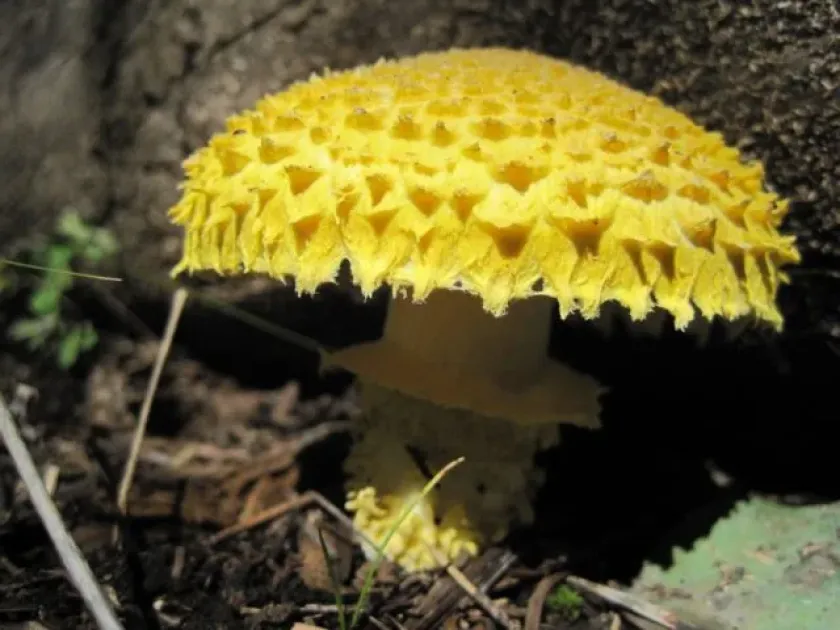
Description
Symptoms
Early symptoms of infection include chlorosis of foliage, where leaves or needles lose their deep green color and appear yellowish. This is often followed by a noticeable decline in annual growth rates and canopy thinning.
The emergence of yellow-green fruiting bodies near the base of the stem is a classic sign of an advanced infection. When these mushrooms are visible, it usually indicates that the root system has already sustained significant damage.
Internal root tissue examination reveals white rot symptoms. The wood becomes brittle, loses its structural integrity, and often takes on a bleached appearance as the fungus extracts cellulose and lignin.
Fine feeder roots, which are crucial for nutrient uptake, show signs of necrosis and disintegration. This leads to impaired plant vigor, making the host plant appear wilted or stressed even when moisture levels are adequate.
Advanced infection stages are marked by top-dieback, where the upper canopy begins to wither. The structural weakness in the roots can cause the tree to become unstable, increasing the risk of falling during high-wind events.
Pathogen
The causal agent is the basidiomycete fungus Floccularia luteovirens. Primarily recognized as a soil-inhabiting fungus, it often acts as a facultative parasite, targeting the root systems of various woody species in forest and woodland environments.
The fungus is distinguished by its yellow-green, scaly pileus (cap) and specific morphological features of its basidiocarps. These fruiting bodies are the primary indicator of the presence of the pathogen within the root zone of a host plant.
The biological activity of the fungus relies on its ability to secrete enzymes that break down complex woody tissues. By colonizing the root system, the mycelium disrupts the transport of water and nutrients, effectively starving the plant from the base upwards.
Mycelial strands known as rhizomorphs are a key feature of this pathogen, allowing it to spread through the soil from infected roots to healthy ones. This subterranean growth habit makes it difficult to eradicate once it is established in an area.
Reproduction is facilitated by spores released from the fruiting bodies, which can be dispersed by wind or water. The resilience of the fungal mycelium in the soil ensures its long-term survival even in the absence of a host.
Conditions for development
Floccularia luteovirens thrives in environments with high soil moisture and moderate temperatures. Shaded areas with heavy leaf litter often provide the necessary microclimate for the fungus to develop its fruiting bodies and spread.
Trees growing in poorly drained or compacted soils are particularly vulnerable. The lack of proper soil aeration hinders tree root health, making them easy targets for fungal colonization.
Optimal temperatures for mycelial growth range between 15°C and 22°C. During these thermal conditions, the fungus exhibits peak metabolic activity, leading to rapid expansion of the root rot within the soil profile.
Wounds in the root zone, often caused by machinery or soil pests, serve as direct entry points for the pathogen. Once a root is wounded, the fungus can easily penetrate the bark and colonize the inner tissues.
Environmental stress, such as drought or nutrient deficiencies, weakens the natural defense mechanisms of the plants. In these weakened states, the plants become less able to resist the opportunistic growth of Floccularia luteovirens.
Why it matters
The primary damage caused by this fungus is the destruction of the root system, which leads to the eventual death of the plant. This poses a significant threat to forest productivity and the overall health of woodland ecosystems.
In addition to individual tree mortality, the fungus creates infection hotspots in the soil. These hotspots can spread to neighboring trees, causing localized outbreaks that can decimate entire patches of healthy vegetation over time.
The economic impact is significant, particularly in timber-producing regions. The loss of standing wood, combined with the cost of clearing infected areas, creates a heavy burden for land managers.
Ecologically, the presence of the pathogen can lead to a shift in species composition within a forest. As susceptible trees are removed, the area may become dominated by less desirable or invasive species, altering the local habitat.
Infected wood is often unsuitable for industrial use, and the remaining debris serves as a substrate for other wood-decaying organisms, further complicating the management of the affected site.
Protection
Effective management begins with the prompt identification and removal of infected plants. It is crucial to excavate the roots carefully to ensure that as much of the infected mycelium as possible is removed from the soil.
Improving soil drainage is a vital preventive measure. By reducing the water content in the soil, the environment becomes significantly less favorable for the survival and spread of the fungus.
Applying fungicides to the soil in the vicinity of infected trees may help create a protective barrier, although this should be used as part of an integrated pest management strategy rather than a sole solution.
Boosting plant vigor through appropriate fertilization and regular maintenance helps plants develop a natural resistance to fungal pathogens. Stronger, healthier plants are far more likely to resist colonization attempts.
Ongoing monitoring of the site is essential. Regular surveys of the root zones of susceptible species can help detect early signs of Floccularia luteovirens, allowing for swift action before the infection spreads to healthy trees.
Discussion
No discussions yet — be the first.