
Flyspeck of apple
Phyllachora pomigena
Description
Symptoms
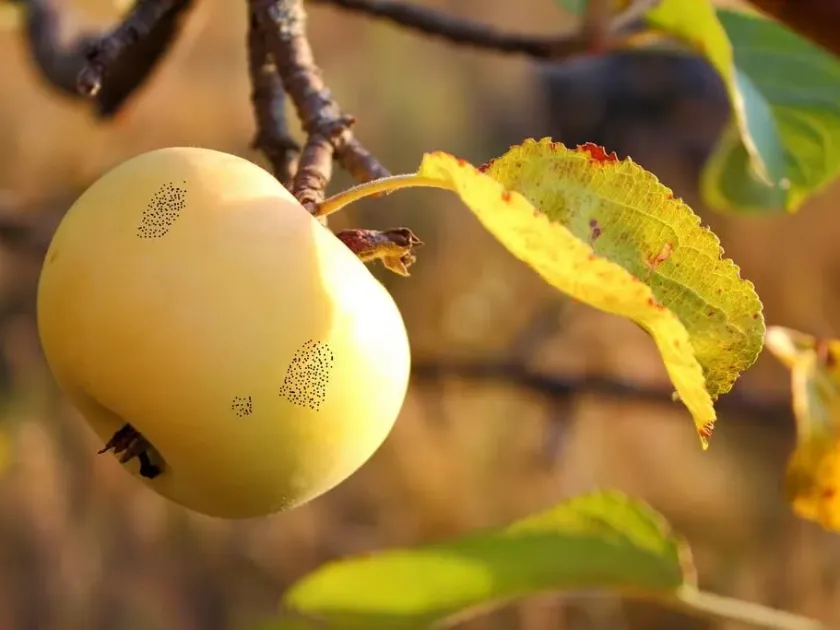
The primary symptom is the appearance of small, black, shiny spots on the skin of the fruit, which often group together in clusters.
These spots are purely surface-level and can sometimes be wiped off with heavy friction, though they remain permanently visible under normal conditions.
The disease typically becomes noticeable in late summer or during the approach of harvest when fruit growth reaches its peak.
The fruit remains structurally intact and free from decay, but the cosmetic damage prevents it from meeting fresh market quality standards.
Symptoms are most visible on light-skinned apple varieties, where the dark dots provide a stark and unattractive contrast against the fruit's color.
Pathogen
The causal agent of apple flyspeck is the fungus Schizothyrium pomi (syn. Phyllachora pomigena). It is a common fungal pathogen that targets the cuticle of pome fruits.
This fungus survives the winter on infected twigs or fallen leaves, releasing spores during the spring and summer that are disseminated by wind and water splash.
The infection is strictly superficial, meaning the mycelium does not penetrate the flesh of the fruit, but it creates significant aesthetic degradation.
Development is highly dependent on environmental moisture, and the fungus can rapidly colonize fruit surfaces under favorable weather conditions.
The biology of the pathogen involves the formation of small, dark, fungal structures known as thyriothecia, which mimic fly excrement.
Conditions for development
Flyspeck thrives in environments characterized by high relative humidity, frequent rainfall, and extended periods of leaf or fruit wetness.
Orchards with poor air circulation due to dense tree canopies or insufficient pruning are significantly more prone to severe outbreaks.
Temperatures ranging from 18°C to 24°C are optimal for the growth and spread of the fungus on the fruit surface.
High planting density without proper maintenance restricts airflow, keeping the microclimate within the tree wet for longer durations after rain events.
Lack of sanitation, particularly regarding the removal of overwintering plant debris, ensures a high inoculum pressure for the next growing season.
Why it matters
The main impact of flyspeck is the reduction of fruit value due to the unsightly appearance, leading to massive financial losses in commercial orchards.
Retailers often downgrade affected fruit, forcing growers to sell them at lower prices for processing rather than as premium fresh produce.
While the taste and nutritional value are not altered, the marketability is severely compromised, which is a major concern for fruit exporters.
Prolonged storage of infected apples can lead to increased transpiration rates through the affected cuticle, causing the fruit to shrivel prematurely.
In neglected orchards, the infection can cover a large percentage of the crop surface, rendering the entire yield unattractive for consumers.
Protection
Effective management begins with dormant and summer pruning to improve canopy light penetration and accelerate fruit drying after rainfall.
Sanitation practices, including the removal of weeds and debris around the tree base, help reduce the amount of primary inoculum in the orchard.
Fungicide applications, particularly those timed for scab control, are usually effective in managing flyspeck if applied during the infection periods.
Integrated Pest Management (IPM) strategies emphasize regular monitoring of weather conditions to time chemical treatments appropriately.
- Proper canopy management and pruning.
- Removal of inoculum sources like infected twigs.
- Timely application of protective fungicides.
Discussion
No discussions yet — be the first.