
Fluted black elfin saddle
Helvella sulcata
Description
Symptoms
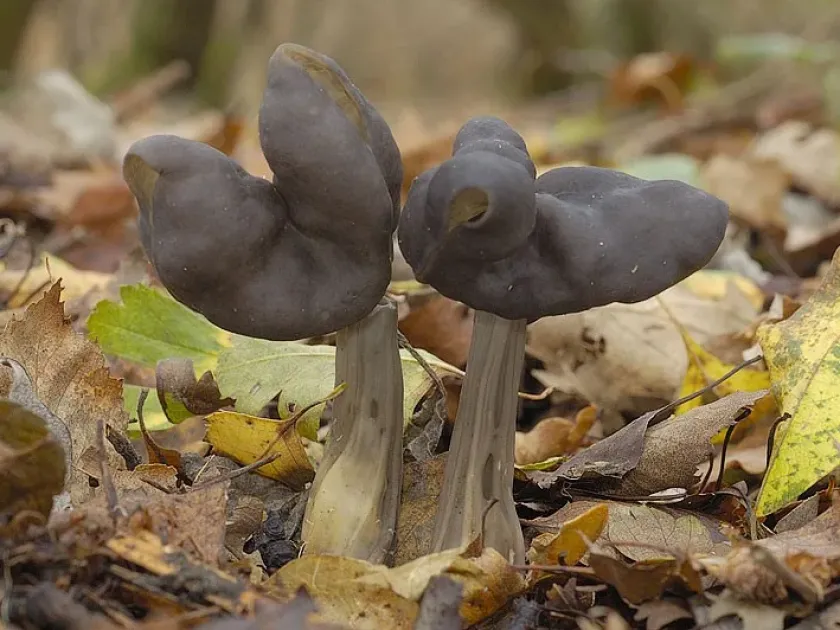
The fruit body features a distinct saddle-shaped or irregular cap, which can be grey, brown, or nearly black in color.
The most diagnostic feature is the stalk, which is deeply fluted or ribbed. These longitudinal folds give the stem a complex, twisted appearance.
The flesh is brittle and thin, usually with a mild odor. The color of the stalk is generally paler than the cap, often ranging from white to light grey.
The mushrooms appear in small groups, often partially obscured by leaves or forest debris. They are typically small, standing only a few inches high.
Spores are released from the surface of the cap, which is covered in spore-producing cells called asci. Fruiting typically occurs in late summer and autumn.
Pathogen
Helvella sulcata, commonly known as the fluted black elfin saddle, is not a plant pathogen. It is a saprotrophic fungus that lives on decaying organic matter.
This species does not possess parasitic traits and cannot infect living plants. It lacks the biological mechanisms to invade plant tissues and cause diseases.
As a decomposer, it plays a vital role in soil health by breaking down forest litter, dead wood, and other organic debris. It functions as an essential part of the soil microbiome.
It should not be confused with phytopathogenic fungi such as those causing root rot or leaf spots. Its presence in an environment is indicative of organic material degradation, not illness.
Agronomically, this organism is completely neutral. It poses no threat to crop yield, plant development, or overall field health.
Conditions for development
Helvella sulcata requires moist, shaded environments to thrive. It is most commonly found in woodlands and areas with high humidity.
The species prefers soils rich in organic matter, such as leaf mold or decaying wood, which serve as its primary food source.
A stable microclimate is essential for its development. The fungus is sensitive to drought and will stop producing fruit bodies if the environment becomes too dry.
It prefers acidic to neutral soil pH levels. It is highly unlikely to appear in standard agricultural fields unless they are adjacent to damp woodlands or poorly managed sites.
Adequate soil drainage will naturally inhibit the growth of this fungus, as it depends on constant moisture availability for vegetative growth.
Why it matters
There is no economic harm associated with Helvella sulcata. It does not compete with crops for nutrients and does not secrete phytotoxic compounds.
The fungus is strictly a recycler of dead plant material. Its existence promotes the recycling of nutrients within the soil profile, benefiting general ecosystem function.
There is no evidence suggesting this species acts as an opportunistic pathogen for distressed crops. It remains entirely non-pathogenic throughout its lifecycle.
While the mushroom contains toxins that make it unsafe for human consumption, these pose zero risk to the health of agricultural plant species.
Agronomists do not need to implement any strategies against this fungus, as it does not constitute an agricultural pest or disease.
Protection
No control measures are necessary for Helvella sulcata. Using fungicides to eliminate this species would be counterproductive and harmful to beneficial soil microbes.
Proper field maintenance, including debris management and ensuring appropriate soil drainage, is more than sufficient to prevent its occurrence if it is deemed visually undesirable.
Standard cultivation practices are naturally hostile to these fungi, as they generally prefer undisturbed, moist, and shaded forest soils.
It is important to maintain a focus on legitimate threats to crops rather than targeting beneficial or neutral saprotrophic fungi present in the environment.
Environmental management should prioritize the preservation of healthy soil biology rather than attempting to eradicate non-pathogenic species.
Discussion
No discussions yet — be the first.