
Beech bark disease
Neonectria faginata
Description
Symptoms
Initial signs include the appearance of localized patches of dead, cracked bark that can eventually develop into deep, open cankers.
Trees often respond to the fungal invasion by producing callous tissue, leading to a bumpy or distorted surface on the tree trunk.
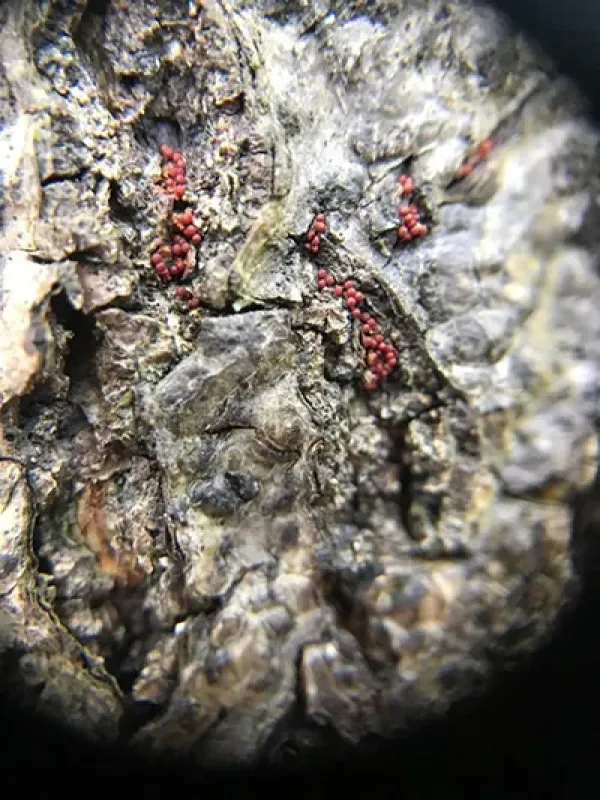
Reddish-orange fruiting structures are a key indicator, appearing as small clusters on the infected parts of the tree during late summer and autumn.
Foliage on affected branches may show signs of yellowing, chlorosis, or wilting as the fungal infection restricts nutrient and water flow.
In severe cases, the entire circumference of the tree can be girdled, leading to crown dieback and the eventual death of the tree.
Pathogen
Beech bark disease is caused primarily by the fungus Neonectria faginata, which invades the bark and cambium layer of beech trees.
This fungal pathogen acts as an opportunistic parasite, colonizing tissues that have been weakened or damaged by other environmental factors or insects.
The fungus produces small, bright red fruiting bodies called perithecia, which are often visible on the bark surface during the dormant season.
It frequently interacts with the beech scale insect Cryptococcus fagisuga; the scale's feeding creates wounds that facilitate fungal entry.
Once established, the mycelium spreads through the bark, disrupting the tree's vascular system and causing significant necrosis.
Conditions for development
The development of the disease is heavily reliant on moisture, which is essential for the germination and spread of fungal spores.
The presence of the beech scale insect is a critical predisposing factor, as it creates the necessary entry points for the Neonectria fungus.
Densely packed stands with poor air circulation create a humid microclimate that fosters the rapid progression of the disease.
Stressed trees, particularly those suffering from drought or soil compaction, are significantly more susceptible to infection and mortality.
Spores are typically dispersed by rain splash and wind, making wet weather seasons high-risk periods for the expansion of the fungal population.
Why it matters
Beech bark disease is a devastating condition that can kill large numbers of beech trees, significantly altering forest ecosystems.
Infected timber suffers from structural weakness and internal decay, resulting in substantial financial losses for the forestry industry.
The disease reduces the vigor of individual trees, making them less capable of providing ecosystem services and habitat for wildlife.
Widespread outbreaks can lead to the loss of large patches of mature forest, which can negatively impact local biodiversity and scenic values.
The disease persists in the environment for many years, as dead wood remains a source of spores that continue to infect surrounding healthy trees.
Protection
Management focuses on sanitation, which involves identifying and removing highly infected trees to reduce the inoculum level in the forest.
Controlling the population of scale insects is a vital component of integrated pest management to limit the pathways for infection.
Minimizing mechanical damage to tree trunks during logging or thinning operations helps to prevent the introduction of the fungus.
Promoting a diverse and healthy forest stand helps to improve resilience against disease outbreaks and reduces the spread of the pathogen.
- Monitor forest health regularly for signs of bark cracks.
- Implement selective harvesting to remove severely infested trees.
- Avoid wounding trees to prevent fungal spore entry.
- Destroy heavily infested wood debris by burning or burying.
Discussion
No discussions yet — be the first.