
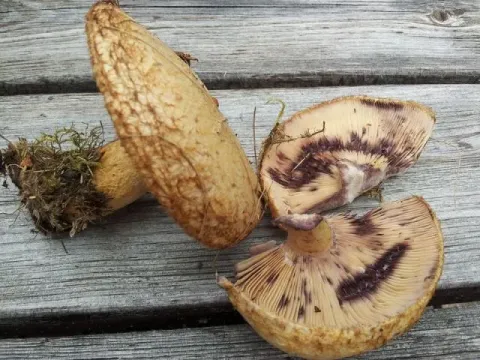
Yellow-staining milkcap
Lactarius flavidus
Lactarius flavidus, known as the yellow-staining milkcap, is a basidiomycete fungus within the Russulaceae family. While primarily a mycorrhizal species, in forestry and nursery contexts, it can act as a stressor by colonizing the rhizosphere and competing with young tree roots for nutrients.
What the section contains
Yellow-staining milkcap
The pathogen reproduces via spores, which are disseminated by wind, rain splashes, and soil movement. Its mycelium is capable of persisting in the soil for extended periods, waiting for suitable environmental conditions to colonize the root systems of sensitive woody plants.
The infection process begins when fungal hyphae come into contact with root tissues. Unlike obligate parasites, this fungus occupies a complex niche where its interaction with host plants can shift from symbiotic to pathogenic under specific ecological stresses.
Understanding the biology of this organism is vital for nursery management. It is characterized by the production of yellowish-toned fruiting bodies that indicate the active presence of mycelium in the immediate vicinity of plant roots.
The fungal life cycle involves rapid vegetative growth in humid, organic-rich substrates. Its ability to form resilient mycelial networks makes it a persistent challenge in nursery soils where drainage and pH management are not strictly controlled.
The primary clinical signs of Lactarius flavidus presence include stunted growth and reduced vigor in young plants. Infected specimens typically display yellowing leaves or chlorosis, indicating impaired mineral and water uptake due to root impairment.
Root system examination often reveals patches of dense mycelial growth. These colonies physically obstruct nutrient absorption and may cause localized tissue death, hindering the development of the primary and secondary roots of the seedling.
The appearance of distinct, pale-yellow fruiting bodies on the soil surface is a definitive indicator of the infection. These bodies indicate that the fungus has established a robust subterranean presence that is actively affecting the host.
Plants affected by the fungus exhibit increased sensitivity to drought. Even with sufficient watering, the damaged root system fails to meet the transpirational demands of the plant, leading to wilting of the apical shoots during hot afternoons.
Chronic infestation leads to the progressive necrosis of feeder roots. This degradation of the root architecture makes the plant susceptible to opportunistic secondary invaders, including various soil-borne bacteria and necrotic fungi.
The development of Lactarius flavidus is strongly favored by high soil moisture levels and acidic pH. Soils that are heavy, poorly drained, and rich in organic matter provide the ideal environment for its mycelium to thrive.
Optimal environmental temperatures for sporulation and rapid mycelial spread fall between 15°C and 20°C. Persistent rainfall or excessive irrigation provides the necessary water film for spores to germinate and colonize new root zones.
Poor soil aeration acts as a catalyst for fungal expansion. In compacted soils where oxygen exchange is limited, host roots become weakened and less capable of defending themselves against fungal infiltration, creating a susceptibility window.
Proximity to forested areas or natural woodland edges serves as a primary source of inoculum. Spores can travel significant distances, meaning that nursery sanitation must be proactive to prevent the initial introduction of the pathogen.
Inappropriate fertilization practices, particularly over-application of nitrogen, can disrupt soil microbial balance. This allows opportunistic fungi to outcompete beneficial soil microorganisms, establishing a dominance that facilitates root colonization.
The main impact of Lactarius flavidus is the significant retardation of plant development. In commercial nurseries, this results in high attrition rates and non-marketable saplings that do not meet the required height and vigor standards.
Root dysfunction causes a systemic water deficit. This physiological stress reduces the plant’s ability to allocate resources for growth, leading to poor biomass accumulation and reduced overall productivity in the nursery environment.
Nutrient uptake inhibition is a major concern. By blocking the transport of essential minerals, the fungus triggers chlorotic conditions that mimic nutrient deficiency, leading to wasted inputs when growers try to correct it through fertilization.
Large-scale infestations can lead to total crop loss. The necessity for nursery-wide culling and soil replacement introduces significant financial burdens and delays in operational cycles, affecting the bottom line of forestry enterprises.
The indirect harm caused by the fungus is the predisposition of the host to more aggressive soil-borne pathogens. By weakening the root system, the yellow-staining milkcap creates an entry point for root-rot complexes that can quickly kill the sapling.
Effective management begins with soil remediation. Improving soil drainage and adjusting pH levels to an optimal range create an unfavorable environment for this fungus, limiting its ability to form dense mycelial mats in the rhizosphere.
Irrigation practices must be calibrated to ensure the soil profile is moist but not saturated. Drip irrigation systems are preferred as they minimize the creation of water films that facilitate the spread of fungal spores across the surface.
Mechanical removal of fruiting bodies, along with the immediate surrounding soil, is a highly effective suppression technique. By reducing the local inoculum density, growers can interrupt the fungal reproduction cycle before it reaches its peak.
Biological control agents, such as formulations containing Bacillus subtilis, are recommended to displace the pathogen. These beneficial microbes colonize the root zone and outcompete harmful fungi for space and nutrients, providing a natural defense.
Preventive strategies include rigorous sanitation of equipment and tools, alongside careful monitoring of planting sites for early visual signs. Keeping the growing area free of debris and managing the soil ecosystem prevents the pathogen from gaining a foothold.