
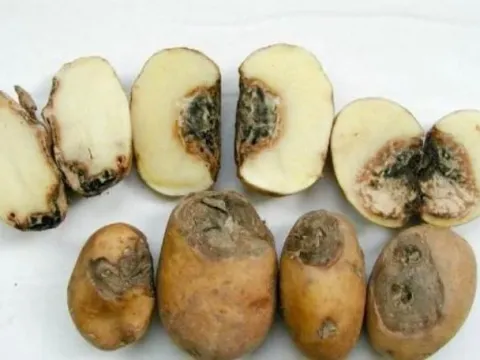
Potato gangrene
Juxtiphoma eupyrena
The causal agent of potato gangrene is the fungus Juxtiphoma eupyrena (formerly classified as Phoma exigua var. foveata). This pathogen belongs to the class of deuteromycetes and primarily targets tubers and stems of solanaceous crops.
What the section contains
Potato gangrene
The infection survives as pycnidia and mycelium, remaining in the soil or on crop residues for extended periods. The fungus exhibits high adaptability to various soil types and can exist in a saprotrophic phase for a long time.
The primary source of infection is contaminated seed material, which carries the pathogen until planting. Spores are also spread through soil particles, rain splashes, and farm equipment during the harvesting process.
The life cycle of the pathogen includes an active growth phase during the vegetation period and a resting phase during tuber storage. In warehouse conditions, the fungus can spread rapidly from infected to healthy tubers under high humidity.
The biology of Juxtiphoma eupyrena is critical to understanding storage losses. The pathogen penetrates deep into tuber tissues, creating an environment that favors secondary infection by soft rot bacteria.
Initial visual symptoms of gangrene appear on tubers as small, slightly depressed, circular spots that resemble a thumbprint. Over time, these spots expand, becoming dark and firm.
The skin over the infected areas often stretches and eventually cracks. Cutting through an infected tuber reveals a cavity, often described as a "button," filled with grey or dark fungal mycelium.
On stems, the symptoms manifest as dark, elongated lesions, typically occurring at the base of leaf petioles. In severe cases, leaves may prematurely yellow and wilt as the disease progresses.
Under high-humidity conditions, pycnidia — small black dots representing the fruiting bodies of the fungus — form on the surface of the lesions. These are a primary diagnostic feature used to identify the pathogen in the field.
Because symptoms can overlap with other storage rots, laboratory analysis is often required for precise identification of the Juxtiphoma species. Accurate diagnosis allows for the implementation of appropriate containment measures.
Cool and wet weather during the end of the potato growing season favors gangrene development. The optimal temperature range for spore germination is between +15 and +20 degrees Celsius.
Excessive soil moisture, particularly during prolonged rain before harvest, creates ideal conditions for spores to enter through lenticels and mechanical wounds on the tuber skin.
Poor temperature and humidity control in storage, leading to condensation, significantly accelerates the progression of rot. The fungus reaches peak activity when relative air humidity is high.
Mechanical damage caused during harvesting significantly increases tuber susceptibility to infection. Pathogens penetrate damaged tissues much more easily than they do healthy, intact skin.
Compacted, heavy soils with poor aeration can prolong the survival of the inoculum in the rhizosphere, thereby increasing the risk of primary infection in young developing tubers.
The main danger of gangrene lies in the severe degradation of tuber quality, making the crop unsuitable for market. Infected stock cannot be stored long-term due to the rapid spread of decay.
Economic damage stems not only from reduced yield weight but also from significant losses during grading and sorting. Even minor infection foci can lead to the mass rotting of entire warehouse batches.
The disease negatively impacts the seed quality of potatoes. Using infected tubers for planting leads to uneven emergence and a reduction in the overall productivity of the potato field.
Stem infection reduces the photosynthetic capacity of the plant, resulting in premature haulm senescence and lost tuber weight. Plants weakened by gangrene are also more susceptible to secondary pathogens.
Financial losses include expenditures on fungicides, the need for enhanced storage monitoring, and the costs associated with replacing infected seed stock. Fighting gangrene requires comprehensive integrated management.
The primary control method is the use of healthy, carefully inspected seed stock. It is crucial to strictly avoid planting tubers that show any signs of rot or physical damage.
Crop rotation plays a vital role, with a recommended break of at least 3–4 years before returning potatoes to the same field. This practice helps reduce the buildup of Juxtiphoma eupyrena in the soil.
Timely harvest under dry conditions is recommended to minimize mechanical damage to tubers. After harvest, tubers should be thoroughly dried before being placed into long-term storage.
- Applying systemic fungicides as a seed treatment before planting.
- Regular disinfection of storage facilities, containers, and machinery to prevent spore spread.
- Maintaining optimal storage conditions (temperature +2...+4°C, humidity 80–85%).
- Timely removal and destruction of crop residues and weeds after the harvest.
Selecting potato varieties with known resistance to gangrene is an important defense strategy. Genetic resistance significantly reduces the likelihood of infection, even under unfavorable environmental conditions.