
Potato wart
Synchytrium
Description
Symptoms
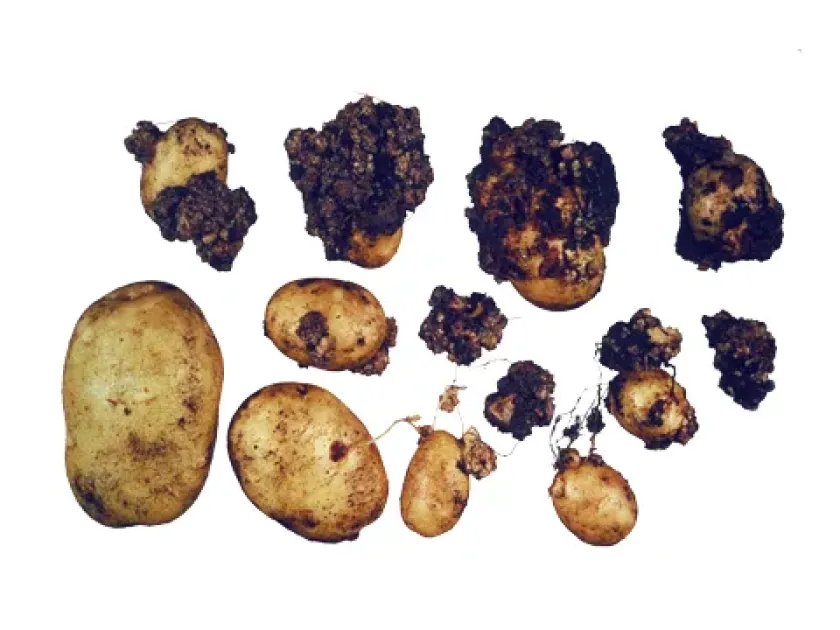
The most characteristic symptom is the development of warty, cauliflower-like growths on tubers, stolons, and the stem base. The roots are rarely affected by these specific structures.
Early infections appear as small, light-colored swellings near the eyes of the tuber. As the disease progresses, these swellings enlarge rapidly, forming a complex, irregular mass.
Mature galls change color from light green to dark brown or black. Eventually, they become necrotic and disintegrate due to colonization by secondary bacteria and fungi.
Above-ground foliage symptoms are typically absent, though severe subterranean infections can lead to stunted growth or wilting if the root system and tuber development are compromised.
Microscopic examination of the tissue will reveal the presence of the pathogen within the hyperplastic cells, which helps distinguish it from other tuber malformations like powdery scab.
Pathogen
The causative agent of potato wart is the chytrid fungus Synchytrium endobioticum. It is an obligate parasite that lacks mycelium and exists in the form of zoospores and resting sporangia.
Resting spores are extremely resilient and represent the primary inoculum. They can survive in the soil for up to 20–30 years, resisting freezing, heat, and desiccation.
When environmental conditions are favorable, these resting spores germinate to produce motile zoospores. These zoospores swim in soil moisture to find and penetrate the host plant tissues.
The fungus forces the plant to undergo rapid, abnormal cell division, resulting in the formation of galls. These structures provide the necessary environment for the parasite to complete its life cycle.
This pathogen is classified as a quarantine pest worldwide due to its extreme longevity in the soil and the lack of effective chemical eradication methods.
Conditions for development
The fungus thrives in cool, moist soil conditions. The optimal temperature for zoospore movement and infection is between 15 °C and 20 °C, with a minimum threshold of about 5 °C.
Soil moisture levels of approximately 60–80% of field capacity are ideal for the rapid spread of zoospores. The pathogen prefers slightly acidic soil conditions.
Dissemination occurs primarily through the movement of contaminated soil adhering to tubers, agricultural machinery, farm equipment, or even footwear.
Irrigation with water from contaminated streams or ponds can spread zoospores into previously clean fields, significantly increasing the risk of an outbreak.
Long-term continuous potato cultivation in infected fields leads to a massive accumulation of resting spores, rendering the land unsuitable for future potato production.
Why it matters
The primary economic impact is the total loss of marketable yield. Infected tubers are unfit for human consumption, processing, or animal feed, and they rot in storage.
A confirmed presence of potato wart triggers mandatory quarantine regulations. This restricts the trade of potato tubers and the movement of soil from the affected area.
The pathogen causes significant yield reduction by diverting plant energy towards the development of galls rather than tuber formation.
It poses a threat to biodiversity and agricultural stability by persisting in the soil for decades, forcing farmers to abandon potato production on the infested plots.
The inability to use infected land for high-value potato crops results in direct financial losses and the need for costly crop rotation strategies.
Protection
The use of resistant potato cultivars is the cornerstone of disease management. Planting resistant varieties is often the only way to farm in regions where the fungus is present.
Strict phytosanitary measures are essential. This includes avoiding the introduction of infected soil and ensuring that only certified, pathogen-free seed potatoes are used.
Implementing long-term crop rotation with non-host crops like cereals or forage grasses can help reduce the pathogen population, though total eradication is rarely achieved.
Any detected infected plants must be carefully removed with all surrounding soil, buried deep with lime, or destroyed by burning to prevent the spread of spores.
Regular sanitation of farm machinery and tools between fields is a critical preventive practice to minimize the risk of spreading soil-borne spores.
Discussion
No discussions yet — be the first.