
Jackrogersella
Jackrogersella
Jackrogersella is a genus of fungi belonging to the Hypoxylaceae family within the class Ascomycetes. These fungi were historically included within the genus Hypoxylon.
What the section contains
Jackrogersella
While many species act primarily as saprotrophs, some can behave as weak parasites, especially targeting trees that are already under physiological stress.
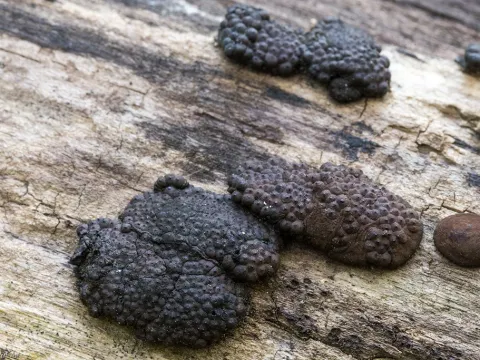
The fungus produces stromatic structures on the surface of the host wood. These structures contain perithecia, which are the fruiting bodies where spores are developed.
Biologically, these fungi are efficient wood-decaying organisms capable of breaking down complex organic structures like lignin and cellulose through enzymatic activity.
The taxonomic classification of this genus continues to evolve as molecular research reveals more details about the evolutionary relationships between various species.
The most visible symptom is the appearance of dark, crusty, or cushion-like stromatic growths on the bark of infected branches or trunks.
Upon close inspection, the surface of these growths displays tiny, pore-like structures called ostioles, which serve as exit points for fungal spores.
The internal wood tissue below the infected area often shows signs of decay, becoming brittle, discolored, or soft, indicating structural damage.
Advanced stages of the disease manifest through the wilting of foliage, branch dieback, and the eventual death of the affected part of the tree.
- Dark, hardened stromatic growths on the bark.
- Presence of minute openings on the surface of stromata.
- Localized wood tissue softening and discoloration.
The development of Jackrogersella is highly dependent on environmental factors, with high humidity and moderate temperatures being the primary drivers.
Trees that are weakened by environmental stress, such as prolonged drought, poor soil conditions, or previous mechanical injury, are most susceptible to infection.
Spore dispersal occurs predominantly through wind currents and rain splash, which transport the fungus to new hosts or healthy areas of the same tree.
Dense planting or lack of proper pruning results in poor air circulation, creating a microclimate that remains moist for longer periods, favoring fungal growth.
Any breach in the tree's outer defenses, such as wounds or cracks in the bark, provides an easy entry point for the fungus to colonize the inner tissues.
The primary harm caused by this fungus is the destruction of wood integrity, which reduces the structural stability of the tree and its branches.
In forest ecosystems or gardens, this leads to premature dieback and can eventually cause the tree to fail, creating safety hazards in public areas.
The pathogen negatively impacts the aesthetic value of ornamental plants, making them look unkempt and leading to premature loss of foliage.
By disrupting the vascular transport system, the fungus impairs the tree's ability to move water and nutrients, resulting in overall decline.
As a wood-decay agent, it contributes to the economic degradation of timber quality and reduces the lifespan of valued landscape specimens.
Good cultural practices, such as providing adequate water and soil nutrients, are essential to maintain tree vigor and resistance to fungal colonization.
Regular sanitation, which includes removing and properly disposing of dead or infected branches, helps reduce the local inoculum of the pathogen.
All pruning wounds or accidental damage to the bark should be cleaned and protected with appropriate wound sealants or fungicidal pastes.
Applying preventive fungicidal sprays during periods of high humidity can help protect susceptible trees from spore infection on the bark surface.
Consistent monitoring of tree health allows for early detection of stromatic growths, enabling prompt intervention before the infection spreads deeper into the wood.