
Jackson's slender Caesar
Amanita jacksonii
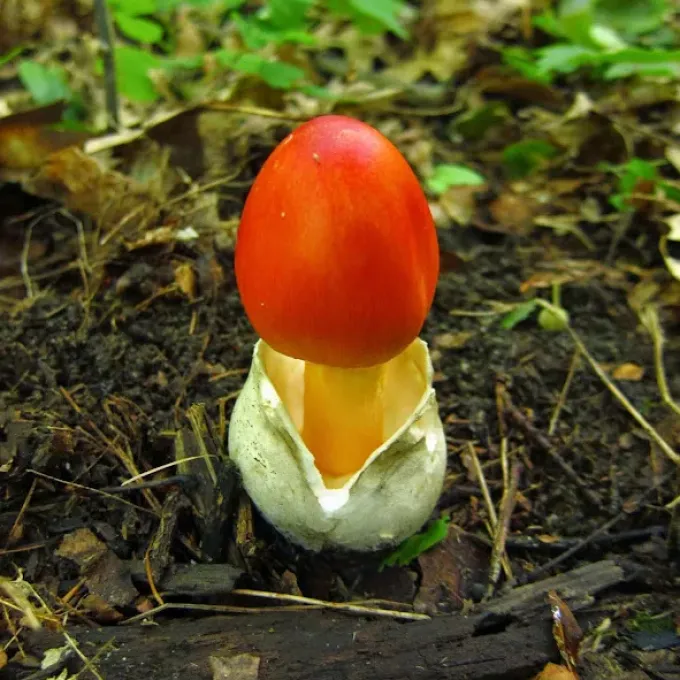
Description
Pathogen
It is critical to state that Jackson's slender Caesar (Amanita jacksonii) is not a plant disease. It is a fungus that forms mycorrhizal relationships with various tree species and is strictly beneficial to its host.
There is no evidence in agricultural science that Amanita jacksonii acts as a pathogen. It does not possess the enzymes or structural mechanisms required to invade living plant tissue and cause damage.
Many people mistake forest fungi appearing near plants as signs of infection. However, in the case of this species, the presence of its fruiting bodies indicates that the soil is healthy and properly supporting a symbiotic network.
The fungus provides the plant with essential nutrients and water from the soil in exchange for carbon compounds produced by the plant through photosynthesis.
Because it is not a pathogen, there is no need for protective measures, fungicides, or any other control strategy regarding this specific fungus in an agricultural or garden setting.
Conditions for development
The development of Amanita jacksonii is strictly dependent on the presence of compatible host trees. It requires a stable forest environment where the root systems are undisturbed.
Favorable growth conditions include high atmospheric humidity and relatively warm temperatures. The fungus typically fruits during the mid-to-late summer months following significant rainfall.
Soil quality is a major factor, with the species preferring nutrient-rich, acidic soils that are protected by a layer of organic mulch. Direct exposure to intense sunlight and drought will inhibit fruiting.
Unlike parasitic fungi that thrive on weakened hosts, Amanita jacksonii thrives when the entire ecosystem is thriving. It acts as an indicator of ecological stability.
Agricultural activities that involve heavy tilling or the overuse of synthetic fertilizers can disrupt the delicate underground mycelial network, potentially causing the fungus to vanish from the area.
Discussion
No discussions yet — be the first.