
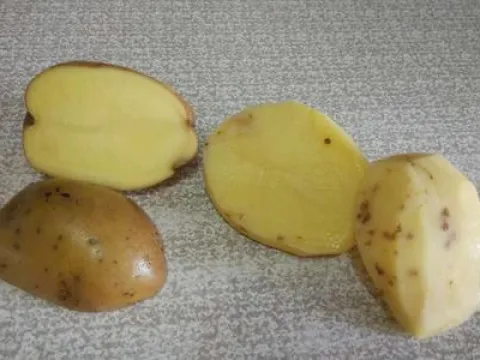
Internal Rust Spot
Tuber maculatum
Internal Rust Spot is characterized by the presence of reddish-brown, rusty-looking spots scattered throughout the tuber flesh. These necrotic lesions can be isolated or occur in clusters, significantly affecting the internal quality of the potato.
What the section contains
Internal Rust Spot
Externally, affected tubers look perfectly healthy and smooth. There are no signs of fungal decay, skin lesions, or malformations on the tuber surface, making it impossible to detect the disease without slicing the potato open.
The necrotic tissue is typically dense and firm. When cooked, these spots do not soften, remaining hard and unpalatable, which renders the tubers unsuitable for culinary purposes like mashing or frying.
Symptoms often appear in the center or scattered throughout the parenchyma. While the size of the spots does not typically increase during storage, the affected areas remain distinct, degrading the overall market value of the crop.
The intensity of the symptoms can vary from barely visible specks to large necrotic zones. It is common to find the disease in only a subset of the total yield, with unaffected tubers mixed in the same batch.
Internal Rust Spot is not an infectious disease; it is a physiological disorder. It is not caused by pathogens such as fungi, bacteria, or viruses, meaning the disease does not spread between plants in the field.
The disorder arises from a disruption in the plant's metabolic processes during the tuber bulking stage. Specifically, it is associated with a localized deficiency of calcium in the tuber tissue compared to other nutrients like phosphorus and potassium.
Biochemical imbalances at the cellular level cause the death of parenchyma cells. The subsequent oxidation of phenolic compounds within these dying cells creates the characteristic rust-colored pigments that define the disorder.
Genetic susceptibility is a primary factor, as certain potato cultivars exhibit a much higher sensitivity to fluctuations in the growing environment, making them more prone to this internal necrosis.
Improper synthesis of proteins and stress-induced changes in cellular respiration are key biological drivers behind the formation of these dead tissue spots during the rapid growth phase of the tubers.
Water stress is the leading environmental cause of Internal Rust Spot. Prolonged periods of drought, especially when combined with high soil temperatures, inhibit the proper uptake of calcium by the roots.
High soil temperatures (above 25 degrees Celsius) disrupt the normal physiological development of tubers. The heat causes metabolic instability, which significantly increases the risk of necrotic spot formation.
Sandy soils are particularly prone to this disorder because they have low moisture retention capacity and fluctuate in temperature much faster than heavier loam soils.
Nutrient mismanagement, specifically an excess of phosphorus or potassium, can create an imbalance that blocks the uptake of calcium, even if the element is present in the soil in adequate quantities.
Uneven irrigation patterns—characterized by cycles of severe drying followed by heavy watering—create erratic growth rates, which stress the tuber tissues and lead to physiological breakdown.
The primary economic impact is the loss of commercial value for the potato harvest. Tubers affected by internal rust spots are rejected for premium markets and processing due to poor quality.
The disorder severely limits the processing potential for industry use. Because the spots remain hard during heat treatment, the potatoes cannot be used for high-quality frozen products, chips, or flakes.
Storing tubers with internal necrosis poses a risk, as the damaged tissues may become susceptible to secondary infections or rot, potentially spreading within the storage facility and ruining healthy potatoes.
For farmers, the presence of this disorder leads to significant financial losses and necessitates the implementation of stricter irrigation and soil management protocols to salvage the crop's marketability.
The lack of external visual indicators poses a serious challenge for quality control, as farmers may unknowingly market a product that will disappoint consumers upon preparation.
The most effective management strategy is consistent irrigation. Maintaining steady soil moisture levels throughout the tuber development phase prevents the physiological stress that triggers internal necrosis.
Implementing soil management practices to reduce soil temperature, such as mulching or optimizing planting times to avoid peak heat, is essential for minimizing the risk of heat-induced lesions.
Balanced fertilization based on regular soil testing is crucial. Ensuring adequate calcium availability and maintaining an optimal pH balance helps prevent the nutrient antagonism that triggers the disease.
Choosing resistant cultivars is a fundamental preventive measure, especially in regions where climate conditions—such as high heat and irregular rainfall—are known to favor the disorder.
- Regular application of calcium-based fertilizers if soil analysis indicates a deficiency.
- Effective soil preparation to improve water infiltration and retention.
- Avoidance of rapid growth stimulation during periods of high temperature.