
Ilyonectria palm rot
Ilyonectria palmarum
The causal agent of this disease is a fungus from the genus Ilyonectria, belonging to the Ascomycota phylum. This microorganism is a soil-borne pathogen known for its resilience in harsh environmental conditions.
What the section contains
Ilyonectria palm rot
The life cycle of the fungus includes the formation of chlamydospores, which allow the pathogen to remain viable in the soil and on plant debris for several years even in the absence of a host plant.
Infection occurs primarily through the root system, with the pathogen penetrating plant tissues either through mechanical injuries or by direct invasion of the root hairs.
The species Ilyonectria palmarum is evolutionarily adapted to specific tropical and subtropical conditions, making it extremely hazardous to various palm tree species.
The taxonomy of this fungus is continuously refined through molecular and genetic analysis, allowing for more precise identification and the development of targeted fungicidal strategies.
The primary symptom of the disease is progressive wilting of the foliage, often starting from the lower or older parts of the palm's crown.
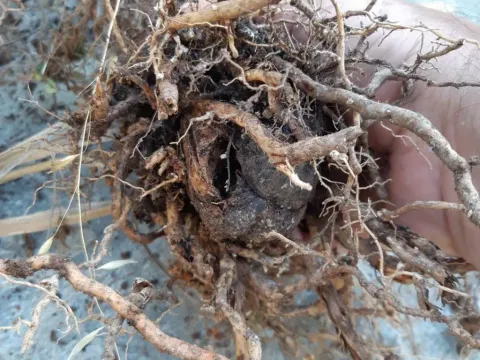
Upon examination of the root system, characteristic rot is observed, accompanied by the softening of root tissues and a change in color to brown or dark mahogany.
In the later stages of infection, general growth suppression, yellowing, and the gradual drying of leaf blades occur, leading to a total loss of ornamental value or plant death.
Necrosis of tissues may be observed near the root collar, often complicated by secondary bacterial infections that further deteriorate the plant's condition.
Microscopic examination of affected tissue sections may reveal fungal sporulation, which appears as a whitish or cream-colored coating, typical for many members of the Ilyonectria genus.
Disease development is favored by high soil moisture, especially in cases of waterlogging or excessive watering combined with poor substrate aeration.
The optimal temperature range for active mycelial growth is a moderately warm climate, characteristic of greenhouse environments or tropical regions.
Root damage caused by soil pests, such as nematodes or insect larvae, significantly facilitates the entry of the infection into the plant's vascular system.
Poor agricultural practices, including the use of non-sterile planting material and contaminated soil substrate, are the main factors in the spread of the pathogen.
High plant density and insufficient ventilation in closed environments create a microclimate that promotes the rapid spread of infection between plants.
Ilyonectria palmarum causes severe economic losses for nurseries specializing in the cultivation of ornamental and agricultural palm species.
The disease disrupts the normal absorption of water and nutrients, which inevitably leads to the slow exhaustion of the plant.
In the case of massive infestation, entire batches of plants can be lost, as effective treatment of systemic root rot requires significant financial investment.
The reduction in the market value of infected seedlings and the high costs of phytosanitary measures make the management of this pathogen an economically critical task.
Infection by this fungus often prevents the export of plant products due to strict international quarantine and phytosanitary regulations.
The foundation of protection is the use of healthy, disease-free planting material that has undergone rigorous inspection and preventative systemic fungicide treatment.
Strict adherence to watering schedules is recommended to prevent substrate waterlogging, alongside the use of soil mixes with excellent drainage properties.
Prophylactic measures include the sterilization of tools and containers, as well as the application of biological control agents based on antagonistic fungi, such as Trichoderma, to suppress pathogen activity.
- Ensuring optimal aeration of the root zone.
- Regular monitoring of plants for early disease symptoms.
- Removal and destruction of heavily infected specimens.
- Application of benzimidazole or triazole class fungicides upon detection of initial symptoms.
If an outbreak is detected, affected plants must be isolated to prevent the further spread of fungal spores within the nursery or collection.