
Hericium
Hericium
The Hericium genus belongs to wood-decaying basidiomycetes of the Hericiaceae family. In agroforestry and horticulture, these fungi are classified as facultative parasites that destroy wood tissue.
What the section contains
Hericium
The pathogen enters the trunk through open wounds, frost cracks, or pruning sites, where spores germinate into mycelium.
The fungus actively decomposes lignin and cellulose, penetrating deep into the heartwood of the tree, which makes it dangerous for tree longevity.
The mycelium spreads through the vascular system and intercellular spaces, gradually turning healthy tissue into a fragile mass.
Unlike many other bracket fungi, Hericium often manifests as a parasite on weakened old trees, accelerating their decay.
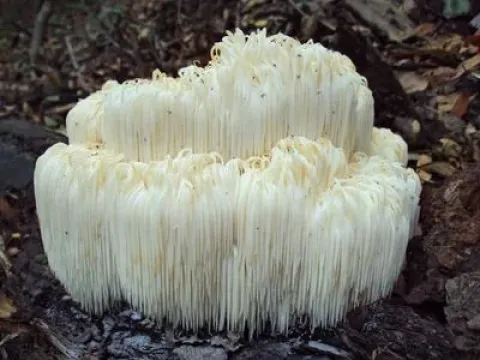
The main external sign of infestation is the formation of characteristic fruiting bodies on trunks or large branches.
The fruiting bodies have a unique shape with long, hanging spines, which is why it is often referred to as "lion's mane" or "hedgehog fungus".
The wood at the site of infection takes on a light color and a fibrous structure, which is a consequence of the white rot process.
In the early stages, the tree may show no visible signs of disease, but growth gradually declines and premature leaf fall is observed.
Internal destruction of the trunk often leads to the formation of cavities, which become hidden hubs of infection for the entire orchard.
Development of Hericium is promoted by high air humidity and moderately warm temperatures during the autumn season.
The fungus spreads most actively in dense plantations where poor air circulation prevents bark from drying after rainfall.
Mechanical damage is the main factor for successful infection, as spores easily attach to exposed cambium areas.
Old, weakened trees or crops that have undergone temperature fluctuations have reduced immunity, making them ideal hosts.
Water stagnation in the lower part of the trunk or soil waterlogging also creates a favorable microclimate for basidiospore germination.
The main danger of Hericium is the gradual destruction of the structural integrity of the wood, leading to a loss of commercial value of the trees.
Affected areas become extremely brittle, creating a high risk of windthrow or breakage of large skeletal branches under the weight of the crop.
The fungus exhausts the tree's nutrient reserves, eventually leading to slow desiccation and the death of the entire organism.
Infection quickly spreads to neighboring trees, especially if they have interlocking crowns or a common root system.
Economic damage is associated not only with the loss of timber but also with the necessity of removing and disposing of infected plants.
The primary method of control is timely sanitary pruning of all dry and damaged branches that can serve as entry points for spores.
All cuts with a diameter of more than two centimeters must be immediately treated with grafting wax or antiseptic preparations.
It is important to maintain general tree health through proper irrigation, fertilization, and control of pests that weaken the bark.
Upon detection of fruiting bodies, they should be carefully removed and immediately burned to prevent further spore spread.
- Regular inspection of trunks for cracks and fissures.
- Whitewashing trunks with lime in spring and autumn.
- Removal of heavily infected trees, including stump extraction.