
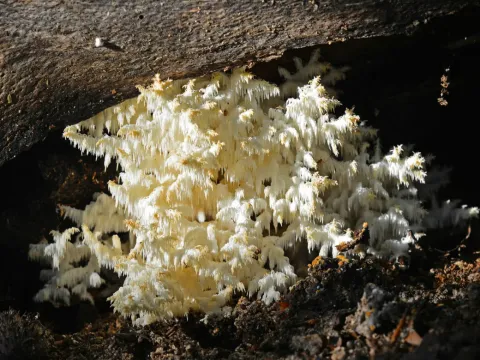
Hericium coralloides
Hericium coralloides
Hericium coralloides, commonly known as the coral tooth fungus, is a xylotrophic species belonging to the Hericiaceae family. While often celebrated for its unique beauty, it functions as a facultative parasite capable of causing white rot in various hardwood species.
What the section contains
Hericium coralloides
The fungus invades trees primarily through wounds, broken branches, or bark damage. Once inside, its mycelium spreads through the wood, systematically breaking down lignin and cellulose, which are the fundamental structural components of the tree's wood tissues.
This condition is classified as a wood-decay disease, leading to internal degradation. The fungal mycelium can persist within the tree for years, gradually consuming the heartwood and sapwood, which compromises the tree's overall stability and physiological health.
The life cycle of the pathogen is highly dependent on humidity. Basidiospores, released from mature fruiting bodies, are the primary agents of spread, carried by wind currents and insects to colonize new, susceptible hosts.
Typically, the fungus targets stressed, aging, or already weakened trees. In these cases, the tree's natural defense mechanisms are insufficient to arrest the fungal growth, allowing the mycelium to fully colonize the internal structure.
The most visible symptom of an Hericium coralloides infection is the emergence of its distinct, coral-like white fruiting bodies. These grow directly from the bark of trunks, stumps, or large branches of affected deciduous trees.
White rot, caused by the mycelial activity, manifests as a soft, fibrous, and bleached appearance in the wood. As the decay progresses, the structural integrity of the timber is lost, making it crumble easily when touched.
Early stages of infection are often invisible from the exterior, as the fungal growth is concentrated deep within the heartwood. By the time fruiting bodies appear, the interior wood is usually significantly compromised, indicating a long-standing infection.
Cracks and fissures often appear on the bark near the site of the fungal colonization. Furthermore, the tree may exhibit branch dieback or signs of structural weakening, making it prone to snapping during extreme weather conditions.
Inspection during late summer and autumn is crucial for identification. Detecting these white, branch-like fungal growths on hardwoods like beech or birch is a clear indication that the tree is harboring a fungal pathogen.
High humidity and moisture are the primary environmental requirements for the germination and growth of Hericium coralloides. The fungus thrives in shaded, damp environments where moisture levels remain consistently high.
Wounds and mechanical damage to the bark are essential prerequisites for infection. These entry points provide the mycelium with access to the inner tissues, allowing it to bypass the tree's primary protective bark layer.
The fungus demonstrates a preference for hardwoods such as beech, birch, ash, and oak. Healthy, vigorous trees can often wall off infections, whereas trees weakened by drought, pests, or physical stress are much more susceptible to colonization.
Dense forest stands with poor airflow create favorable conditions for spore dispersal. An abundance of coarse woody debris also serves as a significant reservoir, increasing the spore load in the local environment and putting neighboring trees at risk.
The fungus is most active during periods of prolonged rainfall, which ensures the necessary moisture saturation of the bark and wood surfaces, supporting the development of its reproductive structures.
The primary damage caused by this fungus is the degradation of timber quality. In forestry contexts, infected wood loses its structural strength and economic value, making it unsuitable for construction or high-quality wood processing.
In residential or park landscapes, infected trees become significant safety hazards. The loss of structural integrity increases the risk of limb failure or sudden trunk collapse, posing dangers to property and human safety.
In horticulture and landscaping, the presence of the fungus significantly diminishes the aesthetic value of ornamental trees. Often, complete removal of the infected plant is necessary to prevent the spread of the fungus to adjacent healthy specimens.
While the fungus performs a role in natural decomposition, its activity in managed settings leads to the rapid decay of valuable plant assets. This accelerates the degradation of living trees, reducing their lifespan and ecological utility.
Chronic infection results in a gradual decline, including slowed growth rates, reduced leaf canopy, and eventually, the total failure of the tree's vascular system, leading to its eventual death.
A proactive approach is the most effective way to manage Hericium coralloides. Regular tree inspections help identify infected individuals early, allowing for the removal of hazardous or diseased trees before they become significant sources of spores.
Minimizing mechanical damage to trees during landscaping or forest maintenance is essential. Any wounds should be treated promptly with professional-grade sealants or fungicides to prevent opportunistic fungal entry.
Maintaining tree vigor through proper irrigation, fertilization, and pest management enhances a tree's natural resistance. Healthy trees are better equipped to compartmentalize infections and prevent widespread internal decay.
If fruiting bodies are observed, they should be carefully removed and disposed of away from the site to reduce the local spore concentration. While this does not heal the internal infection, it helps limit immediate spread.
- Routine sanitation pruning and removal of heavily infected trees.
- Sterilizing pruning tools between uses to avoid cross-contamination.
- Applying protective treatments to fresh pruning wounds or accidental bark injuries.
- Promoting good airflow by managing stand density in wooded areas.