
Hericium clathroides
Hericium clathroides
Description
Symptoms
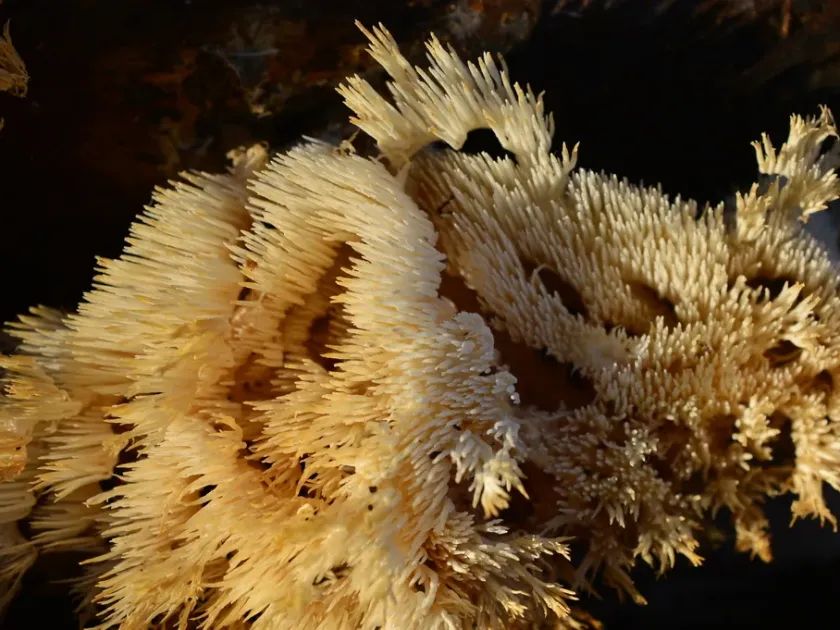
The most visible symptom is the appearance of coral-shaped fruiting bodies protruding from the bark or wounds on the tree trunk. Their bright white color makes them easy to spot against darker wood.
Internally, the wood exhibits symptoms of white rot. The affected tissue loses its density, becomes fibrous and soft, and eventually crumbles under mechanical pressure.
Bark in the vicinity of the infection may show signs of splitting or peeling. This indicates that the mycelium has successfully established itself within the cambium and xylem layers.
Affected trees often exhibit a decline in overall vigor. Symptoms include premature leaf yellowing, thinning of the crown, and the death of individual scaffold branches.
As the rot progresses deep into the heartwood, the tree's structural stability decreases significantly, increasing the risk of trunk failure during windstorms or heavy snowfall.
Pathogen
The causal agent of this wood decay is the xylotrophic fungus Hericium clathroides, belonging to the Hericiaceae family. It acts primarily as a saprotroph, though it can colonize weakened living trees.
The fungus produces a mycelium that invades the host's wood, secreting enzymes that decompose lignin and cellulose. This enzymatic action effectively breaks down the tree's structural tissue.
Its fruiting bodies are highly distinctive, featuring a branched, coral-like morphology with delicate white or creamy spines. These structures are the primary organs responsible for spore production.
Commonly found on hardwood species, including beech, birch, and oak, this fungus plays a significant role in the natural decomposition of wood within forest ecosystems.
The biological lifecycle transitions from vegetative mycelial growth within the wood to the production of sporocarps, typically occurring during late summer and autumn under high humidity.
Conditions for development
High moisture levels are the most critical factor for the development of the fungus. It thrives in shaded, humid forest environments where water evaporation is limited.
The fungus requires specific temperature ranges coupled with frequent precipitation to initiate the formation of its elaborate fruiting bodies and ensure effective spore dispersal.
Trees that have been stressed by drought, competition, or mechanical injury are the most susceptible. Wounds on the bark serve as primary entry points for spores to infect the tree.
Dense forest stands with poor air circulation often provide the microclimate necessary for the fungus to persist and spread efficiently to neighboring trees.
Seasonal weather variability directly impacts the fungus's activity. Extended periods of rain and fog promote higher infection rates compared to dry, hot seasons.
Why it matters
The primary economic impact is the degradation of timber quality. The white rot renders wood unusable for construction or furniture, as it destroys the cellulose and lignin matrix.
The fungus can cause the premature mortality of trees. This leads to a loss of forest productivity and disrupts the composition of local woodland communities.
It poses a significant safety hazard in urban parks and residential areas. Trees weakened by Hericium clathroides are prone to sudden breakage, threatening property and public safety.
The presence of this fungus accelerates the thinning of forest stands. This change in forest density alters light levels, potentially negatively affecting understory plants.
In forest management, the fungus is viewed as a pathogen that requires careful monitoring. Failure to manage infected trees allows the fungal population to expand throughout the stand.
Protection
Sanitation is the most effective control measure. Removing and destroying infected timber helps reduce the total spore load within the immediate forest area.
Preventing mechanical damage to tree trunks during logging or maintenance operations is crucial, as any wound acts as an entry gate for fungal colonization.
Improving air circulation through thinning or selective pruning helps dry out the bark, creating an environment less favorable for fungal growth and spore germination.
Regular inspections of trees, especially after severe weather events, can identify infections at an early stage, allowing for targeted management before the disease spreads.
Promoting overall tree vigor through proper water and nutrient management can help trees defend themselves against fungal pathogens, reducing their overall susceptibility.
Discussion
No discussions yet — be the first.