
Hericium abietis
Hericium abietis
Description
Symptoms
The most visible sign of infection is the presence of the fungus's characteristic fruiting bodies on the trunk of the tree, usually emerging from old wounds.
The internal wood shows clear signs of decay, transforming into a white, fibrous rot. This process significantly degrades the structural integrity of the tree.
Stressed trees may exhibit symptoms such as chlorotic (yellowing) needles, thinning of the canopy, and dieback of the top of the tree.
During a physical inspection, bark lesions or areas where the wood has become soft and spongy are indicators of advanced fungal infection.
Trees severely affected by the fungus are at high risk of windthrow, as the rotten core can no longer support the weight of the trunk during strong winds.
Pathogen
The disease is caused by the fungus Hericium abietis, a member of the Basidiomycota phylum. It is a wood-decaying pathogen that specifically targets various conifer tree species.
The fungus infiltrates the tree through wounds in the bark, broken branches, or frost cracks. Once inside, the mycelium begins to colonize the wood, breaking down structural components.
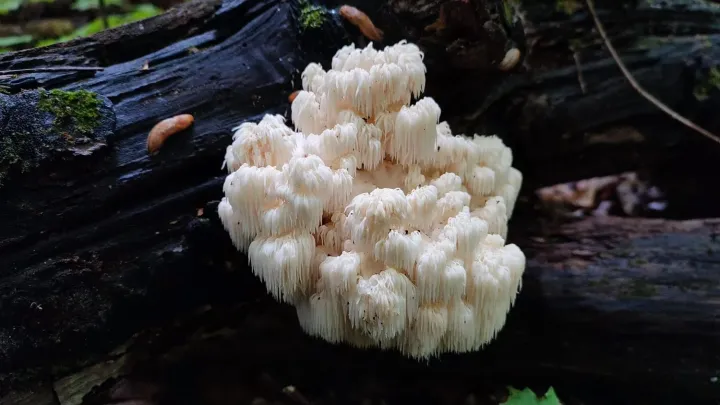
Fruiting bodies of this fungus are highly distinctive, appearing as white or cream-colored, branched structures covered in long, soft spines hanging downwards.
As a parasite, it weakens the living host, but it also functions as a saprotroph, continuing to decompose the wood long after the tree has died.
The fungus reproduces via basidiospores that are spread through the air. These spores can travel long distances, allowing the disease to propagate throughout forested areas.
Conditions for development
The development of Hericium abietis is favored by high humidity and moderate temperatures, which are common in dense, sheltered conifer forests.
The primary prerequisite for infection is the presence of entry points such as wounds, which are necessary for the fungal spores to penetrate the tree's defense systems.
Older trees are generally more susceptible, as they have accumulated more mechanical damage over time and their defense mechanisms are often weakened by age.
Inadequate forest management, resulting in the accumulation of dead wood and debris, increases the total load of fungal spores in the environment.
Seasonal stresses, such as significant temperature fluctuations leading to frost cracks, create optimal conditions for the fungus to establish itself.
Why it matters
The fungus causes severe internal wood rot, which reduces the commercial and structural value of the timber, rendering it unsuitable for most construction purposes.
Infected trees become a liability in managed forests, as they are likely to fall unexpectedly, posing safety risks to workers and visitors.
The disease contributes to the loss of tree vitality, leading to reduced growth rates and, eventually, the death of individual trees within the stand.
If left unmanaged, the pathogen can spread to surrounding healthy trees, creating pockets of mortality that can disrupt the entire forest ecosystem.
The loss of mature, healthy trees negatively impacts the biodiversity and ecological services provided by the forest, including soil stabilization and carbon sequestration.
Protection
Effective management requires the proactive removal of infected trees through sanitary logging to reduce the inoculum level in the forest.
Care must be taken during forestry operations to minimize mechanical injuries to remaining healthy trees, as these wounds provide entry points for the pathogen.
- Monitoring of forest health and early detection.
- Prompt disposal of infected logging residue.
- Maintenance of appropriate stand density for better airflow.
- Prevention of physical damage to the tree bark.
- Selective thinning to promote tree health.
Maintaining a healthy, vigorous forest stand is the best natural defense against this disease, as healthy trees can better compartmentalize infections.
Regular surveys of the forest area help in identifying infected trees early, allowing for targeted control measures before the fungus reaches the reproductive stage.
Discussion
No discussions yet — be the first.