
Hamaspora
Hamaspora
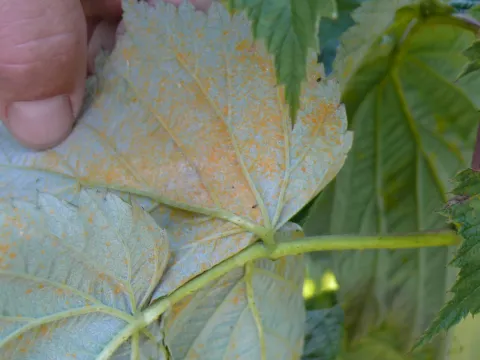
The primary sign of a Hamaspora infection is the development of distinct rust-colored or orange spots appearing mainly on the underside of raspberry leaves.
What the section contains
Hamaspora
Over time, these spots evolve into fungal pustules, which can coalesce, leading to premature yellowing and heavy defoliation of the infected plant.
In certain instances, the infection impacts young canes and leaf petioles, where elongated lesions emerge, weakening the plant's structural integrity.
During advanced stages of the disease, stems may develop cracks, making the plant highly susceptible to secondary infections and severe winter damage.
Observing early chlorotic spots on leaves is essential for timely detection, as these precede the formation of the sporulating pustules on the plant surface.
The disease is caused by a microscopic fungus of the genus Hamaspora, which belongs to the rust fungi group, primarily infecting members of the Rosaceae family.
This fungus acts as an obligate parasite, extracting nutrients directly from the living tissue cells of the host plant throughout the entire growing season.
Pathogen reproduction occurs through spore production, allowing for easy dispersal by wind, rain splashes, or insect activity across healthy plantation sections.
The fungal life cycle involves various stages that enable it to survive successfully on plant debris or in the soil, enduring harsh winter conditions.
Its high level of biological specialization makes this pathogen a particularly dangerous and persistent threat to raspberry cultivation in suitable climates.
Hamaspora development is heavily favored by high levels of humidity and moisture, often triggered by prolonged rainy weather during the summer season.
Temperature ranges between +15 and +22 degrees Celsius are considered optimal for the rapid germination of spores and the infection of new plant parts.
Overcrowded plantations create stagnant air conditions, which facilitate moisture buildup and significantly accelerate the spread of the fungal infection.
Lack of sunlight and heavy shading prevent dew from drying on leaves, creating an ideal environment for the sustained growth of the fungal mycelium.
The overuse of nitrogen-based fertilizers results in soft, succulent plant tissues, making it easier for fungal hyphae to penetrate the epidermis.
The harm caused by Hamaspora is primarily due to a significant reduction in photosynthetic leaf area, which limits the overall nutrient supply of the bush.
Infected plants show reduced fruit bud formation, which leads to a direct decline in total yield during both the current and subsequent growing seasons.
The infection places immense stress on the plant, weakening its immune system and making it less capable of surviving freezing winter temperatures.
Fruit quality is compromised, as the plant cannot direct sufficient sugars and essential microelements into the developing berries due to foliage loss.
In severe cases, the productivity of an entire plantation can be lost, necessitating drastic measures such as the removal and destruction of all infected bushes.
The most critical preventative measure is timely sanitary pruning and the thorough removal of all fallen leaves that act as a reservoir for fungal spores.
Maintaining proper spacing between bushes and ensuring regular pruning for airflow is essential to prevent moisture from lingering in the root zone.
Applying fungicides based on copper or specific systemic treatments at the start of the growing season helps to halt the primary infection of healthy plants.
- Regular monitoring of leaf health.
- Implementation of proper crop rotation practices.
- Application of potassium-phosphorus fertilizers to boost immunity.
- Selection of raspberry varieties resistant to rust diseases.
Once symptoms are identified, the infected parts of the plants must be pruned immediately and disposed of by burning away from the garden area.