
Gyroporaceae
Gyroporaceae
The Gyroporaceae family, commonly known as a group of bolete-like fungi, does not function as a plant disease or agricultural pathogen. These fungi are essential members of the forest ecosystem, forming symbiotic mycorrhizal relationships with various tree species.
What the section contains
Gyroporaceae
In the field of agronomy, it is important to distinguish between parasitic fungi and beneficial soil symbionts. Gyroporaceae species provide trees with water and minerals in exchange for photosynthetically produced sugars, enhancing plant resilience.
These fungi do not affect crop plants such as cereals, vegetables, or fruits. They are strictly confined to wild ecosystems where they rely on woody hosts for survival. Therefore, there is no threat to commercial agriculture or horticulture posed by these organisms.
The biological nature of these mushrooms is defined by their interaction with soil chemistry. They require specific environmental conditions to maintain their mycelial health, which are usually absent in modern cultivated fields.
Understanding their role helps in conservation efforts. They serve as bio-indicators of soil health and undisturbed natural forest environments, reflecting a balanced ecosystem with high biological diversity.
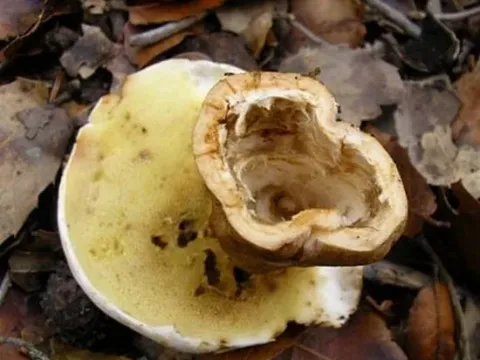
The physical characteristics of Gyroporaceae are distinct. They feature a fleshy, pileate structure with a porous underside that typically transitions from white to yellow as the spores mature.
A key diagnostic feature of many species within this family is the hollow stem, which is brittle and breaks easily. This structure is a unique morphological trait that differentiates them from other bolete species.
Another striking characteristic is the rapid color change of the flesh upon bruising or exposure to oxygen, which usually turns an intense blue. This is a chemical reaction involving specialized pigments within the mushroom cells.
These mushrooms do not produce any symptoms such as chlorosis, necrosis, or lesions on plants. Their growth cycle is independent of the physiological state of surrounding small plants, focusing solely on the roots of larger trees.
- Hollow and often brittle stipes.
- Rapid bruising reaction (turning blue).
- Tubular hymenophore (pores).
- Preference for sandy soil environments.
Gyroporaceae fungi thrive in well-drained, sandy soils that allow for efficient gas exchange. They are highly sensitive to soil moisture; excessive water retention can lead to the decay of their delicate mycelial network.
Development is seasonal and occurs primarily in late summer and autumn when temperature and humidity levels are optimal. They require a stable environment provided by natural forest leaf litter for fruiting.
Sunlight does not directly influence their development, as they rely on their symbiotic hosts for metabolic energy. However, they are highly sensitive to chemical fertilizers and pesticides, which can disrupt their root colonization.
Soil compaction caused by heavy agricultural machinery is lethal to the mycorrhizal systems of Gyroporaceae. For this reason, they are almost never found in arable crop lands or intensively managed pastures.
Maintaining a natural, undisturbed state of the forest floor is the primary condition for the continued existence of this mushroom family. Their presence indicates high ecological stability and soil health.