
Haematomma
Haematomma
Description
Symptoms
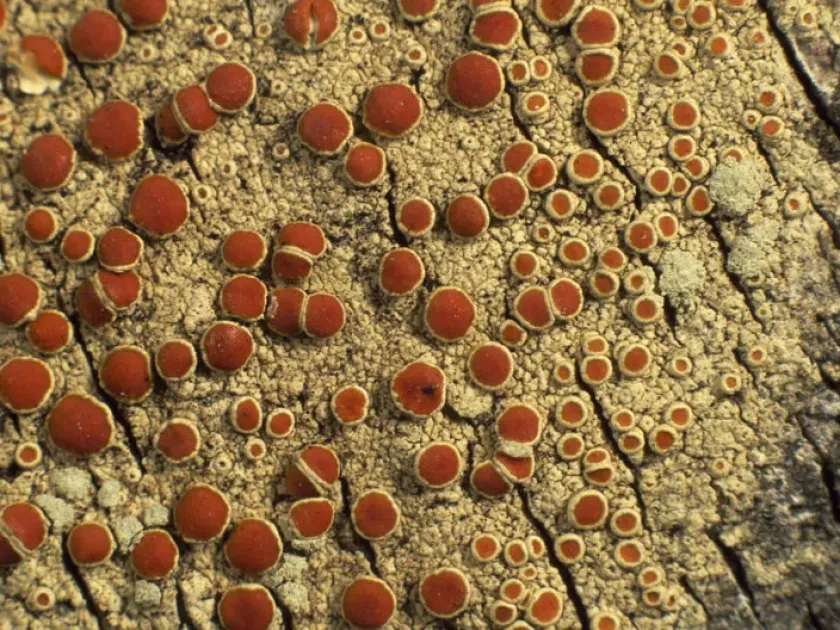
Haematomma is a genus of crustose lichens that frequently appears on the bark of woody plants. The primary sign of presence is the development of tight, crust-like thalli that adhere firmly to the bark surface, often forming irregular grey or whitish patches.
A distinctive feature of this genus is the presence of apothecia, which are small, reddish or brownish fruit bodies. These structures give the affected bark areas a unique appearance, often described as having a reddish or "bloody" tint, which is a key identification marker.
Unlike parasitic organisms that penetrate deep into the phloem or xylem, Haematomma stays on the surface. However, the presence of these lichens often indicates that the tree's growth processes have slowed, which is common in aging or stressed specimens.
In cases of heavy colonization, the lichens can cover large portions of the trunk and primary branches. This gives the tree an aged or neglected aesthetic, as the lichen layer can obscure the natural texture and color of the bark.
As the colony expands, it can cause the surface layer of the bark to feel rougher. While the lichen itself is not destroying the wood, its persistent presence can interfere with the tree's visual health and act as an indicator of environmental conditions.
Pathogen
Haematomma is not a disease in the sense of a viral or bacterial pathogen. It is a symbiotic organism, specifically a lichen composed of a fungal partner and an algal partner living in a mutually beneficial relationship.
The fungal component provides structural support and protection for the alga, while the alga contributes nutrients through photosynthesis. This allows the organism to colonize nutrient-poor surfaces, such as tree bark, where other plants cannot survive.
Reproduction occurs primarily through spores or by the fragmentation of the thallus. These reproductive units are easily dispersed by wind, rain, or even insects, allowing the lichen to spread across different trees in an orchard or forest.
It functions as an epiphyte, meaning it uses the tree solely for physical support without extracting nutrients directly from the living plant cells. Therefore, it is classified as a biological colonizer rather than a parasite.
Despite not being a primary pathogen, its biology is highly specialized for survival. It thrives in various climates and is known for its resilience against desiccation and extreme temperature fluctuations, making it a permanent resident on many hosts.
Conditions for development
The development of Haematomma is heavily influenced by high ambient humidity and moderate temperatures. Orchards with poor airflow and dense canopy structures provide the perfect environment for these lichens to establish themselves.
Shaded, damp areas within the tree canopy are particularly prone to colonization. Because lichens rely on moisture from the air, stagnant air pockets allow them to hydrate and grow more efficiently than in open, windy areas.
Older trees with weathered, rough, or cracked bark are the most common targets. The crevices in mature bark act as traps for moisture and organic debris, creating a fertile site for the lichen spores to germinate and anchor.
Poor orchard management, such as the lack of periodic pruning, creates a dense canopy that limits sunlight penetration. This constant shade prevents the bark from drying out after rainfall, fostering a long-term suitable habitat for the lichen.
Environmental cleanliness also plays a role. While some lichens are sensitive to air pollution, Haematomma is quite tolerant, often appearing in rural or semi-rural areas where the bark surface has remained undisturbed for several years.
Why it matters
The main risk associated with Haematomma is the inhibition of normal gas exchange between the bark and the atmosphere. Bark is essential for the tree's metabolic respiration, and a thick lichen cover can interfere with these vital processes.
The lichen layer tends to trap and hold moisture against the bark surface for extended periods. This excessive moisture creates a micro-habitat suitable for the growth of opportunistic mold and decay-causing fungi.
Furthermore, dense lichen colonies provide excellent shelter for various orchard pests, including scales and mites. These pests can hide beneath the lichen structure, protected from environmental stressors and traditional pesticide applications.
The presence of significant lichen cover is often a secondary symptom of a tree that is under stress from other factors, such as improper nutrition or root health issues. It signals that the tree's self-cleansing mechanisms are failing.
If left unmanaged, the coverage can expand to cover healthy branches, potentially leading to premature branch dieback or reduced vigor in the long term, thereby impacting the overall productivity of the horticultural crop.
Protection
The most effective strategy is the mechanical removal of the lichen. During the dormant season, when the bark is moist, brushes or scrapers can be used to gently remove the lichen thalli without harming the living bark tissue beneath.
After mechanical cleaning, applying a whitewash (lime-based paint) to the trunks and base of major branches is highly recommended. Adding copper-based compounds to this mixture provides a lasting disinfectant barrier.
Routine pruning is vital for prevention. By opening up the canopy, you increase light penetration and air circulation, making the tree bark significantly less hospitable for lichen colonization.
Spring and autumn applications of copper-based fungicides serve as an excellent preventative measure. These treatments sanitize the bark surface and help eradicate developing lichen colonies before they can become established.
Overall orchard health is the best defense. Properly fertilized, well-hydrated, and vigorous trees have faster bark regeneration rates, which naturally makes it much harder for slow-growing lichens like Haematomma to take hold.
Discussion
No discussions yet — be the first.