
Haematomma vulgare
Haematomma vulgare
Description
Symptoms
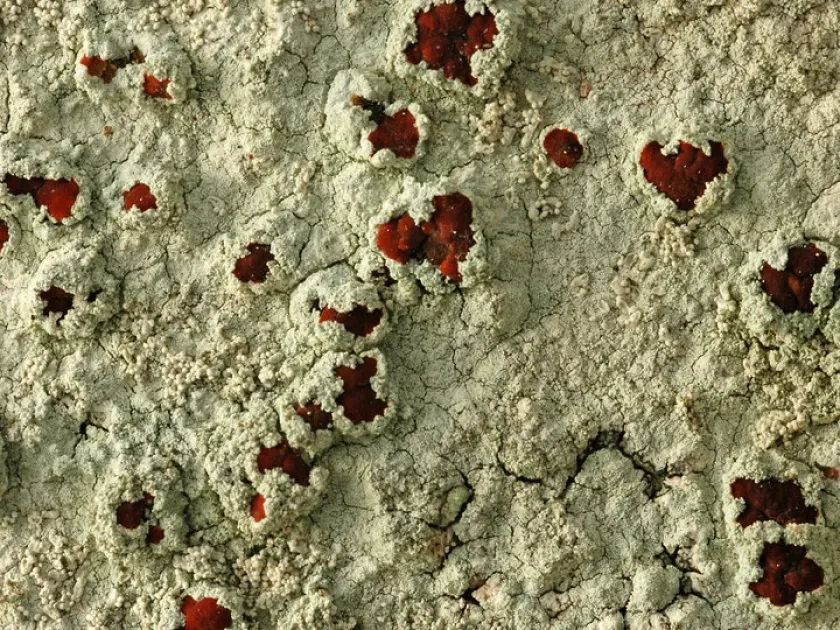
The primary symptom of a Haematomma vulgare colony is the appearance of grayish-white or yellowish crusts on the tree bark. These patches often have a grainy or cracked appearance.
The presence of small, reddish or brownish apothecia (fruiting bodies) is a distinct characteristic of this genus, setting it apart from other common tree lichens.
Colonization typically begins on the northern side of the tree trunk or in shaded areas where humidity persists. The growth can slowly expand to cover significant portions of the bark surface.
The bark underneath the lichen may appear darker due to the retention of moisture. If the tree is otherwise healthy, the underlying bark tissue remains structurally intact and free of lesions.
It is important to differentiate this lichen from true bark diseases. Unlike fungal infections (like cankers), there are no necrotic spots, oozing sap, or soft rot associated with the lichen.
Pathogen
Haematomma vulgare is a species of crustose lichen belonging to the Lecanoraceae family. Although sometimes mistakenly referred to as a plant disease in agricultural contexts, it is a symbiotic organism comprised of fungi and algae.
This organism is not a parasite in the true biological sense, as it does not extract nutrients or moisture directly from the tree tissues. The tree bark serves merely as an inert substrate for attachment and photosynthesis.
The lichen forms a crust-like thallus that adheres firmly to the bark. It does not penetrate deep into the cambium or wood, meaning it does not disrupt the tree's internal vascular system.
Propagation occurs via spores carried by wind or through small thallus fragments scattered by rain. This allows the lichen to colonize various surfaces under suitable environmental conditions.
In ecology, this species serves as a bioindicator of air quality, as it is highly sensitive to sulfur dioxide and atmospheric pollutants. Its presence usually signifies a relatively healthy and clean environment.
Conditions for development
The development of Haematomma vulgare is largely dependent on high humidity and poor airflow. Orchards with overly dense canopies provide the perfect microclimate for the lichen to thrive.
Older trees with rough, thick bark are more susceptible to colonization. The crevices in mature bark act as traps for spores and moisture, facilitating the establishment of the organism.
Insufficient light penetration into the tree canopy allows the lichen to grow more aggressively, as it prefers moderate, diffused light rather than direct, harsh sunlight.
Poor orchard maintenance, such as lack of pruning, contributes significantly to the spread of lichen. Dense foliage traps humidity long after rainfall, maintaining the damp surface required for lichen growth.
Trees experiencing stress from nutrient deficiencies or other diseases may have weakened bark resistance, making them more prone to hosting various epiphytic organisms.
Why it matters
Haematomma vulgare does not directly damage the tree's internal tissues. However, very heavy coverage might slightly interfere with the bark's gas exchange through lenticels, potentially impacting the tree's respiration.
A significant indirect harm is that the thick lichen crusts provide shelter for common orchard pests, including scale insects, mites, and leafhoppers, which use the spaces under the lichen to overwinter.
The presence of lichen can mask the early symptoms of serious bark diseases such as bacterial canker or fungal necrosis, delaying timely diagnosis and treatment.
While not lethal, severe lichen buildup can lead to a decline in the aesthetic value of the orchard, which is particularly relevant in nurseries, landscaped areas, or public gardens.
In extreme cases, the moisture trapped beneath the lichen can lead to uneven cooling of the bark during cold snaps, which may increase the risk of frost cracks on the trunk.
Protection
The most effective preventive measure is regular canopy pruning. This ensures adequate airflow and light exposure, which reduces the surface moisture levels that lichens require to survive.
Mechanical removal using a stiff brush or a non-metallic scraper during the dormant season is a highly effective way to clear the bark without damaging the underlying tissue.
After manual cleaning, applying a horticultural whitewash or lime-based paint can help neutralize the surface, making it difficult for lichen spores to re-establish.
Copper-based fungicides applied during the dormant phase (early spring) can effectively kill lichen spores and also provide protection against various fungal bark pathogens.
Maintaining high orchard hygiene and ensuring proper tree vigor through balanced fertilization supports healthy bark growth, making it less hospitable for lichen colonization.
Discussion
No discussions yet — be the first.