
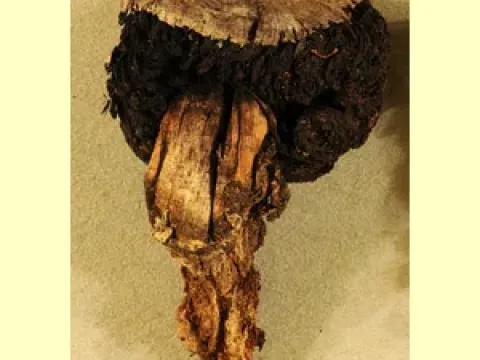
Gyrophragmium
Gyrophragmium
Gyrophragmium is a genus of fungi belonging to the Agaricomycetes class. While primarily categorized as saprotrophic organisms, they can occasionally act as opportunistic pathogens, colonizing the rhizosphere and root systems of weakened agricultural crops.
What the section contains
Gyrophragmium
The biological structure of the fungus involves the formation of gasteroid-like fruiting bodies. These structures develop from an extensive mycelial network that permeates the soil and organic debris present in the growing medium.
Dissemination of the pathogen primarily occurs through spores, which are distributed by wind, irrigation water, and the movement of contaminated soil particles on agricultural machinery.
Taxonomically, the genus is distinguished by its specific hymenial arrangement, which requires professional microscopic analysis for accurate species identification in field samples.
These fungi possess enzymatic systems capable of breaking down complex lignin compounds, allowing them to persist in the soil for extended periods even in the absence of a live host plant.
The most prominent sign of Gyrophragmium presence is the emergence of distinct fruiting bodies around the base of the plant stem. These structures often feature a stout stalk and a dome-shaped cap, partially embedded in the soil.
Affected plants exhibit symptoms of stunted growth and overall loss of vigor. Leaves may show yellowing or wilting during peak sunlight hours, indicating compromised root function and nutrient uptake.
Visual inspection of the root zone often reveals white or greyish mycelial strands wrapping around the roots. This network physically impedes the plant's ability to absorb water and essential minerals.
Severe infestations lead to root necrosis, which is often accompanied by a distinct fungal odor in the soil surrounding the affected crop.
On the soil surface, white cobweb-like mycelial mats may appear, indicating an active phase of colony growth and potential spore production near the crop host.
Gyrophragmium development is heavily correlated with the presence of raw, undecomposed organic matter in the soil. High concentrations of manure or uncomposted residues create an ideal environment for mycelial expansion.
Excessive soil moisture is a critical driver for the pathogen. Poorly drained fields or over-irrigation provide the high humidity levels necessary for rapid fungal colonisation of the root zone.
Compacted, poorly aerated soils create anaerobic micro-climates that favor these fungi over beneficial soil microbes, allowing the pathogen to gain a competitive advantage.
Monoculture farming practices significantly contribute to the build-up of spore populations in the soil profile, increasing the risk of infection in subsequent growing seasons.
Temperatures ranging from 15°C to 22°C are generally considered optimal for the vegetative growth of the mycelium and the subsequent development of fruiting bodies.
The primary impact of the fungus is the reduction of plant physiological efficiency. By damaging the root system, it prevents proper nutrient uptake, leading to significant yield losses and reduced quality of harvest.
The fungus actively competes with the crop for water and soil-bound minerals, essentially stripping the plant of the resources provided through fertilization.
Root damage caused by the fungus creates entry points for secondary bacterial pathogens, which further complicate plant health and increase the likelihood of total plant death.
The economic burden includes decreased market value of the produce, costs associated with sanitation efforts, and the potential need to abandon infected fields for future planting.
On a larger scale, the loss of plant density due to the disease disrupts field uniformity, leading to inefficient resource utilization and increased management costs.
Deep plowing and soil inversion are effective cultural practices, as they facilitate the rapid mineralization of organic matter and disrupt the fungus’s food supply.
Liming acidic soils to reach a more neutral or slightly alkaline pH can effectively inhibit the development of many Gyrophragmium species that thrive in acidic conditions.
Biological control methods, particularly the application of Trichoderma-based formulations, have shown promise in outcompeting the pathogen within the rhizosphere.
Adopting a robust crop rotation schedule is essential to break the pathogen's life cycle and prevent the accumulation of spores in the topsoil.
- Remove and destroy all fungal fruiting bodies manually upon detection.
- Improve field drainage systems to prevent waterlogging.
- Optimize fertilizer regimes to ensure plant vigor without excessive organic amendments.