
Gyrophragmium dunalii
Gyrophragmium dunalii
Description
Symptoms
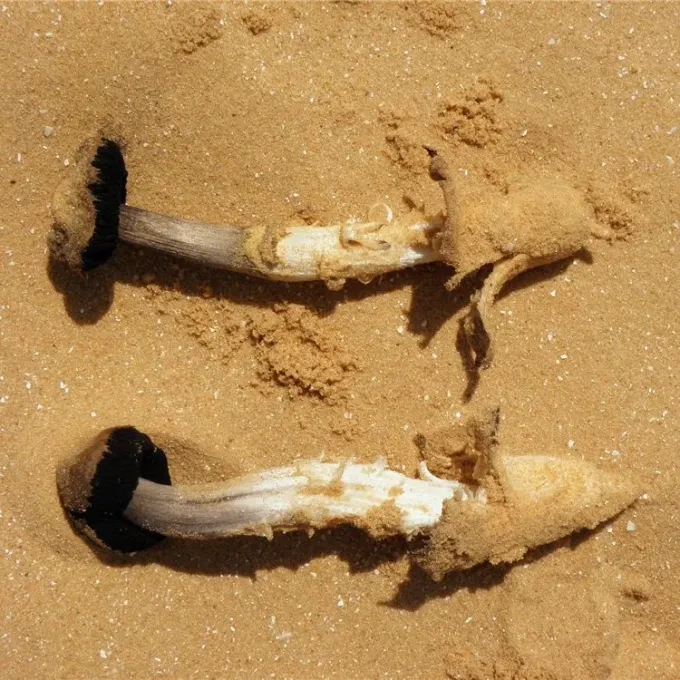
Gyrophragmium dunalii is a unique gasteroid fungus that often causes confusion due to its unusual appearance in agricultural fields.
The fruiting bodies are often conical or hemispherical, partially buried in sandy soil, which makes them stand out against the background of regular crops.
The outer covering of the fungus is firm and tends to crack, revealing a dark, powdery interior mass containing spores.
Farmers may observe these structures near the roots of plants, which can be mistakenly identified as a fungal infection or root disease.
The appearance of these mushrooms is a natural occurrence in certain environmental conditions and does not signify a pathological state of the vegetation.
Pathogen
The organism Gyrophragmium dunalii is a saprotrophic fungus belonging to the Agaricaceae family.
It is crucial to clarify that this fungus is not a plant pathogen; it feeds exclusively on dead organic matter in the soil.
Unlike parasitic fungi that attack living plant tissues, Gyrophragmium dunalii does not infect crops or cause plant diseases.
It performs a beneficial role in the environment by acting as a decomposer, breaking down plant debris and contributing to soil health.
Therefore, it should not be categorized as a disease-causing agent in any agricultural handbook or pest management guide.
Conditions for development
This fungus thrives in specific conditions, particularly in light sandy or sandy-loam soils with high aeration and low water retention.
It is commonly found in arid and semi-arid regions, including deserts, dunes, and fallow agricultural lands.
The growth of fruiting bodies is triggered by moderate rainfall, which provides the necessary moisture for the fungus to complete its reproductive cycle.
High temperatures in open areas are conducive to its growth, as the species is adapted to intense sunlight and warm surface conditions.
Disturbed or uncultivated soils with sufficient organic residue are the most likely places to find populations of this fungus.
Why it matters
Gyrophragmium dunalii causes no harm to agricultural crops and poses zero risk to overall farm productivity or harvest quality.
There is no evidence of interaction between this fungus and the root systems of crops, ensuring that plant health remains unaffected.
The fungus does not produce toxins or secondary metabolites that could inhibit the development of common field crops.
Instead, its presence indicates a high level of biological activity in the soil, which is generally a positive ecological sign.
Agricultural managers can safely ignore the presence of these fruiting bodies as they do not constitute an economic threat.
Protection
No chemical control measures or fungicide applications are necessary for Gyrophragmium dunalii, given its non-pathogenic nature.
Any perceived need to eliminate the fungus can be addressed through standard soil management practices rather than chemical interventions.
Routine cultivation, including plowing and deep tillage, effectively disrupts the mycelial network and prevents the formation of fruiting bodies.
Improving soil structure through organic amendments can also help integrate the fungus more effectively into the soil ecosystem.
- Deep plowing and soil tillage.
- Proper crop rotation to maintain soil health.
- Use of organic composts to balance soil microflora.
Discussion
No discussions yet — be the first.