
Graphidaceae lichens
Graphidaceae
Graphidaceae lichens are a family of epiphytic organisms consisting of a symbiotic association between a fungus and algae or cyanobacteria. In agronomy, their presence on tree trunks is viewed as a biotic factor that can negatively affect the long-term health of orchard trees.
What the section contains
Graphidaceae lichens
These lichens are autotrophic, meaning they produce their own organic matter and do not parasitize the internal tissues of the tree. They utilize the bark solely as a substrate for attachment and stability.
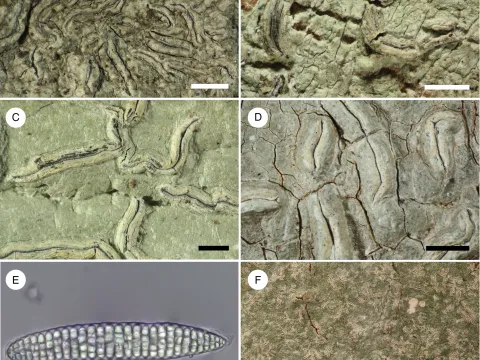
The name of the family is derived from the appearance of their apothecia, which look like intricate script or scribbles, often referred to as "script lichens."
While not a traditional infectious disease, their colonization is considered a sign of poor tree maintenance or an environment with high humidity levels.
They propagate through spores that are dispersed by wind and rain, which germinate upon finding stable, sufficiently moist surfaces on the bark of older trees.
The most visible symptom is the appearance of distinct, scribble-like patterns on the bark, characterized by fine black, grey, or white lines and streaks.
As the lichen colony matures, it causes the bark surface to appear rough, with color variations ranging from ashy grey to greenish-white, contrasting with the natural bark tone.
Upon close inspection, one can observe that the lichen is firmly attached to the surface, forming patches that grow and merge over time to cover large sections of the trunk.
A key sign of excessive colonization is a reduction in bark elasticity, which can lead to micro-cracking in the bark during extreme temperature fluctuations.
The lichens may block the lenticels of the tree, which are critical for gas exchange, potentially hindering the normal physiological respiration of the tree bark.
High relative humidity is the primary environmental factor that promotes the rapid growth and spread of Graphidaceae lichens within a garden or orchard.
Dense tree canopies that prevent proper air circulation and sunlight penetration create a stagnant, moist microclimate ideal for lichen development.
Shaded areas within the orchard are more susceptible to colonization, as these lichens prefer moisture and do not require direct sunlight for their metabolic processes.
Older trees with damaged, aged, or rough bark provide the necessary surface stability and moisture retention needed for the spores to germinate and establish successfully.
These lichens thrive in clean air, acting as bioindicators; their presence suggests that the local environment is free from significant atmospheric pollution.
The dense layers of lichen provide a perfect shelter and overwintering habitat for various pests, including scale insects, mites, and moths, which hide underneath the thallus.
Persistent moisture trapped under the lichen layer can promote the growth of secondary pathogenic fungi and bacteria, leading to bark rot and necrosis.
By interfering with the tree's gas exchange, the lichens can weaken the tree's overall metabolism, making it more susceptible to other diseases and environmental stress.
In cases of severe infestation, the tree's vigor may decrease, leading to reduced shoot growth and potential premature dieback of older branches.
The aesthetic value of trees is significantly degraded by heavy lichen coverage, which is a major concern in ornamental gardens and park landscapes.
Mechanical cleaning is the most effective manual control method; using scrapers or stiff brushes during damp weather allows for the removal of lichen without damaging the underlying bark.
Applying a whitewash solution of lime mixed with copper sulfate to the trunks during early spring or late autumn acts as a powerful disinfectant and deterrent against regrowth.
Regular crown pruning is essential to improve airflow and light penetration, creating an environment that is unfavorable for epiphytic colonization.
Preventative application of copper-based fungicides can help sanitize the bark surface and inhibit the germination of new lichen spores.
- Maintain tree health through proper fertilization and irrigation to strengthen natural defenses.
- Seal wounds and cavities to prevent pathogens from entering through areas colonized by lichens.
- Remove and prune heavily infested branches to curb the spread of spores to healthy parts of the garden.