
Graphis
Graphis
Graphis is a genus of lichens in the family Graphidaceae, known for their unique growth patterns on tree bark. While often mistaken for a pathogenic disease, it is technically an epiphyte that does not feed on the host plant's tissues.
What the section contains
Graphis
Like all lichens, Graphis is a composite organism formed by a symbiotic relationship between a fungus and an alga or cyanobacteria. The fungus provides structural support, while the algae produce energy via photosynthesis.
The most widespread species, Graphis scripta, is commonly found on various hardwood trees. It does not penetrate deep into the plant's vascular system, residing strictly on the outer bark surface.
Reproduction occurs through spores released into the environment, which land on bark and develop into new thalli under appropriate humidity conditions. The growth process is relatively slow compared to parasitic fungi.
In agronomy, the presence of Graphis is often a secondary issue. It is frequently considered a biological indicator of the tree's overall vitality and the environmental conditions of the orchard or forest.
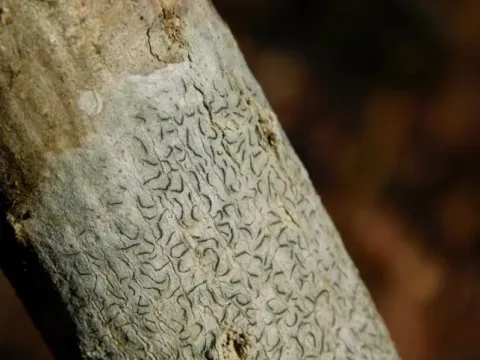
The most distinct feature of Graphis is the intricate, hieroglyph-like pattern on the bark surface. These are the apothecia, or fruiting bodies of the fungus, which grow in branched or linear configurations.
The thallus typically appears as a thin, crusty layer on the bark, ranging in color from light grey to white. It adheres tightly to the tree, giving the bark a textured, weathered appearance.
Unlike parasitic infections that cause oozing or tissue necrosis, Graphis lesions are dry and do not cause significant physical damage to the wood beneath them.
Over time, these "written" patterns can expand, covering large segments of the tree trunk and main branches. The density of the coverage varies depending on the tree species and environmental factors.
In advanced stages, the combination of Graphis and other epiphytic organisms like mosses may significantly alter the visual appearance of the tree, sometimes masking more serious underlying health issues.
Graphis thrives in environments characterized by high humidity and moderate light. It is frequently observed in old-growth areas, shaded orchards, or regions with high precipitation.
Bark condition is a key factor; older trees with slower bark renewal cycles are more susceptible to colonization. The stability of the bark provides a perfect, long-term substrate for the lichen to grow.
Poor aeration and lack of regular maintenance in dense planting systems create a microclimate with high moisture retention, which is highly favorable for the establishment of Graphis colonies.
Atmospheric purity also plays a significant role. Lichens are notoriously sensitive to pollution, so the presence of healthy Graphis populations often indicates a relatively clean, unpolluted environment.
The pH level of the bark also influences colonization. Certain tree species provide a more suitable chemical environment for Graphis spores to germinate and thrive compared to others.
The primary concern is the physical obstruction of gas exchange. By covering the bark, the lichen layer can potentially reduce the efficiency of lenticels, which are essential for the tree's respiration.
A dense layer of lichen creates a moist microhabitat that serves as a hiding place for various bark pests, including mites and scale insects, protecting them from predators and weather.
The "camouflaging" effect of the lichen can be detrimental to management. It makes it extremely difficult for agronomists to spot early symptoms of necrotic diseases or insect infestations.
In high-value ornamental trees or nursery settings, the presence of Graphis is considered an aesthetic defect. It lowers the visual quality of the bark, which is a major concern for landscape aesthetics.
While not a direct parasite, the presence of heavy lichen cover is often a sign of a tree's reduced vigor. It suggests that the tree is growing slowly and may require supplemental care and fertilization.
Mechanical removal is the most reliable method for controlling Graphis. Careful scrubbing of the bark during dry periods removes the lichen without causing damage to the living inner bark.
Post-cleaning, applying a wash with copper-based or iron-based fungicides can disinfect the bark and prevent new spores from establishing themselves on the treated surface.
Proper pruning is essential to improve airflow through the canopy. Increased sunlight and better ventilation dry out the bark, creating a hostile environment for lichen survival.
Promoting tree health is the best long-term prevention. Through proper fertilization and irrigation, trees grow more vigorously and shed old bark layers more frequently, naturally keeping the lichen off.
Applying traditional tree whitewash (lime-based mixtures) can effectively deter lichen growth by creating an alkaline surface, which disrupts the biological requirements of the lichen thallus.