
Graphiola leaf spot
Graphiolaceae
Description
Symptoms
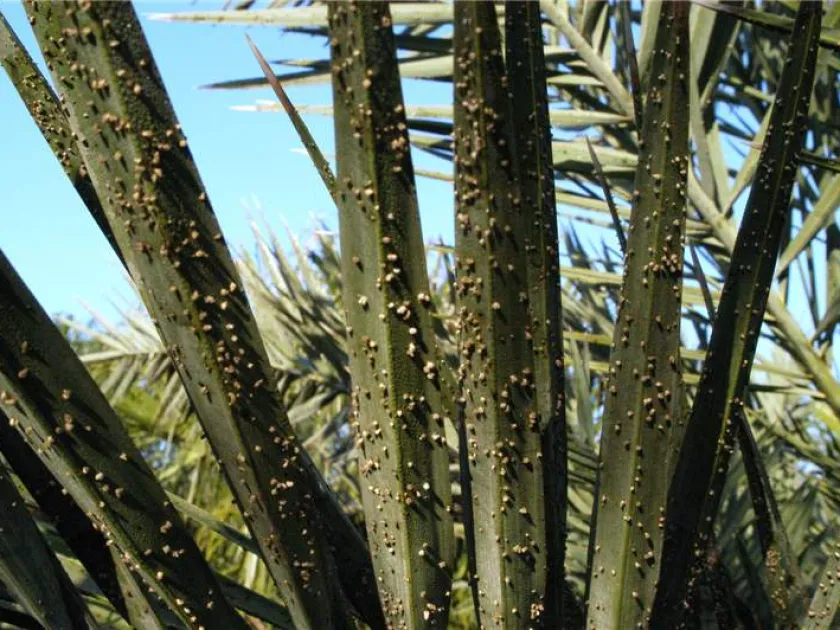
The characteristic sign of this disease is the appearance of numerous small, wart-like pustules scattered across both surfaces of the leaves.
These pustules typically start as small yellow or brown dots that gradually turn black as the fungal reproductive structures mature.
Each spot often has a slightly raised center, which gives the leaf surface a distinctly rough and textured feel to the touch.
In advanced stages, the foliage may develop a yellowing or chlorotic halo around the fungal spots, indicating significant tissue stress.
Eventually, the affected leaves exhibit premature yellowing and necrosis, leading to a noticeable decline in the overall vigor of the palm tree.
Pathogen
The disease is caused by the fungus Graphiola phoenicis, a member of the order Graphiolales known to parasitize various palm species.
The pathogen completes its life cycle within the host tissues, producing fruiting bodies that eventually rupture the leaf epidermis.
Spores produced by the fungus are easily dispersed through the air or by splashing water, facilitating its spread to neighboring susceptible plants.
This fungus is highly specialized, meaning it requires specific host tissues and environmental conditions to establish a successful infection.
Microscopic analysis reveals a complex structure of the fungus that allows it to survive periods of relative dormancy until conditions become favorable.
Conditions for development
High humidity levels are the primary driver of Graphiola leaf spot development, as the fungus requires wet surfaces for spore germination.
Improper watering practices, especially overhead irrigation that keeps the foliage constantly damp, significantly increase the risk of infection.
Poor air circulation within greenhouses or interior spaces prevents leaves from drying quickly, creating an ideal environment for the pathogen.
Plants that are stressed due to inadequate lighting or poor nutrient management are more susceptible to this fungal attack.
Moderate temperatures, generally between 20°C and 25°C, are considered ideal for the rapid growth and sporulation of this fungus.
Why it matters
The infection significantly reduces the photosynthetic capacity of the plant by damaging the leaf surface, which stunts overall growth.
A heavy infestation causes massive leaf drop, which leaves the palm bare and weakens its structural and physiological integrity.
The aesthetic value of the plant is destroyed, making it useless for landscape or decorative purposes due to the unsightly spots.
Weakened plants are highly prone to secondary infections and infestations by other pests that thrive on damaged or stressed botanical tissues.
If left unmanaged, chronic infections can lead to the slow death of the palm as it gradually loses its ability to produce energy.
Protection
The first line of defense is the immediate pruning and destruction of all infected leaves to minimize the source of fungal inoculum.
Switch to drip irrigation or careful soil-level watering to ensure the foliage remains dry and inhospitable to the fungal spores.
Increase spacing between plants and improve airflow in the area to lower humidity and ensure that leaves dry out rapidly after watering.
Apply copper-based fungicides regularly during periods of high humidity to protect healthy foliage and suppress the development of the fungus.
Maintain optimal cultural practices, including proper fertilization and lighting, to keep the plants strong and resistant to environmental pathogens.
Discussion
No discussions yet — be the first.