
Godronia canker
Godroniaceae
Godronia canker is caused by fungi belonging to the Godroniaceae family, most notably the species Godronia cassandrae, which is known for infecting various berry bushes and fruit trees.
What the section contains
Godronia canker
The pathogen is an ascomycete fungus that survives as mycelium within infected bark tissue and dormant spores on fallen leaves and dead wood.
Its life cycle involves the production of small, cup-shaped fruiting bodies known as apothecia, as well as pycnidia, which release spores during humid conditions.
The fungus typically enters the host plant through wounds, such as pruning cuts, frost cracks, or sites damaged by insects, where it begins to colonize the bark and cambium.
As the mycelium grows, it disrupts the flow of nutrients and water within the plant, eventually causing the death of the infected branches or stems.
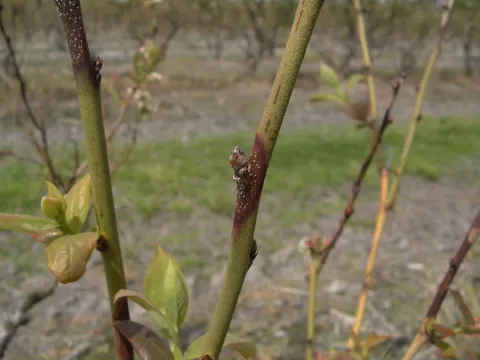
The primary symptom of Godronia canker is the development of elongated, sunken lesions or cankers on stems and branches, often characterized by a reddish-brown or dark color.
As the infection progresses, the centers of these cankers may crack, and in moist conditions, tiny dark fruiting structures of the fungus become visible on the surface.
Leaves on infected branches often show signs of distress, including premature yellowing, wilting, and browning, as the blockage of water transport manifests in the canopy.
In severe cases, the canker may encircle the stem entirely, leading to the death of the entire section of the plant located above the point of infection.
Persistent infection can lead to bark peeling and the exposure of the wood, making the plant structure brittle and highly susceptible to breakage.
Godronia canker thrives in cool, wet environments, which favor the spread of spores and the establishment of new infections on susceptible plant tissues.
High relative humidity and prolonged periods of rain create the perfect conditions for the fungus to germinate and penetrate the bark of its host.
Poor plant hygiene, such as leaving pruning debris in the field or failing to clear away fallen infected branches, increases the concentration of spores in the vicinity.
Plants that have been stressed by drought, poor soil fertility, or winter injury show a reduced ability to defend themselves against fungal colonization.
Densely planted orchards with poor airflow contribute to moisture retention, which facilitates the rapid spread of the fungus from one plant to another.
The disease causes significant economic losses by killing productive branches, which directly reduces the overall yield and fruit quality of the orchard.
Because the disease affects the structural integrity of the wood, it increases the risk of plant loss during extreme weather events like winter frosts.
Chronic infestation weakens the plant over several seasons, leading to poor vigor, reduced growth rates, and eventually the premature decline of the entire bush or tree.
In nurseries, Godronia canker can devastate young stock, rendering thousands of plants unsellable and requiring intensive sanitation measures.
If left untreated, the accumulation of spores on the property can make it extremely difficult to manage the disease, often requiring the removal of infected plants.
Pruning out and removing all infected stems is the most effective way to control the spread, provided the material is burned or removed from the site entirely.
Sanitation of tools is critical; blades must be disinfected with alcohol or other appropriate agents between each plant to prevent cross-contamination.
Protecting wounds created during pruning by applying appropriate sealants or wound paints can prevent fungal spores from settling on the exposed tissue.
Preventive sprays, such as copper-based fungicides applied during dormancy or early spring, help to reduce the spore load on the bark surface.
Maintaining optimal plant health through balanced fertilization and thinning of the canopy helps ensure that plants are resilient enough to ward off infections.