
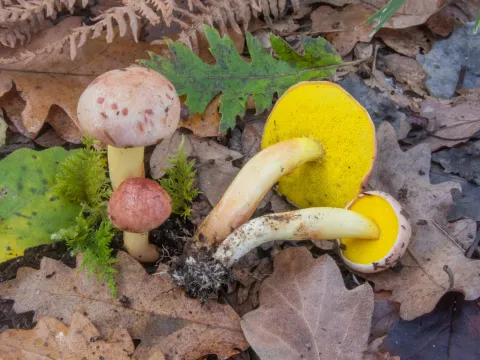
Golden bolete
Aureoboletus gentilis
Aureoboletus gentilis, commonly known as the Golden bolete, is not a plant pathogen and does not cause diseases in plants.
What the section contains
Golden bolete
It is a mycorrhizal fungus that maintains a symbiotic relationship with the root systems of various tree species, particularly broad-leaved trees.
The fungus establishes a mutualistic association where it provides trees with water and nutrients absorbed from the soil, receiving carbohydrates in return.
This species lacks the parasitic machinery required to attack or kill living plant tissue; instead, it is an essential component of forest health.
Scientific evidence confirms that the presence of Golden boletes in a forest ecosystem supports tree vigor and soil vitality through effective nutrient cycling.
The Golden bolete thrives primarily in deciduous woodland habitats, where it associates with specific host trees like oak and beech.
Successful development of the mushroom fruiting body requires consistent humidity levels and mild temperatures throughout the summer and early autumn.
The fungus prefers undisturbed soil environments that are rich in organic matter, allowing the mycelium to spread effectively within the leaf litter.
Its natural distribution is dictated by the range of its tree partners, as it depends on the host for survival and the initiation of its life cycle.
Environmental stressors, such as prolonged drought and severe soil compaction, can significantly impede the proliferation of the fungal colony.