
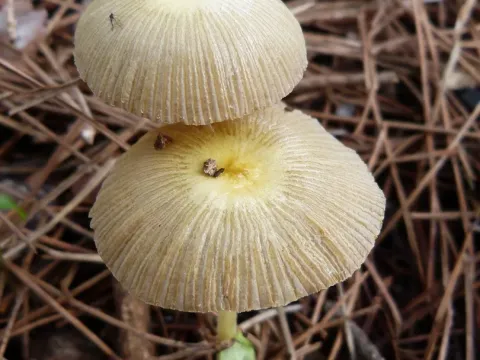
Golden bolbitius
Bolbitius titubans
Golden bolbitius (Bolbitius titubans) is a small mushroom of the Bolbitiaceae family, which is widely misidentified by novice gardeners as a plant disease.
What the section contains
Golden bolbitius
In reality, this organism is a saprotroph, meaning it feeds on decaying organic matter rather than attacking living plant tissues.
It acts as a decomposer in the soil, helping to break down complex vegetable fibers into nutrients that plants can absorb more easily.
Because it lacks the parasitic mechanisms required to infect living cells, it poses absolutely no biological threat to crops or garden plants.
Mycological studies classify this species as a beneficial component of the soil ecosystem that contributes to natural nutrient recycling.
The fungus thrives in environments rich in organic material, such as lawns with leaf litter, mulched garden beds, or areas heavily treated with manure.
Moisture is the primary driver for its development; the mushrooms typically appear after significant rainfall or during periods of high humidity.
It prefers temperatures ranging from 18 to 26 degrees Celsius, coinciding with the active growing season of most ornamental and food crops.
The mycelium resides in the upper soil layers, requiring a constant but not waterlogged source of decomposing organic carbon to sustain its metabolism.
Spores are efficiently dispersed by wind currents, allowing the fungus to colonize any suitable habitat that provides enough moisture and nutrients.
There is no direct harmful impact from Bolbitius titubans on plant health, as it is strictly a non-pathogenic saprotrophic fungus.
Its presence is merely a bioindicator, suggesting that the soil contains high levels of decomposing matter and moisture, which may be favorable for other soil organisms.
While the mushrooms themselves are harmless, their sudden appearance in greenhouses might indicate poor ventilation or excessive stagnant moisture.
The fungus does not produce secondary metabolites that inhibit plant growth or compete with root systems for vital mineral resources.
Gardeners should view these mushrooms as a sign of a healthy, organic-rich soil rather than a destructive infection that requires eradication.
Since the golden bolbitius is not a disease, no chemical fungicides are necessary or recommended for its control on agricultural plots.
If the appearance of mushrooms is considered unsightly, cultural practices focusing on moisture and organic management are the most effective solutions.
Ensuring better drainage in the soil prevents the excessive water accumulation that triggers the rapid development of fungal fruiting bodies.
Using fully aged compost instead of fresh manure helps reduce the availability of the raw organic matter that this fungus prefers.
- Improve soil aeration by regular cultivation.
- Adjust irrigation schedules to prevent surface water stagnation.
- Use mature, well-decomposed organic fertilizers.
- Remove fruiting bodies manually if preferred for aesthetics.