
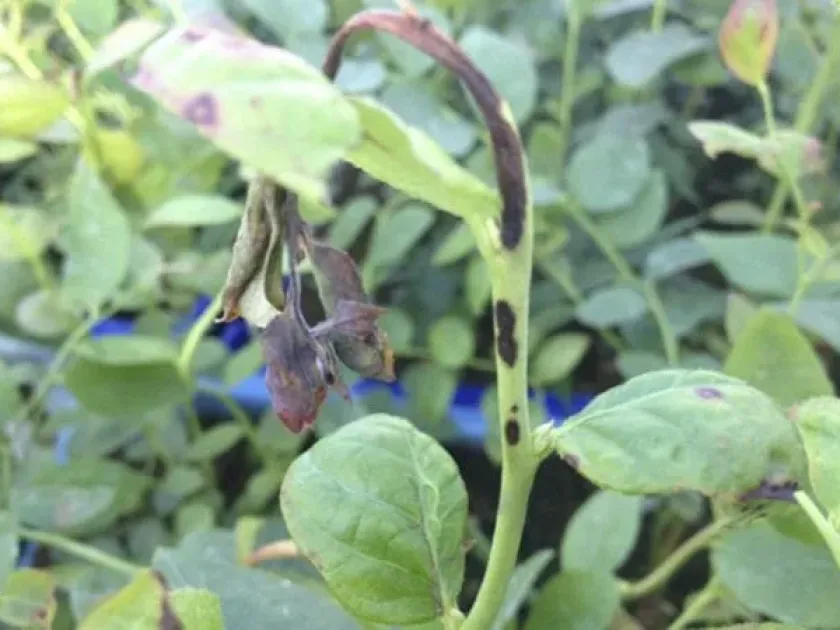
Description
Symptoms
Early symptoms appear as small, scattered spots on the leaves, which are initially pale green or yellowish. Over time, these spots transition into brown or dark-reddish lesions with well-defined borders.
Upon closer inspection, particularly on the underside of infected leaves, one may notice minute, dark-colored fruiting structures. These structures release spores and indicate that the fungus is actively reproducing.
As the infection progresses, the tissues within the spots may dry out, becoming brittle or thin. Leaves with heavy infestation tend to wither, curl at the edges, and drop prematurely, leading to partial defoliation.
If the infection spreads to the petioles or young stems, it can cause localized necrosis, which may further weaken the structural integrity of the plant and interrupt nutrient flow.
Plants severely affected by the fungus often exhibit a generally stunted and discolored appearance, significantly reducing the aesthetic and commercial value of the berry patch.
Pathogen
The disease is caused by the fungus Godronia foliicola, an ascomycete pathogen that specifically targets foliage and stems of plants in the Ericaceae family, particularly lingonberries (Vaccinium vitis-idaea).
This fungus survives unfavorable winter conditions as mycelium or dormant fruiting bodies (apothecia) on fallen leaves and infected woody parts of the plant. As spring approaches, it produces spores that act as the primary inoculum for new infections.
Spores are disseminated by splashing rain, wind, and movement of insects, allowing the fungus to spread rapidly across dense patches of lingonberry. The pathogen is highly host-specific, adapting well to the leaf tissues of its target plant.
Once the spores land on the leaf surface, they penetrate the epidermis and colonize the inner mesophyll tissue. This parasitic activity drains the plant's resources and initiates visible necrotic changes in the foliage.
The biological cycle of Godronia foliicola is closely synchronized with the growth of the host plant. It remains active as long as the temperature and humidity allow for hyphal growth within the infected plant tissues.
Conditions for development
The development of Godronia foliicola is heavily dependent on moisture. Prolonged periods of rainfall, heavy dew, or high humidity create an environment that promotes spore germination and rapid fungal growth.
Planting density is a critical factor; when lingonberry plants are crowded, air circulation is restricted. Stagnant air keeps foliage wet for longer periods after rainfall, providing a perfect incubator for the pathogen.
Moderate temperatures (typically in the spring and autumn) are most conducive to the fungus. While it can survive cold winters, it thrives during the growing season when temperatures are mild and moisture is constant.
Improper site selection, such as areas with poor drainage or stagnant water, increases the stress levels on the plants. Stressed plants are invariably more susceptible to fungal colonizations than healthy, vigorous ones.
Over-fertilization with nitrogen can lead to excessive succulent growth, which is often softer and more vulnerable to fungal entry. Maintaining a balanced nutritional profile is essential for host resistance.
Why it matters
The primary damage is caused by premature defoliation, which severely hampers the photosynthetic capacity of the plants. This prevents the accumulation of sugars and starch needed for overwintering and early spring growth.
Infected lingonberries show decreased productivity, resulting in smaller berry sizes, lower yields, and inferior fruit quality. The overall longevity of the berry patch may be significantly shortened due to recurrent disease pressure.
Plants weakened by the disease are less likely to survive severe winter conditions, leading to plant death. This loss of vigor can result in patches of empty soil within the plantation, necessitating expensive replanting.
The economic impact includes both the loss of harvest and the cost of managing the disease. Farmers must invest in fungicide programs, labor for sanitation, and potentially loss of organic certification if synthetic chemicals are used.
If left unmanaged, the disease acts as a source of infection for surrounding areas, making it difficult to maintain healthy plant stock over large landscapes or commercial growing regions.
Protection
Strict sanitation is the most effective preventative strategy. All fallen leaves and infected plant debris must be cleared away and destroyed, ideally burned or deeply buried, to eliminate overwintering sources.
Proper spacing during planting is essential to ensure adequate airflow. Pruning or thinning existing patches helps to dry the foliage quickly after rains, effectively slowing the spread of the fungus.
Protective fungicide sprays based on copper or other approved agents should be applied during the early growth stages in spring, especially if weather conditions favor high humidity.
- Regular monitoring of the plantation to identify early disease outbreaks.
- Balanced nutrient management to promote stronger cuticle development in leaves.
- Selective pruning of infected stems to contain the spread of the fungus.
Integrated pest management (IPM) is recommended, combining cultural practices like sanitation and spacing with timely chemical interventions when the disease threshold is reached, ensuring sustainable cultivation.
Pathogens and affected parts
Affects crops · 1
Discussion
No discussions yet — be the first.