
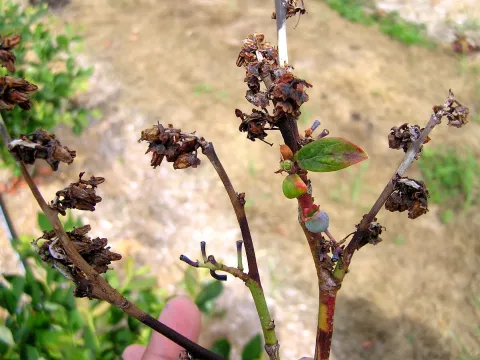
Godronia canker
Godronia
Godronia canker is caused by the ascomycete fungus Godronia cassandrae (anamorph Fusicoccum putrefaciens). This pathogen primarily targets woody stems of shrubs and fruit bushes.
What the section contains
Godronia canker
The fungus survives as mycelium within infected host tissues, allowing it to remain present in the garden or field across different seasons.
Reproductive structures of the fungus develop beneath the epidermis, releasing spores during periods of high humidity and rainfall.
This pathogen acts by colonizing the bark and cambium, eventually interrupting the flow of nutrients and water within the stems.
Because it is a facultative parasite, the fungus can also exist saprophytically on dead plant debris, making complete eradication difficult.
The first signs of Godronia infection are typically small, discolored spots on the stems, which gradually enlarge to form elongated lesions.
As the disease progresses, these lesions turn brown or reddish-purple, often becoming sunken and cracked as the bark tissues die.
Small, pinhead-sized fruiting bodies (apothecia) appear on the surface of the cankers, which serve as the primary sources of secondary spread.
Plants often exhibit tip dieback, where stems dry out from the top downwards, leading to wilting and premature leaf drop.
Cutting into the wood of an infected stem often reveals localized necrotic tissue and vascular discoloration within the cambial layer.
The development of Godronia canker is heavily dependent on moisture. Prolonged wet weather during spring and autumn facilitates spore germination.
Wounds caused by mechanical damage, pruning, or winter frost injuries significantly increase the likelihood of successful fungal colonization.
Densely planted areas with poor airflow prevent stems from drying quickly after rainfall, creating a favorable microclimate for the pathogen.
Plants under physiological stress, due to poor soil fertility or extreme temperature fluctuations, are more susceptible to infection.
The pathogen thrives in areas where debris from previous years is left on the ground, serving as a reservoir for recurring annual infections.
Godronia canker causes severe stem damage, which, if left unchecked, can lead to the total loss of the entire shrub or tree.
Reduced vigor and stunted growth are common outcomes, which significantly diminish the plant's ability to produce quality fruit or foliage.
The disease can cause widespread crop loss in commercial settings, as infected stems become brittle and break easily under weight or wind.
Systemic damage to the vascular system leads to chronic decline, eventually killing off entire sections of the canopy or the whole specimen.
Economic damage is exacerbated by the need for costly labor to prune infected stems and the loss of long-term perennial investments.
The primary control measure for Godronia canker involves strict sanitary practices, such as removing and destroying all infected stem tissue.
Preventive fungicide sprays, particularly those containing copper or systemic active ingredients, can help reduce the infection pressure.
- Regular pruning of dead or diseased wood.
- Ensuring proper spacing to improve air circulation and sunlight penetration.
- Disinfecting pruning tools between cuts to prevent cross-contamination.
- Applying winter protection to reduce frost-related bark injuries.
- Encouraging balanced growth with appropriate fertilization regimes.
Sealing large pruning wounds with specialized pruning pastes can help prevent spores from entering fresh tissues during wet spells.
Monitoring the plantation for early signs of lesions allows for rapid intervention, which is critical to stopping the spread of the fungus.