
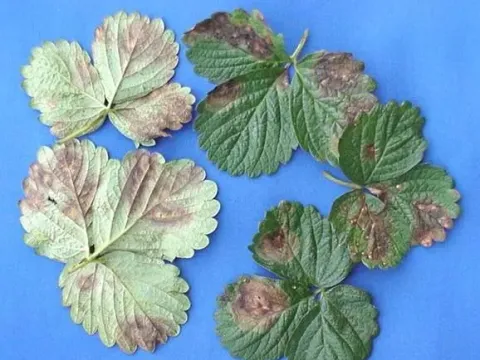
Gnomonia leaf spot
Gnomoniaceae
Gnomonia leaf spot is caused by fungi belonging to the Gnomoniaceae family, within the Ascomycota phylum. These pathogens are highly specialized parasites that primarily infect deciduous trees and shrubs, surviving the winter within fallen leaves and decaying organic matter.
What the section contains
Gnomonia leaf spot
The disease cycle is triggered in early spring as temperatures rise and moisture becomes available. Perithecia, the fruiting bodies of the fungus, develop on the previous year's leaf debris and release ascospores into the environment.
These spores are primarily disseminated by wind and splashing rainwater, landing on susceptible young foliage or succulent stems. Once contact is made, the spores germinate and penetrate the host tissue, initiating the infection.
The fungi employ enzymatic secretions to breach the host’s cell walls, effectively colonizing the mesophyll. This process leads to the disruption of cellular functions and the development of characteristic necrosis associated with the pathogen's activity.
Gnomoniaceae pathogens can produce multiple generations of spores throughout the growing season, which enables the disease to spread rapidly if environmental conditions remain favorable for fungal development.
The initial symptoms typically appear as small, chlorotic spots on the leaf surface. As the infection develops, these spots expand and evolve into brown or dark-colored lesions, frequently surrounded by a yellow halo.
In severe cases, the lesions coalesce, covering large portions of the leaf blade. This extensive tissue damage leads to premature leaf senescence and abscission, leaving branches partially or fully defoliated during the peak growing season.
Lesions can also appear on petioles and young shoots. These infections often manifest as depressed cankers or cracks in the bark, which can provide entry points for secondary opportunistic pathogens or insect pests.
Under humid conditions, one may observe tiny, black, pimple-like structures on the underside of leaves or necrotic stems. These are the pycnidia or perithecia of the fungus, confirming the presence of the pathogen.
Fruit infection, when it occurs, is characterized by darkened, sunken spots. These lesions often compromise the fruit integrity, leading to tissue decay and rendering the yield unsuitable for market or consumption.
Environmental moisture is the primary driver of disease development. Frequent rainfall and high humidity provide the necessary environment for ascospore germination and the subsequent colonization of host tissues.
Poor airflow, often resulting from dense planting or lack of proper pruning, creates stagnant microclimates that retain moisture longer. Such conditions significantly exacerbate the infection pressure within the host plant.
Moderate temperatures, generally ranging from 18 to 25 degrees Celsius, are optimal for the growth and reproduction of these fungi. Warmer, wet springs often correlate with high disease incidence.
The presence of overwintering inoculum is critical for the start of the epidemic. Fallen foliage that is not removed or destroyed serves as the primary reservoir, ensuring that the fungus remains present on-site year after year.
Plant vigor plays a role in disease susceptibility. Plants suffering from nutrient deficiencies, water stress, or other mechanical damages are generally less capable of mounting effective defensive responses against Gnomoniaceae pathogens.
The primary harm caused by Gnomonia leaf spot is the significant reduction in photosynthetic surface area. Premature leaf loss hinders the tree's ability to produce energy, weakening it for future growth and winter survival.
Damage to young shoots and branches can disrupt vascular transport and lead to dieback. Over time, persistent infections can significantly reduce the overall productivity and lifespan of the host plant.
Economic losses are compounded by the degradation of fruit quality. Affected harvests often face rejection or price devaluation, leading to decreased profitability for commercial growers.
The disease necessitates ongoing management efforts, including the application of fungicides and labor-intensive sanitation practices, which add to the operational costs of orchard maintenance.
In long-term scenarios, severe Gnomoniaceae infestations can lead to a general decline in tree health, eventually necessitating the removal and replacement of susceptible individuals or entire blocks within a plantation.
Sanitation is the cornerstone of Gnomonia leaf spot management. Removing and destroying fallen leaves during autumn and winter significantly reduces the amount of primary inoculum available to initiate infection the following spring.
Proper pruning practices are essential to open up the canopy. Increasing air circulation reduces humidity within the foliage, making the environment less conducive to fungal spore germination and development.
Chemical control involving the use of fungicides can be effective when applied during critical phases of plant development. Preventive treatments, particularly during periods of wet weather, are often necessary to protect new growth.
Maintaining optimal tree health through balanced fertilization and adequate irrigation helps plants build structural defenses. A well-nourished tree is generally more resilient to infection than a stressed one.
Selecting resistant cultivars or species during the planting phase is the most sustainable strategy for long-term disease management, as it reduces the reliance on chemical interventions over time.