
Gnomoniopsis fruit rot
Gnomoniopsis fructicola
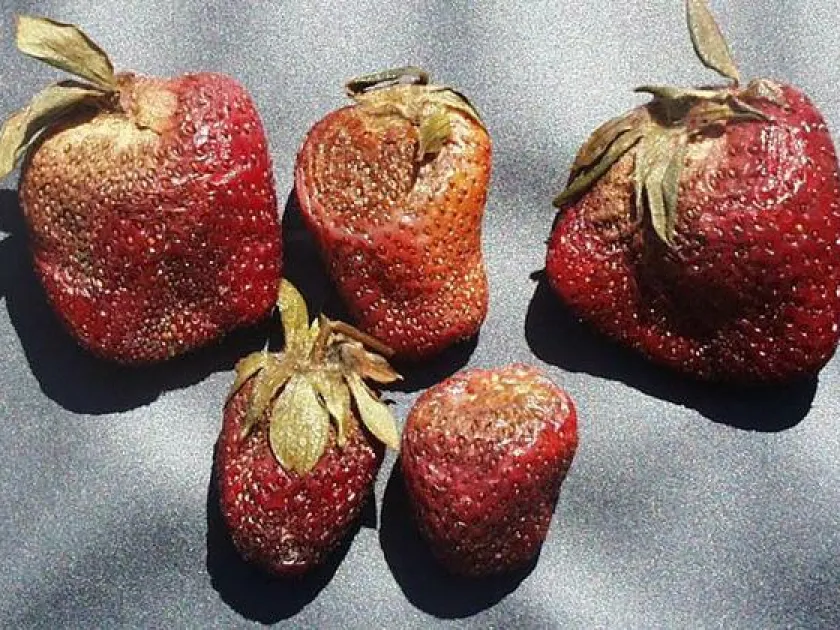
Description
Symptoms
Initial symptoms of Gnomoniopsis fruit rot appear as small, water-soaked lesions on the berry surface that expand rapidly over time.
As the infection progresses, the tissue turns brown or dark brown, becomes soft, and may eventually collapse completely.
A white or creamy mycelial growth often becomes visible on the surface of the fruit, later darkening as the fungus produces new spores.
Severely infected berries often undergo mummification, remaining on the peduncle as dry, shriveled, and hardened structures.
The disease may also cause necrosis of the calyx, which can wilt and die prematurely, further compromising the quality of the harvest.
Pathogen
The disease is caused by the ascomycete fungus Gnomoniopsis fructicola, a pathogen known for its destructive impact on the reproductive structures of berries.
The fungus survives the winter primarily on decaying plant debris, where it produces apothecia that release ascospores in early spring.
Infection typically begins during the flowering stage, where spores land on blossoms and colonize the developing fruit tissue as the plant matures.
The mycelium grows internally, secreting enzymes that degrade plant tissues, leading to the characteristic rot and softening of the fruit.
Secondary spread is facilitated by conidia, which are easily disseminated by wind, splashing rain, and insect activity throughout the growing season.
Conditions for development
High humidity and frequent rainfall during the critical stages of flowering and fruit set are the primary drivers for disease development.
Warm temperatures, generally ranging between 18 and 25 degrees Celsius, create an ideal environment for the rapid germination of fungal spores.
Dense planting schemes that restrict airflow allow moisture to persist on the foliage and fruit, significantly increasing the risk of infection.
Overhead irrigation practices can contribute to the spread of the pathogen by splashing soil-borne spores onto susceptible fruit tissues.
Poor sanitation, such as leaving diseased fruit and plant waste on the ground, provides a continuous reservoir for the fungus to persist.
Why it matters
The economic impact of this disease is significant, as it leads to high levels of post-harvest loss and renders berries unsellable.
Early infections often result in the premature dropping of fruitlets, which directly reduces the overall marketable yield of the plantation.
Fruit that appears healthy at the time of harvest can develop rot during storage and transport, leading to claims and loss of market reputation.
The pathogen is highly contagious within a field, capable of causing widespread losses during seasons with favorable weather conditions.
Long-term infestation of a field requires intensified management, increasing the costs associated with chemical and cultural control strategies.
Protection
Successful management of Gnomoniopsis rot relies on integrated crop management strategies, starting with the selection of high-quality, disease-free planting material.
Rigorous sanitation practices, including the removal of infected fruit and debris, are essential to reduce the primary inoculum load.
Mulching the soil surface with straw or synthetic landscape fabric is a highly effective method to prevent fruit from touching the ground.
Protective fungicide applications during the bloom period are critical to safeguard the fruit from early infection and subsequent disease development.
- Maintaining proper row spacing for aeration.
- Regular scouting for early disease symptoms.
- Implementation of appropriate crop rotation.
- Avoidance of overhead irrigation during bloom.
Discussion
No discussions yet — be the first.